Showing posts with label state responsibility. Show all posts

'Nuff said

(Taking context-optional note of thought-provoking quotes)

[T]he Grand Chamber's judgment exposes flaws in the current European asylum regime. ... [E]stablished to reduce 'asylum shopping' and ensure minimum standards of protection to asylum seekers across the European Union, [it] is based on a presumption of equality and cooperation among safe countries. For geopolitical reasons, [there is] an unbalanced burden-sharing among the various European countries.
The judgment acknowledges those challenges, yet underlines that neither uneven burden-distribution (Greece) nor a state's minimalist reaading of the Dublin Regulation (Belgium) absolves Member States of their responsibilities vis-à-vis the Convention or other applicable international treaties ....

-- Tom Syring, co-chair of the International Refugee Law Interest Group of the American Society of International Law and member of Norway's Immigration Appeals Board, in an ASIL Insight written in his personal capacity. Syring analyzed the judgment that the European Court of Human Rights (right) issued this January in M.S.S. v. Belgium & Greece. An asylum case, M.S.S. unfolded within the framework of the Common European Asylum System -- launched in 1999 and better known as CEAS -- as well as the 2003 Dublin Regulation that implements CEAS. A 17-member Grand Chamber of the Court ruled that both respondent countries had violated rights of the asylee-applicant under Article 3 (banning inhuman and degrading treatment) and Article 13 (guaranteeing an effective remedy) of the 1950 European Convention on Human Rights. Belgium was faulted for having returned the applicant to his 1st state of entry -- Greece -- without considering that there he might endure the poor living conditions and risk of refoulement to his native Afghanistan. Greece, meanwhile, was held to account for the possibility of such risks and for the delays in providing the remedy of asylum. By Syring's telling, the judgment appears to place a significant, affirmative responsibility on member states -- and thus is well worth a read for international lawyers in many fields beyond that of asylum law.


In Defense of Human Rights Defenders

On this day in 1998, paramilitaries stormed into the office of Jesús María Valle Jaramillo (left), a Colombian lawyer and human rights defender who had been active in denouncing crimes committed by paramilitaries in conjunction with members of the Colombian army. Valle Jaramillo was executed. With him on this day 13 years ago were his sister Nelly Valle Jaramillo and a friend, Carlos Fernando Jaramillo Correa. These two individuals were tied, dragged across the office, and threatened with death.
The victims brought a case against Colombia before the Inter-American human rights system (the Commission and the Court). Remarkably, before the Commission, the state partially admitted its responsibility by omission, apologized, and offered reparations. The victims, however, argued that the terms of the admission denied the State's responsibility for its agents as co-authors, accomplices, or instigators in the alleged violations and thus did not fully contribute to the victims' desires for truth and justice. Accordingly, they pressed the Commission to forward the case to the Court.
Before the Court, Colombia was found responsible by omission for violations of the victims' rights to
  • personal liberty (Article 7 of the American Convention on Human Rights),
  • humane treatment (Article 5),
  • life (Article 4),
  • freedom of movement and residence (Article 22) and
  • judicial protection (Article 25).
Drawing on the conclusions of its prior cases involving Colombia, the Court noted that the state originally encouraged the creation of “self defense” paramilitary groups, but that these groups began to "function beyond the law" and commit human rights abuses. The Court also noted that prior cases demonstrated numerous links between paramilitary groups and members of the armed forces such that the Colombian state bore direct international responsibility for the failure to comply with “its obligation to ensure human rights, [and, thus,] its duty of prevention and protection.” In addition, the Court found that

even though the State has adopted certain legislative measures to prohibit, prevent and sanction the activities of the “self defense” or paramilitary groups, these measures did not translate into the effective deactivation of the danger that the State helped create. [T]his accentuates the State’s special obligations of prevention and protection...
In addition, the Court made note of the special guarantees owed to human rights advocates in light of their work defending and promoting human rights. The Court acknowledged that Colombia had already implemented a series of measures to assist and protect human rights defenders including

  • the legal recognition of human rights organizations;
  • the formulation and implementation of the National Action Plan on Human Rights and International Humanitarian Law; and
  • the provision of police protection to human rights organizations.

Nonetheless, full compliance with the obligation that states create the necessary conditions for the effective enjoyment and exercise of the rights established in the Convention,

is tied intrinsically to the protection and recognition of the importance of the role of human rights defenders, whose work is essential to strengthen democracy and the rule of law.

Thus, where a state is aware of a real and immediate danger to human rights defenders, a State

has the obligation to adopt all reasonable measures required to guarantee the rights to life, to personal liberty, and to personal integrity of those defenders who denounce human rights violations and who are in a situation of special vulnerability such as the internal armed conflict in Colombia.
With respect to reparations, the Court also undertook an interesting discussion of which family members should be recognized as "next of kin", reflecting the civil law's more expansive notions of dependents/beneficiaries.

For more on the risks undertaken by human rights defenders, see the programs at Amnesty International, the International Federation for Human Rights (FIDH), and Human Rights First.

Responsibility of state bystanders

(Delighted to welcome back alumna Monica Hakimi, who contributes this guest post)

When must states protect people from abuses committed by third parties?
That obligation (termed the “obligation to protect”) is everywhere in modern human rights law. Consider a few examples of how decisionmakers prescribe, invoke, or apply it:
► Under the Convention on the Rights of the Child, states must take measures to protect children from “physical or mental violence…while in the care of parent(s).”
► Non-refoulement prohibits states from returning people home if there is a risk of third-party harm. A state that deports someone despite that risk typically does not participate in the abuse. Rather, the deporting state fails to satisfy an obligation to protect.
► The International Court of Justice (bottom right) has interpreted the Genocide Convention to require states to protect people from acts of genocide committed by or in another state.
► The concept of responsibility to protect posits: (1) that each state must protect its population from certain atrocities, including atrocities committed by third parties; and (2) if one state fails to satisfy that obligation, it shifts to the international community.
► The International Law Commission (below left) has proposed a rule rendering states responsible where they delegate authority to an international organization that then violates rights. (photo credit) Under the proposal, a delegating state would be responsible even if the abuse were attributable only to the international organization.
In each of those examples, the state must protect someone from third-party abuse.
The entity committing the abuse may be a private actor, another state, or an IO. The critical point is that the duty-holding state may be responsible simply for standing by—for not satisfying an affirmative obligation to protect. The state need not participate in the abuse to be responsible.
Though the obligation to protect is prevalent, no generalized framework exists for appraising when states have it or what it requires.
Instead, decisionmakers prescribe and apply the obligation ad hoc — under different sources of law and for discrete groups of victims (e.g., children), harms (e.g., physical violence), or abusers (e.g., private individuals). As a result, states' practice is splintered and, at times, inconsistent or confused. My article State Bystander Responsibility, published earlier this year in the European Journal of International Law, seeks to remedy that problem by presenting a generalized framework on when states are and should be responsible for failing to protect people from third-party harm.
The framework explains the practice where it is uniform, and helps guide decisions where the practice is inconsistent or confused:
First, whether a state has the obligation depends on its relationship with the (actual or potential) abuser.
A duty-holding state must restrain third parties from committing abuse. Of course, the interest in protecting potential victims favors establishing that obligation. But varied considerations favor limiting when and how states assert their authority over third parties. The obligation thus requires a normative judgment: Given its particular relationship with the third party, are the state’s restraints desirable or overly intrusive? The practice provides considerable guidance on that question. A state generally must restrain third parties to whom it delegates governmental functions or who operate in its territory (or in territory under its control). By contrast, a state generally need not restrain third parties in other states. Broad assertions to the contrary do not reflect legally operative obligations. Consider, for instance, the responsibility to protect contention that all states must restrain any particular state which commits atrocities. Such an assertion is essentially unenforceable and in practice unenforced against particular bystander states.
Nevertheless, the general rule that states lack extraterritorial obligations to protect is subject to an important exception: A state may have that obligation where it substantially enables a third party to violate rights. In that event, the duty-holding state may or may not participate in the abuse under the traditional rules on attribution. But having enabled the abuser, the state must protect against its harm. A few examples:
► Serbia had to restrain the Bosnian Serbs in the ICJ's Genocide Case. (prior IntLawGrrls post)
► Russia had to restrain Georgian and Moldovan separatists that it supported.
► Turkey had to restrain the Turkish Cypriot administration that it propped up.
► And arguably at least, deporting states enable entities in the home country to violate rights, thus triggering obligations of non-refoulement.
Second, obligations to protect depend on the kind of harm caused. States must protect only against conduct that:
(1) causes serious physical or psychological harm; or
(2) affects someone because she belongs to a vulnerable group.
Treaty bodies sometimes assert that states also must protect against other conduct, especially where the abuser is a private actor. That assertion is inconsistent with substantial other practice. Indeed, the treaty bodies themselves apply the obligation more narrowly—and almost exclusively to conduct falling in the above two categories. Thus, states must restrain an employer who beats its employees (category 1) or discriminates on the basis of sex (category 2). But they need not restrain an employer from terminating an employee who is a bad worker or no longer needed. Yes, the termination affects the employee’s right to work. It does not trigger an obligation to protect because the state need not restrain the employer to protect its employees from termination. Rather, the state must try to fulfill the employees’ right to work by, for instance, offering them educational programs.
Finally, a state that has the obligation — because of its relationship with the third party and the severity of the harm — must take reasonable measures to restrain the third party. Reasonableness depends on context, but several factors inform whether particular measures are reasonable:
(1) the nature of the abuser (i.e., whether a private actor, another state, or an international organization);
(2) the nature of the harm;
(3) whether the practice specifically identifies the measures the state must take (e.g., requires criminal action) or leaves that determination to each state’s discretion;
(4) the scale of the problem; and
(5) the state’s capacity to take more effective measures. A duty-holding state is responsible if it takes either no measures or measures that are unreasonably lax to restrain the third party.

Inter-American verdicts against Mexico

Mexico owes compensation to women who suffered sexual abuse at the hands of military personnel, the human rights court for the Americas reportedly has ruled.
According to reports here and here, the 2 judgments came yesterday in the cases of Valentina Rosendo Cantú and Inés Fernández Ortega, Tlapaneca (Me'phaa) indigenous women from the Mexican state of Guerrero. (The website of the Inter-American Court of Human Rights does include judgments in both cases, but they are dated in August and September, respectively.)
Leaders of nongovernmental organizations praised the judgment, which came after 8 years of litigation by the 2 women. The judgment "represents 'a light of hope'" that victims and their families can attain justice, said Alejandra Nuño (left), director of the Mexico and Central America program at CEJIL, the Center for Justice and International Law (prior post), which focuses on the Inter-American Court.
Found responsible for having "failed to guarantee the rights to personal integrity, dignity and legal protection" to Rosendo and Fernández, the Mexican government said it would abide by the court's call for a civilian investigation, for compensation, and for publication of the judgment. The government added that it
reiterates its full commitment to the promotion and protection of human rights, in particular to combat violence against women and girls.

Kampala as cause to celebrate

(Part 3 of a 3-part series)

Celebration proved the closing theme of the 4th International Humanitarian Law Dialogs.
The final speaker at the recent upstate New York conference was William A. Schabas, Professor of International Human Rights Law and Director of the Irish Centre for Human Rights at the National University of Ireland-Galway. He asked whether the International Criminal Court Review Conference this summer in Kampala, Uganda (above left; credit), was "a moment of celebration or a disappointment." Schabas then answered his own question:

I think it is a great accomplishment.

The 1998 Rome diplomatic conference, Schabas recalled, had ended with a compromise on the extent of crimes the ICC may hear. Immediately operative were 3 core international offenses: genocide, crimes against humanity, and war crimes. Left for another day was a 4th: the offense of offensive warmaking, called crimes against peace in the Nuremberg era and known today as the crime of aggression. Article 5 of the Rome Statute grants the ICC jurisdiction over aggression, but postpones actual prosecution until adoption of a provision "defining the crime and setting out the conditions under which the Court shall exercise jurisdiction with respect to this crime."
Negotiators worked on both definition and conditions for the next dozen years before the Assembly of States Parties adopted a package of proposed amendments, designed to give the ICC power to adjudicate allegations of aggression, at Kampala.
"At Kampala, it was not obvious even till the final minutes of the conference that it was going to succeed," said Schabas. "These were adopted in the final minutes of the conference, by consensus. If somebody had called for a vote, the votes probably weren’t there." (credit for photo from Schabas' Kampala blog, depicting him, center, "discussing the amendments to article 8 with the Bulgarian delegation")
The central achievement was the definition of aggression in proposed Article 8 bis. "It will not be immune to judicial interpretation," Schabas said, and predicted "a liberal approach to its application."
Strong supporters of criminal punishment for aggression have expressed concerns that the Kampala package affords too many ways to avoid implication in that crime. (For details on the intricacies of these amendments, see our crime of aggression series.)
Agression, Schabas allowed, "may never be prosecuted, which may not necessarily be a bad thing. It simply confirms a deterrent effect."
Schabas sought to allay concerns about obstacles to entry into force, including a requirement of ratification by 30 states and further review in 2017. "I don’t think they’re actually going to be very difficult – not anywhere near as difficult as the obstacles appeared in 1998, of getting the 60 ratifications." (This latter milepost was reached in April 2002, so that the Rome Statute entered into force fewer than 4 years after its adoption. Today 113 of the United Nations’ 192 member states belong to the ICC. Nonparties include China, India, Russia, Turkey, and, as discussed in yesterday’s post, the United States.)
Nor, in Schabas' opinion, does it seem likely that political leaders of states parties will exercise the possibility of opting out of exposure to ICC pursuit should they be accused of aggression.
Endorsing a prediction that, as posted, ICC Judge Hans-Peter Kaul made earlier in the Dialogs, Schabas said:
I think that within 6 years, 4 months, and a few days we will have a court with jurisdiction over aggression, capable of prosecuting the crime.
This is an important step for international criminal justice, Schabas maintained, along a trail blazed by Robert H. Jackson, Chief U.S. Prosecutor at the Trial of the Major War Criminals held in Nuremberg after the Allies defeated Nazi Germany:

Jackson saw the link between war and other crimes, that war is at the center of it, that war is responsible for it. To the extent that the adoption of that amendment revives this, that is good.

On the trail that Jackson blazed lies the question of state responsibility. According to Schabas, it’s a question that was entertained in the proposal of U.S. President George H.W. Bush and British Prime Minister Margaret Thatcher, following Iraq’s invasion of Kuwait, to set up a tribunal competent to hear charges of aggression. But that proposal never was implemented, and the question of state responsibility was not addressed by the international criminal fora that were set up after Cold War.
Why might some be less eager today to prosecutor perpetrators of aggression?
Schabas proffered 2 possible answers:
► 1st: "We have become a be more militarized than we should be." As posted yesterday, in an earlier Dialogs speech Stephen J. Rapp, U.S. Ambassador-at-Large for War Crimes Issues, had stressed, as a reason for caution in implementing the current Kampala aggression amendments as they now stand, that military intervention is at times necessary. Schabas replied:

Sometimes, yes. But nor would I exaggerate the importance of that, because war brings atrocities, inevitably.

►2d: Some civil society organizations seemed not to appreciate the significance of making aggression a crime punishable by the ICC. Schabas recalled: "I saw a banner that said, ‘Civil Society Welcomes Stocktaking,’" another aspect of the Kampala Conference. "Civil society should have welcomed the amendment on aggression."
Echoing Judge Kaul’s description of atrocities as the "excrement" of war, Schabas said of the crime-of-aggression package: "That’s the big piece. It shows that," despite some growing pains at the ICC, "we have a court that is healthy and productive and moving forward."
 
(Part 1 of this 3-part series on the 4th IHL Dialogs is here; Part 2 is here.)

Domestic violence as torture

(Thanks to IntLawGrrls for the opportunity to contribute this guest post)

Recently, reports of detainee abuse in the “war on terror” have dominated the international legal discourse on torture. This focus on detainee abuse, however, should not obscure developments concerning the most common and pervasive form of torture: domestic violence.
Last summer, a landmark judgment for victims of domestic violence, Opuz v. Turkey (2009), was handed down by the European Court of Human Rights (below right). The Court found the Republic of Turkey liable for torture or inhuman or degrading treatment, under Article 3 of the European Convention on Human Rights, because local officials had failed to prevent and redress the abuse of Nahide Opuz and her mother by Opuz' husband. The Court concluded that the state’s response to the abuse “was manifestly inadequate to the gravity of the offences in question,” in spite of noting that the Turkish authorities “did not remain totally passive” and that “ill-treatment must attain a minimum level of severity if it is to fall within the scope of Article 3.” Turkey was ordered to pay Opuz 30,000 euros in compensation for violating Articles 2, 3, and 14 of the European Convention.
For years, human rights bodies have recognized that state failures with respect to domestic violence can amount to torture. An example is General Comment No. 2 - Implementation of article 2 by States parties, issued in 2008 by the Committee Against Torture.
The ECHR decision in Opuz, however, seems to mark the first time that an international or regional court has held a state accountable for domestic violence, between partners, under a theory of torture — thus establishing the justiciability of the concept. Yet this aspect of the holding has received surprisingly little media attention.
The lack of coverage may be partially due to the fact that, as IntLawGrrl Stephanie Farrior pointed out in a prior post, the Opuz judgment was also remarkable in other respects, including its acknowledgment of domestic violence as a potential form of gender discrimination.
Women’s rights advocates have been pushing for greater recognition of domestic violence as a breach of international human rights for decades, and have made enormous jurisprudential strides. Seminal cases such as Velásquez Rodríguez v. Honduras, decided in 1998 by the Inter-American Court of Human Rights (left), helped establish the concept of state accountability for transgressions by non-state actors. Moreover, the traditional view that domestic violence is inherently a family matter beyond the purview of the state has been challenged by cases like Bevacqua and S. v. Bulgaria, rendered by the European Court of Human Rights in 2008.
As a result, state failures to prevent and redress domestic violence can now be understood to violate a range of human rights. The late Rhonda Copelon (right), to whom I have dedicated this post, explained in early 2009:

The next step in this legal and cultural revolution is to treat gender violence as torture. So far, rape — in war, by the state and where the state does not take measures against it — has been acknowledged in international law as an act of torture. Domestic violence — the most private and most common of all forms of gender violence — is on its way.
The Opuz holding is an important milestone in this regard.
The benefits of a “torture” designation are manifold, and have normative as well as practical value in enhancing legal protections for domestic violence victims:
► These victims of stand to gain from the jus cogens status of the prohibition of torture. It confers a heightened level of international condemnation and sends a clear message that domestic violence is an unqualified violation of human rights.
► Another benefit is the resultant availability of the protections and complaint mechanisms that exist for torture. These can bolster international legal protection for victims of domestic violence.
► A third benefit is the synergistic effect of combining the efforts and resources of advocates focused on feminist issues with those of international human rights generalists.
As Copelon articulated:

Simply recognizing domestic violence as torture will not solve the problem of domestic violence. But . . . it will help make domestic violence a front burner issue, hastening both the impartiality, adequacy and appropriateness of official responses and the cultural revolution that demands absolute and unconditional condemnation of such violence.
Accordingly, as the world laments the mounting evidence of torture perpetrated in the “war on terror,” the same sense of indignation and urgency must be extended to the private torture that countless people endure on a daily basis.

Go On! State Responsibility & Intimate Violence

(Go On! is an occasional item on symposia and other events of interest)
Our readers in the United Kingdom and environs might be interested in the following event, at London's Chatham House, on international law and intimate violence:
The Principles of State Responsibility and Systemic Intimate Violence, Wednesday, 22 September 2010, 17:00 to 18:30.
Featuring:
► Professor Bonita Meyersfeld, University of the Witwatersrand, South Africa, School of Law and Head of the law school's Gender, Centre for Applied Legal Studies, who will: argue that systemic intimate violence is an appropriate concern for international law; survey important recent legal developments at the UN, European, inter-American, and Pan-African levels; and discuss her new book on this subject, Domestic Violence and International Law (2010).
► Gauri van Gulik (left), Women's Rights Division, Human Rights Watch, who will respond from the perspective of a practitioner working on these issues.
To register, e-mail amartin@chathamhouse.org.uk, stating your name and professional affiliation. Members should include their membership number.

Haiti: Human Rights and Human Security


"Earthquake! We see the earth shake! But the soul of the Haitian people, It will never break!"
--Wyclef Jean
The Fundamentals
First things first. Like all IntLawGrrls and people around the world, I express my deepest condolences to the hundreds of thousands who lost loved ones in the Haiti earthquake of 12 January 2010. Our true feelings are beyond written expression.
We—the transnational or global “community”—must continue to support the Haitian people in their struggle for survival against the natural and man-made challenges arrayed against them.
In the first moments and days of crisis and catastrophe, no one (should have) needed legal provisions or principles to understand certain aspects of "the right thing to do." And, from Port-au-Prince, we saw that the vast majority did not. Neighbors and family members used their bare hands, blowtorches, hammers, and whatever tools they could find to answer the cries of those trapped under rubble. Survivors shared what little food or water could be salvaged from destroyed kitchens. Instant caregivers stabilizing broken bones with wood and cardboard and string, then ran through the streets carrying survivors toward emergency help. Pick-up truck and cab drivers became ambulance and hearse drivers.
Husbands and mothers waited for their wives and children, hearing faint voices in reality or only in their hearts and would not give up for days past what seemed to be the limits of survivability. And miracles happened. A 5-year old boy, then a 15-year old girl, did not give up even though trapped under tons of debris.
Self-help, Social Media, and "Old" Media Too
Anxious relatives and friends in New York, Miami, Boston, and other Haitian-American enclaves tried downed phone lines, then flooded Twitter and Facebook with information and requests for information about loved ones. Radio Haiti stayed on the air, relaying information throughout the country and to radio stations in the U.S. People shared information through Skype, and when cellphone networks went back up, even transferred text messages from underneath the rubble to rescue crews.
A Transnational Community
Rescue teams, physicians, nurses, and health workers from Jamaica, Cuba, France, Israel, the United States, Venezuela, Poland, and elsewhere threw their gear into bags and hopped on planes.
Adoption agencies worked with governments to speed through adoptions for children and already vetted prospective parents. Once a few banks and cash transfer agencies opened, remittances from the Haitian diaspora flowed like water into the country—even though the thousands waiting in long lines to receive them often could not gain access. Pre-earthquake estimates put remittances to Haiti from emigrants at 1.5 billion U.S. dollars annually.
Lawyers and law students held training sessions to assist Haitians in the United States obtain “temporary protected status” (TPS). Members of the Congressional Black Caucus and other legislators worked to pass bills aimed at increasing aid or supporting the cancellation of Haiti's foreign debt.
And the U.S. President and First Lady, keenly aware of the ongoing failures surrounding Hurricane Katrina (see posts here), sent strong statements of support, aid appropriations, (controversial) military support, and set up a bipartisan fund for private donations.
Even the news media sometimes dropped their cameras, or used them to direct rescue workers or aid agencies to areas where they were needed. Of course, they were needed everywhere….
Hollywood and New York entertainers used their talent to hold telethons like "Hope for Haiti Now" that kept attention focused, spirits uplifted, and the material support flowing.
In amazing acts of faith, resilience, and defiance, the people, who had nothing but their spirit, sang and marched through ruined streets…
The Impact of History
Nevertheless, human history is also full of the worst expressions of cruelty, self-interest, and ignorance as well. The legacy of such horrors and abuse have left their mark on Haiti as well. Haiti, a former French colony, was initially a place for French planters and colonial elites to grow rich on the backs of African slave laborers. Those kidnapped to the island were often, and quite deliberately, worked to death. The trade in sugar, rum (see IntLawGrrl Marjorie Florestal’s series on “the story of rum” here), and African peoples made the country a focus of international policy and conflict from the beginning.
Astonishingly, only days after the earthquake, a few misguided and uninformed U.S. opinion pieces speculated that the country’s contemporary poverty and lack of disaster response infrastructure should be laid squarely at the feet of “culture” or even religious tradition.
Thankfully, historians, legal and human rights advocates, and Haitian-Americans of all walks of life continue to correct the record. Among other things, the Haitian revolution of 1791-1803, led by Toussaint L’Ouverture (left, image credit here; prior post) resulted in the first successful African-led rebellion against slavery and colonialism in the West. The reverberations of Haiti's independence in 1804 were, and are, enormous: the Louisiana Purchase that opened westward expansion of the United States; a demand that Haiti pay bankrupting war "reparations" to France for lost "property" that included the former slaves themselves; support for African-American and Latin American liberation struggles; U.S. occupation of the country in pursuit of commercial and strategic interests; the encouragement of racial and class divides based on color and language; foreign covert support for ruthless dictators like “Papa Doc” and “Baby Doc” Duvalier and their tontons macoutes; discriminatory migration policies toward Haitian “boat people”; and international aid and economic policies that further undermined economic and human development.
Selected Resources
There are many historical, political, cultural, and legal accounts of Haiti's complex legacy. A few recent opinion-pieces and books follow:
►Sir Hilary Beckles, “The Hate and the Quake—Rebuilding Haiti” The Nation (Barbados)
►Guy-Uriel Charles, “Stop Calling Quake Victims 'Looters'”
►Mark Danner, "To Heal Haiti, Look to History, Not Nature"
►Edwidge Danticat, The Dew-Breaker
►Edwidge Danticat, Brother, I'm Dying
►Paul Farmer, Pathologies of Power: Health, Human Rights, and the New War on the Poor
►Tracy Kidder, Mountains Beyond Mountains: Healing the World: the Quest of Dr. Paul Farmer
►Randall Robinson, An Unbroken Agony: Haiti, from Revolution to the Kidnapping of a President
Guiding Principles
Positive initial reactions to disaster are often motivated by the best of what humanity has to offer. We’ve seen authentic miracles and authentic heroes and heroines go into and come out of the devastation. Their acts of courage and survival are beyond the confines of the law and legality. They rest firmly in morality and the resilience of the human spirit.
But even good intentions can be counter-productive or even harmful if states, humanitarian agencies, and ordinary people abandon the lessons of law and policy entirely. Transnational law helps to provide a much-needed framework for risk-reduction, preparedness, and responses that respect, protect, and fulfill human rights.
Here are a few key points from the “soft law” instruments (that draw on “hard” international treaties and customary norms) such as the “Hyogo Declaration on Disaster Reduction” (prior IntLawGrrls post) and the Guiding Principles on Internal Displacement.
State Responsibility. Although massive mobilization among charitable individuals and humanitarian organizations is essential and to be encouraged at a moment of crisis, the primary responsibility for reducing risk, preparing for disasters, and responding to them, rests with states. Where, as in the case of Haiti, there was significant logistical breakdown of the central government because of the disaster itself, the international community, in the form of the United Nations, must support legitimate governmental capacity in a coordinated way.
Why? NGOs, preferably those that are local or that have built long-term relationships with people on the ground often can move more quickly and determine key areas of need. They also have obligations to respect and protect human rights under the Guiding Principles. But it is governments that have the large-scale and sustainable capacity to provide earthmoving equipment, helicopters, planes, ships, and trucks, and to set up fully-equipped medical triage and treatment areas.
Obviously, individual small states, especially ones with already limited infrastructure, cannot do this alone where the needs of millions are involved. That is why, prior to disaster, all governments should be pressured to comply with their obligations under international human rights and humanitarian law and to assist others in doing so. When called upon by a government in need or by an international body such as the UN, governments around the world should be ready to respond quickly, efficiently, and without inappropriate strings attached.
Preparedness and Risk-reduction
Some lessons have been learned from the South Asian Tsunami, Hurricane Katrina, and other environmental disasters. Although certain disasters cannot be prevented, many can be prepared for. Building codes can be established and enforced, levees can be built to appropriate strength, tsunami warning systems can be established. Trade and agricultural policies that force rural to urban migration and urban overcrowding can be changed. Emergency supplies can be decentralized (a lesson of the tsunami) so that they can be better and more widely distributed even when roads are impassable. Evacuation plans should be in place. Governments and the international community need not wait for the heart-rending photos and videos to appear before taking action.
Coordination
Media and eyewitness reports in Haiti indicate that coordination has been haphazard and slow. Among other things, the UN peacekeeping mission to Haiti lost many of its most experienced people on the ground when a key office building collapsed. The initial outpouring of compassion is crucial, but so is coordination and planning. First responders, aid agencies, community leaders, the news media, local police, and the military must set up triage stations throughout the affected areas, assess the most urgent needs, and drop cross-organization barriers to the exchange of information.
“Vulnerable” Groups
I sometimes resist using the term of art “vulnerable groups” in humanitarian contexts because it seems to reinforce the popular perception that all survivors of disaster or displacement are helpless. The heroism of many Haitian survivors should demonstrate that that is not the case.
Yet, indeed, certain groups tend to be the most targeted or neglected in the days and weeks following a disaster.
Children: Thousands of children lost parents in the disaster. Speaking of culture and community, many are, or will be, cared for by surviving relatives or neighbors. But the Haiti disaster was so extensive that thousands of children may be left without adult care or supervision because so many adults have been killed or severely injured. Providing clean water, emergency medical care, food, and shelter to children must be at the top of the agenda.
As difficult as it is even to write, there are reports of actual or attempted child trafficking of unaccompanied or orphaned children. Needless to say, trafficking in persons is an international crime. It may also be so unthinkable to some that they forget or underestimate the risk. Both legal and practical strategies must be in place to prevent and stop human trafficking, reuniting children with their own relatives or placing them with responsible and loving adoptive parents after careful vetting. These, too, are "guiding principles."
The Elderly. Haitians who have lived to their 80s or 90s are, by definition, tough and resilient. They are also the bearers of culture, history, survival strategies, and family love. These mothers and fathers of the nation will need continuing medical care and emotional support. They will also be among those with the long memories and wisdom necessary to advise on transformative rebuilding.
Women. We've all seen the pictures in Haiti and elsewhere. After a disaster, as food aid and water trucks come in, the strongest young men push forward, leaving many women and children without. We've also seen that some are trying to provide for the women and children in their own families, but humanitarian workers know that distribution of aid to women is a partticular problem. There are reports that women-only aid distributions may finally be starting in Haiti, following the well-known truism that women tend to share the aid they receive within extended families and communities.
People with Disabilities. Unfortunately, the earthquake’s aftermath will increase significantly the number of people living with disabilities in Port-au-Prince and elsewhere in Haiti. Like others, they will need immediate medical care and other basic needs. But in a country where certain basic adaptive needs and jobs of all kinds are in short supply, they may experience social isolation, stigma, employment discrimination, and official neglect. Instead of warehousing the disabled in institutions, emphasis should be placed on rehabilitation, popular education about the capabilities of those with physical or intellectual disabilities, and even the creation of small businesses aimed at local adaptive needs.
Don’t Forget
By now, all readers are aware of the many organizations working toward a better life and human rights for the Haitian people. See posts by IntLawGrrls Diane Marie Amann; Jaya Ramji-Nogales, Naomi Norberg, Marjorie Florestal, and by me here.
Even if we are not in the region, we can pressure our own governments to enact or support just policies toward the country and its people. There will be other catastrophes, unfortunately, but don’t forget the joys and pain of Haiti.
In addition to Partners in Health, Oxfam America, TransAfrica Forum, and other groups previously mentioned in earlier posts, here are a few additional humanitarian and advocacy resources:
► CharityNavigator (to obtain information about charitable organizations)
► Hope for Haiti Now (telethon-based effort)
► Latin American and Caribbean Community Center (Atlanta, Georgia, U.S.-based advocacy organization)
► ReliefWeb (“serving the information needs of the humanitarian community”)
►UNICEF (UN body focused on children and child development)
►World Food Programme

On June 28

On this day in ...
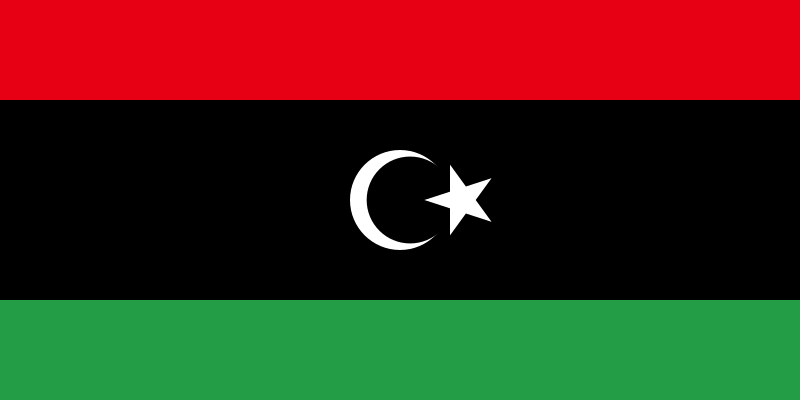
… 2004 (5 years ago today), the United States resumed direct diplomatic ties with Libya (flag at left) when it reopened a U.S. Liaison Office in the capital city of Tripoli. In December 1979, staff members had been withdrawn after a mob attacked and set fire to the U.S. embassy; the United States declared Libya a "state sponsor of terrorism." Relations between the 2 countries remained poor for decades. In 2003, Libya "accepted responsibility for the actions of its officials, renounced terrorism and arranged for payment of appropriate compensation for the families of the victims" of the bombings of a Berlin discotheque and two airliners, and also announced its decision to abandon its weapons of mass destruction programs. (image credit)
… 1969 (40 years ago today), a police raid in the early morning hours at the Stonewall Inn (right) in New York's Greenwich Village touched off the Stonewall riots, frequently cited as the first instance in U.S. history when gays and lesbians fought back against the persecution of homosexuals. Stonewall, in turn, sparked the gay rights movement in the United States and around the world. Today, gay pride events are held annually worldwide toward the end of June to mark the Stonewall riots. (photo credit)

(Prior June 28 posts are here and here.)

Landmark Domestic Violence Judgment by European Court of Human Rights

In a landmark decision, the European Court of Human Rights has unanimously found that a state violated the human rights of the applicant and her mother in failing to protect them against domestic violence. In Opuz v Turkey, discussed in a previous post on IntLawGrrls, the applicant alleged that the state bore responsibility under the European Convention on Human Rights for its failure to take action against her violent husband who repeatedly attacked her and killed her mother.
The European Court had previously found state responsibility in a domestic violence case in Bevacqua and S. v. Bulgaria (2008), grounding its decision in article 8 (right to respect for family life) of the European Convention. In Opuz v Turkey, however, the Court found violations of:
  • the right to life (art. 2) "in respect of the death of the applicant's mother"

  • the prohibition of torture (art. 3) "in respect of the authorities' failure to protect the applicant against domestic violence perpetrated by her former husband"

  • and -- significantly -- the right to non-discrimination on the basis of sex (art. 14). It explicitly recognized domestic violence as a form of gender discrimination that gives rise to state responsibility.
Regarding the latter, the Court found:
the existence of a prima facie indication that hte domestic violence affected mainly women and that the general and discriminatory judicial passivity in Turkey created a climate that was conducive to domestic violence ...
the criminal-law system, as operated in the instant case, did not have an adequate deterrent effect capable of ensuring the effective prevention of [domestic violence] ...
Bearing in mind its finding above that the general and discriminatory judicial passivity in Turkey, albeit unintentional, mainly affected women, the Court considers that the violence suffered by the applicant and her mother may be regarded as gender-based violence which is a form of discrimination against women. Despite the reforms carried out by the Government in recent years, the overall unresponsiveness of the judicial system and
impunity enjoyed by the aggressors, as found in the instant case, indicated that there was insufficient commitment to take appropriate action to address domestic violence.

Read the Court's decision here.
Watch the Court hearing in the case in October 2008 here.
A report issued in May 2009 on the Caselaw of the European Court of Human Rights on Violence against Women, prepared by Christine Chinkin, is available here.

Accountability explored

Kudos to our colleague, Stanford Law's Allen S. Weiner (below left), for dispassionate analysis in The Torture Memos and Accountability, a recent ASIL Insight. (Indeed, down-the-line examination is a hallmark of this feature, making Insights an invaluable resource for anyone trying to separate facts/law from spin on issues of international law). The piece is most timely, given both the efforts to downsize detainee population at Guantánamo about which Naomi Norberg posted yesterday, and the New York Times' lead story yesterday, which asserted: "None of the Justice Department lawyers who reviewed the interrogation question argued that the methods were clearly illegal."
Addressing U.S. criminal law in his ASIL Insight, Allen:
► Explained the significance of the "reasonable reliance" defense of the common law, codified at Model Penal Code § 2.04(3)(b) and accepted in prior federal criminal law precedents. This defense could protect interrogators who, pursuant to Office of Legal Counsel opinions authorizing their behavior, committed acts amounting to torture under the Convention Against Torture and its domestic implementing statute, and that this possibility may underlie the declaration of President Barack Obama that the United States would not seek to prosecute such interrogators. (Prior IntLawGrrls posts here, here, here, and here.) (photos above right from video of interrogation of then-16-year-old Omar Khadr, detailed here and here)
► Confirmed our own conclusion that Obama's declaration does not shield persons who did not rely on the OLC memos, for the simple reason that they wrote those memos. There is no automatic bar to prosecution of lawyers for conspiracy or aiding and abetting torture, Allen explained. But he warned that any such prosecution "could prove difficult," for it would require proof beyond reasonable to doubt "that the purpose of the lawyer's advice was to facilitate conduct that the lawyer knew to be criminal," and such proof likely would be hard to come by.
Turning then to the international arena, Allen:
► Stated on the one hand that if it were refusing to prosecute "on policy grounds" alone the United States might stand in breach of the obligation under Article 7 of CAT -- which it assumed voluntarily when it ratified that anti-torture treaty in 1994 -- to try or extradite a person said to have committed torture. On the other hand, he argued, there may be no breach if the "reasonable reliance" defense grounds the decision.
Other legal considerations yet may prove pivotal. Thus Allen:
► Cited Common Article 3 of the 1949 Geneva Conventions and the statute implementing them, as well as other U.S. laws proscribing conduct the United States admitted occurred during interrogations. To this could be added the International Covenant on Civil and Political Rights, a treaty to which the United States has been a state party since 1992 and Article 7 of which also unequivocally prohibits subject to "torture or to cruel, inhuman or degrading treatment or punishment."
► Noted the potential for other accountability mechanisms in places like Spain, and concluded by reminding that

apart from the question of state responsibility on the part of the United States, it is possible that individual interrogators or lawyers may be subject to criminal prosecution outside the United States.

(The Spanish avenue may face closure, however, as we've posted.)
The Insight underscores that the final chapter in the story of accountability for post-9/11 counterterrorism practices is far from written.

Violence is local, too

As expected of a site concerned with international law, policy, and practice, we at IntLawGrrls typically train our focus on violence abroad. How can we not, given the state of our world? (Just 2 of today's Washington Post headlines: "Car Bombs Kill at Least 80 in Iraq," "Pakistan Truce Appears Defunct: Insurgents Strike Police, Troops; At Least 44 Die.") Yet a journey Midwest this month reminded that attention ought to be paid too to violence at home.
The same 4th of July parade that featured antiwar marches by Code Pink & Co. also was marked by the somber marching of Evanston High School's football team and cheerleaders around a car bannered "In Memory" -- a dignified tribute to their teammate Darryl "Shannon" Pickett, 17, shot dead days earlier in the suburban city just north of Chicago.
Meanwhile, in Chicago, 34 public school students have been killed since the beginning of the 2006-2007 academic year -- a number said to be greater than that of Illinois servicemembers killed in Iraq. The most recent victim was Schanna Gayden, a 13-year-old honors student and basketballer shot dead June 25 at a playground.
Things proved no better on return to the Bay Area:
Last week homicides in Oakland averaged 1 person a day. The total for the year stands at 64, 8 fewer than the same time last year.
Across the bay in San Francisco, homicides have spiked 20% this year; the 54th victim is San Franciscan Demetrius Maybums, 19, fatally shot while driving at 3 in the afternoon July 9. As with so many of these incidents, "[n]o arrests have been made. "
Much bandied about in human rights these days circles is "responsibility to protect" -- indeed, those in the know refer to the concept by its acroynm, RTP. One wonders about claims to a global responsibility to which states have not assented by means of binding treaty and whose status as a norm of customary international law has yet to be proved. Nonetheless, one can say that countries ought to turn the concept inward -- to endeavor mightily to protect their own even as they profess to look out for the rest of the world.
 
Bloggers Team