Showing posts with label JW. Show all posts

Heartfelt thanks to Jocelyn Wolf

With today's "On August 14" post, Jocelyn Wolf (right) completes her stint as IntLawGrrls' inaugural internship. She's been an invaluable help this summer, contributing interesting posts on issues and persons of international/transnational/global significance.
Jocelyn's readying for her 2d year as a law student, a year that will include additional invaluable work, in the superb Immigration Law Clinic at the University of California, Davis, School of Law (Martin Luther King, Jr. Hall).


Heartfelt thanks and best of luck, Jocelyn!

On August 14

On this day in ...
… 1980, shipyard workers in Gdansk, Poland, staged a successful strike (right) in protest over the dismissal of militant crane driver and a Polish trade unionist Anna Walentynowicz, who had been fired 5 months before she was due to retire in response to her participation in the illegal trade union. This strike in the Gdansk shipyard led to many more throughout Poland and, eventually, to the creation of Solidarity, the Polish trade union federation of which Walentynowicz became a prominent member. (photo credit)
… 1947, Danielle Fernande Dominique Schuelein-Steel, better known as Danielle Steel (left), American romantic novelist and author of mainstream dramas, was born in New York City. (photo credit) Steel has sold more than 550 million copies of her books worldwide, and 22 of her books have been adapted for television. Steel's novels have been on the New York Times bestseller list for more than 390 consecutive weeks, and every novel has been a bestseller.

(Prior August 14 posts are here and here.)

On August 13

On this day in ...
… 1762, Anne Josephe Théroigne de Méricourt (right), French revolutionary and feminist, was born in Marcourt, Luxembourg province, in modern Belgium. (image credit) She called for equality with men with an eloquence that was vigrous even for the National Assembly of the day. She demanded that women be permitted to arm themselves and to enlist in the army:
Fellow women citizens, why should we not enter into rivalry with the men? . . . And we too would wish to earn a civic crown and court the honor of dying for a liberty which is dearer perhaps to us than it is to them, since the effects of despotism weigh still more heavily upon our heads than upon theirs. . . . let us open a list of French Amazons; and let all who truly love their Fatherland write their names there.
... 1905, Norwegians voted overwhelmingly -- 368,208 to 184 -- in favor of dissolving the union of Norway and Sweden. This followed by a couple months a similar action in Sweden's legislature (prior post), and dissolution took effect later in the year.

(Prior August 13 posts are here and here.)

On August 12

On this day in ...
… 1833, Lillie Devereux Blake (left) was born in Raleigh, North Carolina. In 1857, she began writing short stories for Harper's Weekly and the Knickerbocker. After her husband’s death, she supported herself and her 2 children with her writing, working as a war correspondent during the Civil War as well as writing novels and short articles. In 1869 she joined IntLawGrrls' foremothers Susan B. Anthony and Elizabeth Cady Stanton to fight for women’s suffrage. She was president of the New York State Woman Suffrage Association from 1879 to 1890 and of the New York City Woman Suffrage League from 1886 to 1900. Blake died in 1913. (image credit)
… 1825, Simón Bolívar (below right), known as "The Liberator," became the 1st president of the Republic of Bolivia. (image credit) A descendant of rich Spanish aristocrats, Bolívar was one of the major architects of South American independence from Spain. He consolidated the independence of several South American countries through multiple military campaigns over the course of the early 1820s. In 1821, Gran Colombia (a federation covering much of modern Venezuela, Colombia, Panama, and Ecuador) was created, and Bolívar became its president. Then followed the presidenc of Bolivia on this day.

(Prior August 12 posts are here and here.)

On August 11

On this day in ...
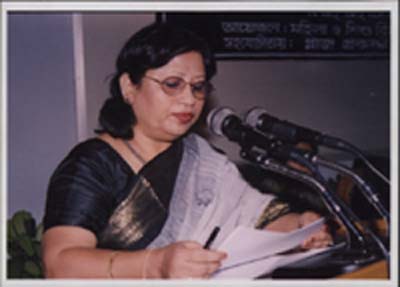
… 1948, Ferdous Ara Begum (left), member of the Committee on the Elimination of Discrimination Against Women and a specialist on gender issues, was born in Bangladesh. (photo credit) Begum has worked for many years in areas related to women and children’s rights. She worked for the government of Bangladesh as Joint Secretary in the Ministry of Women and Children Affairs, providing social and legal protection for women and children. As a Board Member of Grameen Bank, she helped offer microcredit to rural poor women in Bangladesh. She has also published on trafficking and dowries, and given talks on HIV/AIDS prevention and awareness.
… 1934 (75 years ago today), French pilot Hélène Boucher (right) became the fastest woman in the world. (photo credit) She beat the record by flying an average of 485 kilometers per hour (301 mph) over 100 kilometers (62 miles). She also held the altitude (5,200 meters, or 3.23 miles) and 8 other world records. Boucher, a stunt pilot, was the 1st woman buried at Les Invalides. She was posthumously dubbed Chevalier of the Légion d'honneur.

(Prior August 11 posts are here and here.)

On August 10

On this day in ...
… 1993, Ruth Bader Ginsburg (left) (see previous posts) took her seat as an Associate Justice of the U.S. Supreme Court. (photo credit) She is (as of Saturday!) one of only two women on the United States’ highest court. Recently, at a symposium at Ohio State University, she discussed her opinion on foreign law and its potential influence on judicial decisions in the United States, asking,
“Why shouldn’t we look to the wisdom of a judge from abroad with at least as much ease as we would read a law review article written by a professor?”
She also linked the diminished influence of the U.S. Supreme Court to its failure to engage with foreign decisions.
… 1949 (60 years ago today), President Harry S. Truman (right) signed the National Security Act Amendment of 1949, which renamed the National Military Establishment the Department of Defense. (photo credit) Additionally, the amendment placed the secretaries of the Army, the Navy, and the Air Force under the direction of the Secretary of Defense, giving that Secretary more power over the individual services and their secretaries. The 1949 amendment also created the position of chairman of the Joint Chiefs of Staff. These changes further centralized the organization of policy among the three branches of the military begun when the act was first passed in 1947.
(Prior August 10 posts are here and here.)

On August 9

On this day in ...
… 1942, Edith Stein (left), known as St. Teresa Benedicta of the Cross, was executed in Auschwitz. (photo credit) Born in 1891 to a Jewish family, Stein converted to Roman Catholicism in 1921. She took the name Teresa Benedicta of the Cross in 1933, and entered the Discalced Carmelite monastery, where she wrote her metaphysical masterwork Finite and Eternal Being. On July 20, 1942, the Dutch Bishops' Conference had a public statement read in all the churches of the Netherlands condemning Nazi racism. On July 26, 1942, all Jewish converts, who had previously been spared, were ordered arrested. Stein was among those who died in the Auschwitz concentration camp. Stein was beatified as a martyr on May 1, 1987 by Pope John Paul II, and canonized by him on October 11, 1998.
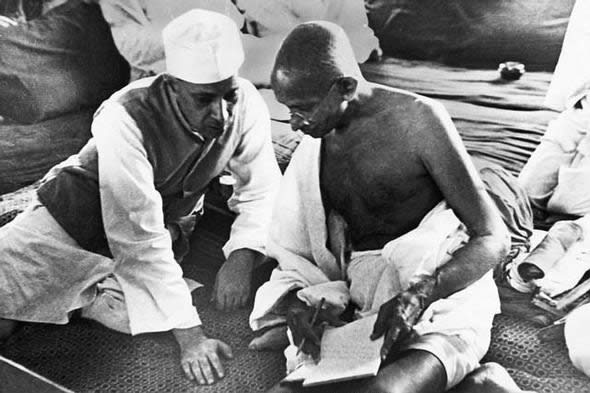
… 1942, Indian leader, Mohandas Gandhi (far right) was arrested in Bombay by British forces, launching the Quit India Movement. (photo credit) By 1942, Indians were divided over World War II, as the British Governor-General of India had unilaterally and without consultation entered India into the war. On July 14, 1942, the Indian National Congress, including Gandhi (and Jawaharlal Nehru, near right), passed a resolution threatening massive civil disobedience if their demands for complete independence from Britain were not heeded. On August 8, Gandhi told Indians to follow non-violent civil disobedience and to act as an independent nation. Less than twenty-four hours after Gandhi's speech, almost the entire Congress leadership was put into confinement.
(Prior August 9 posts are here and here.)

On August 8

On this day in ...
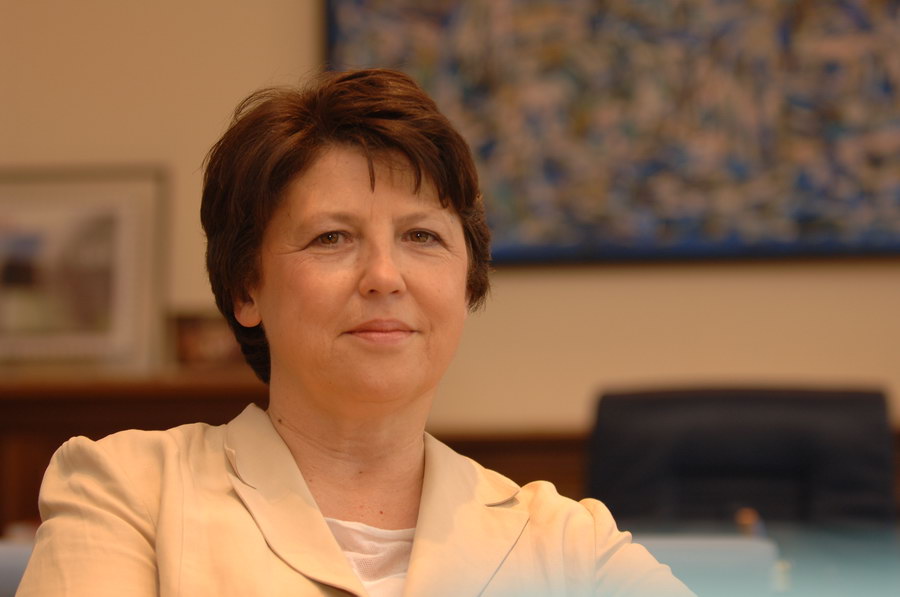
… 1950, Martine Aubry (left), current leader of the French Socialist Party, was born in Paris. (photo credit) As Minister for Employment and Solidarity from 1997 to 2000, she implemented the "Loi Aubry," reducing the full-time working week from 39 to 35 hours. During that time, she also introduced the universal health coverage initiative which allows basic access to health insurance for any person of French or foreign nationality residing in France for over three months on a regular basis who is not already covered by a social security scheme. She has been the mayor of Lille, a city in northern France, since March 2001 and president of the Urban Community of Lille since April 2008. She was selected as leader of the French Socialist Party last November.
… 1945, The U.N. Charter (prior posts), the foundational instrument of the international organization called the United Nations, was ratified by 50 countries at the at the conclusion of the U.N. Conference on International Organization in San Francisco, California. The Charter entered into force on October 24 of the same year, after the 5 permanent members of the Security Council and a majority of the other signatories ratified it. The Charter states that obligations to the United Nations prevail over all other treaty obligations. Today, there are 192 parties to the Charter; this animation shows the accession of member states, and changes in national borders, from 1945 to 2008. (credit)

(Prior August 8 posts are here and here.)

On July 31

On this day in ...
… 1936, the International Olympic Committee announced that the 1940 Summer Olympics were to be held in Tokyo. Two years later, however, the Japanese would renounce renounce the games due to the outbreak of the 2d Sino-Japanese War; they expressed hope that the 1944 Olympics might be held in Tokyo. The IOC conseuqently would award the 1940 games to Helsinki, Finland, the runner-up in the original bidding process. The Olympic Games would be suspended indefinitely following the onset of World War II, and would not resume until the London Games of 1948.
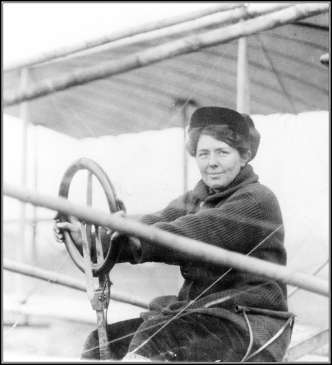
… 1913, Alys McKey Bryant (left) became the first woman to fly a plane in Canada. (photo credit) She flew in Minoru Park, Vancouver, as part of the entertainment for the Prince of Wales and his younger brother, the Duke of York, who would become King George VI. Bryant, an American, learned to fly after winning a job to perform in flight demonstrations. She is recognized as an Early Bird of Aviation, given that she piloted a plane before December 17, 1916. View a video clip of her here in front of her plane in 1913.

(Prior July 31 posts are here and here.)

On July 30

On this day in ...
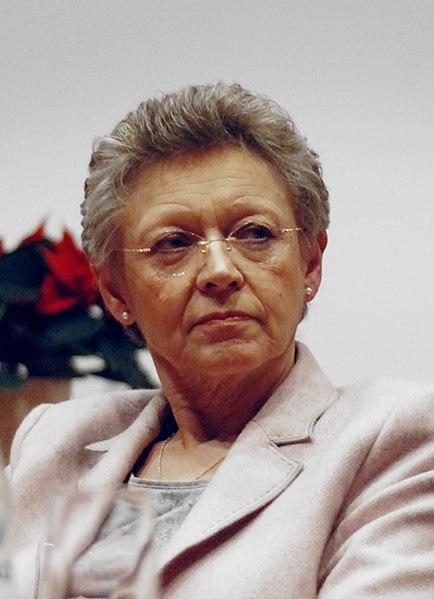
… 1947, Françoise Barré-Sinoussi (left) was born in Paris, France. (photo credit) In 1983, while researching retroviruses at Paris'Institut Pasteur , she discovered the HIV virus. Together with her boss, she was awarded the 2008 Nobel Prize in Physiology or Medicine for her discovery. She is currently the director of the Unité de Régulation des Infections Rétrovirales at the Institut. In 2009, Barré-Sinoussi wrote an open letter to Pope Benedict XVI to protes his statements that condoms are at best ineffective in combating HIV/AIDS.
… 1863, President Abraham Lincoln (right) issued the "eye-for-eye" order to shoot rebel prisoners under certain circumstances. (photo credit) Known as the Order of Retaliation, it stated:

It is … ordered that for every soldier of the United States killed in violation of the laws of war, a rebel soldier shall be executed; and for every one enslaved by the enemy or sold into slavery, a rebel soldier shall be placed at hard labor on the public works and continued at such labor until the other shall be released and receive the treatment due to a prisoner of war.

(Prior July 30 posts are here and here.)

On July 29

On this day in ...
… 1994 (15 years ago today), British chemist Dorothy Crowfoot Hodgkin (left) died in Ilmington, Warwickshire, England. Among her most influential discoveries was the structure of vitamin B12, for which she was awarded the 1964 Nobel Prize in Chemistry. In 1969, after 35 years of work, Hodgkin was able to decipher the structure of insulin, which she considered her greatest scientific achievement. She cooperated with laboratories active in insulin research and traveled to give talks about insulin and diabetes. Hodgkin also was concerned about social inequalities and stopping conflict: from 1976 to 1988, she was President of the Pugwash Conferences on Science and World Affairs, an international organization that works toward reducing the danger of armed conflict and global security threats. (credit for 1996 British stamp honoring Hodgkin as 1 of 5 “20th Century Women of Achievement")
… 1987, Indian Prime Minister Rajiv Gandhi (below, at left) and Sri Lankan President J. R. Jayawardene (below, at right) signed the Indo-Lankan Pact, also known as the Indo-Sri Lanka Peace Accord. (photo credit) The agreement aimed to end ongoing anti-insurgent operation by Sri Lankan forces in the Northern peninsula. Sri Lankan troops were to withdraw to their barracks, and the Tamil rebels (mainly the Liberation Tigers of Tamil Eelam, also known as the Tamil Tigers) were to disarm. India agreed to end support for the Tamil separatist movement and recognize the unity of Sri Lanka. Under the accord, India pledged military assistance to promote peace. The pact did not in fact put an end to conflict. Just this past May, the Sri Lankan military crushed Tamil Tiger rebels, in operations that, as IntLawGrrl Jaya Ramji-Nogales posted here and here, raised humanitarian law concerns.

(Prior July 29 posts are here and here.)

On July 28

On this day in ...
… 2005, Joan Finney (right), Kansas governor, died at age 76 in Topeka. In addition to being the state's 1st female governor, she was its 1st Roman Catholic Governor, its oldest governor, and also one of the few pro-life Democratic Governors of her time. (photo credit) Finney'd served as State Treasurer from 1975 to 1991, and then was elected Governor, becoming the 1st woman to defeat an incumbent Governor in a general election. In 1996, she ran unsuccessfully for the U.S. Senate seat vacated by Presidential candidate Bob Dole.
… 2005, The Irish Republican Army (Óglaigh na hÉireann in Irish) called an end to its 30-year-long armed campaign in Northern Ireland.
From its statement:
All IRA units have been ordered to dump arms.
All Volunteers have been instructed to assist the development of purely political and democratic programmes through exclusively peaceful means. Volunteers must not engage in any other activities whatsoever.
In September 2008, the 19th report of the Independent Monitoring Commission stated that the IRA was "committed to the political path" and no longer represented "a threat to peace or to democratic politics," and that the IRA's Army Council was "no longer operational or functional." (photo credit)

(Prior July 28 posts are here and here.)

On July 27

On this day in ...
… 1884 (125 years ago today), divorce was reestablished in France. Divorce first became legal in France on September 20, 1792. The divorce law, which was extremely liberal even by modern standards, reflected the French Revolution's commitment to the rights of the individual and its antipathy to Roman Catholicism. In 1816, with the rise of Napoleon and the return of Roman Catholicism, divorce again was abolished. Judicial separation became the only option. When France's aristocracy voted against the divorce bills proposed during this time, their votes were as much a rejection of the revolutionary heritage as of the social effects of divorce. The law passed on this day departed from the liberal model of 1792 and instead was conservative, based on Napoleonic law.
… 1740, Jeanne Baré (below right), botanist and explorer, was born. She was probably the 1st woman to have circumnavigated the globe. Disguised as a man, Baré enlisted as personal valet and botanical assistant to the expedition's physician and naturalist shortly before it sailed from France in 1766. (image credit) According to the account of the expedition's master, Baré proved an expert botanist who had a reputation for courage and strength, and who went cheerfully on the most troublesome excursions over rugged terrain. Her companions did not learn that Baré was a woman until they reached Tahiti; there she confessed that she knew when she boarded that the ship would go around the world, and that such a voyage had raised her curiosity.

(Prior July 27 posts are here and here.)

On July 26

On this day in ...
... 1909 (100 years ago today), began Tragic Week (in Catalan la Setmana Tràgica, in Spanish la Semana Trágica), a series of bloody confrontations between the army and the working classes of Barcelona and other cities of Catalonia, who were backed by the anarchists, socialists and republicans. (above, demonstration during this week, credit) In mid-July, military reserves had been called to active duty due to renewed military-colonial activity in Morocco. Many reservists were desperately poor and stridently anti-colonial Catalan workers who were not willing to risk their lives for the wealthy. Antiwar feeling ran high throughout the country, and resulted in a general strike throughout Spain. In Catalonia, the strike degenerated into riots, convent burnings, and street fighting. By the end of the week, the army and the police had lost 8 dead and 124 wounded, while 104 civilians were reported killed.
… 1906, Irena Morzycka-Iłłakowicz (right) was born in Berlin, Germany. She would become a Polish second Lieutenant of the National Armed Forces, a polyglot, and an intelligence agent. (photo credit) After the 1939 invasion of Poland by Germany, she joined the Polish resistance movement. She began service as an intelligence agent, and was assigned to conduct military, economic and information reconnaissance in Berlin, as she was a fluent German speaker. Between 1941 and 1942, the Germans destroyed her intelligence section, She was arrested by the Gestapo but was freed after being subjected to harsh interrogation. Later she returned to Warsaw and started working on the Soviet intelligence network in Poland. She was murdered under unknown circumstances in October 1943.

(Prior July 26 posts are here and here.)

On July 25

On this day in ...
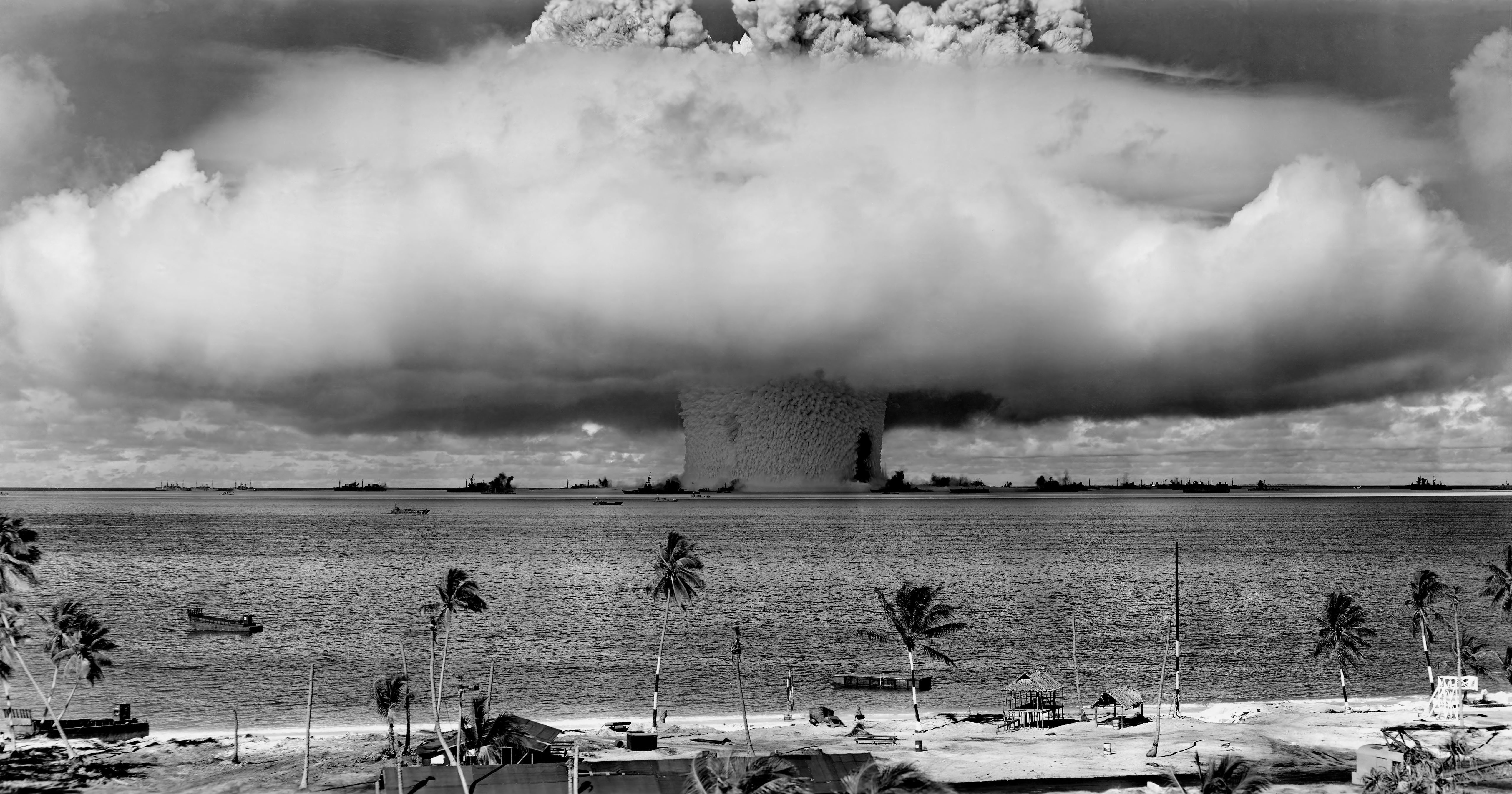
1946, the United States detonated an atomic bomb at Bikini Atoll in Micronesia in the first underwater test of the device. The impetus for the test, which was known as "the Baker explosion" (left), was President Harry S. Truman's December 1945 directive stating that joint testing of nuclear weapons would be necessary "to determine the effect of atomic bombs on American warships." Bikini was chosen because of its isolated location. (photo credit) In February 1946, the Bikinians agreed to leave the atoll temporarily so that the United States could begin testing atomic bombs for "the good of mankind and to end all world wars." The U.N. strategic agreement that gave trusteeship of the area to the United States also allowed further bombing in the area, and so precipitated the Bikinians’ dire health situation. Today, the people of Bikini remain scattered throughout the Marshall Islands and the world as they wait for the radiological cleanup of Bikini to begin in earnest.
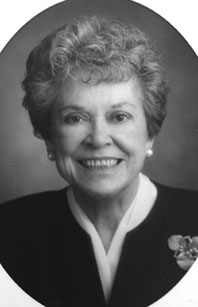
… 1905, Winona Grace MacInnis (right), Canadian politician and feminist, was born. She was the 1st woman from British Columbia elected to the Canadian House of Commons. She served as a Member of Parliament from 1965 until her retirement in 1974. During her tenure, MacInnis championed issues such as family planning, affordable housing, abortion rights and women's equality. In 1974, she was made an Officer of the Order of Canada in recognition of her service. In 1990, she was awarded the Order of British Columbia. She died in 1991. (photo credit)

(Prior July 25 posts are here and here.)

On July 24

On this day in ...
1959 (50 years ago today), during a visit to an American exhibition in the Soviet Union, U.S. Vice President Richard M. Nixon (near left) got into a tense discussion with Soviet leader Nikita Khrushchev (far left) about the merits of communism versus capitalism; their dispute became known as the "kitchen debate." (photo credit) The exhibition, which mirrored a Soviet exhibit that had taken place in the United States earlier that year, was intended to show Soviets facets of American life, such as homes, fashions, and cars. The discussion became heated after the 2 leaders were shown into the American model kitchen and Nixon said that even the washing machines, toasters, and juicers on display were common purchases American workers could afford, implying that the new gadgets were not readily available in the Soviet Union. Khrushchev replied,
'We have all these things in our new flats."
1920, Bella Abzug (right), American feminist, lawyer and politician, was born in the Bronx, New York. In the 1970s, Abzug served as the representative for the West Side of Manhattan for 3 Congressional terms. On her 1st day as a representative she called for an immediate withdrawal from Vietnam. She fought for national health insurance, money for day care centers, and housing. She cosponsored the Equal Rights Amendment, and she was one of the 1st members of Congress to call for the impeachment of President Richard M. Nixon. In the words of a colleague,
'She was one of the most exciting, enlightened legislators that ever served in the Congress.'

After leaving the House in January 1977, Abzug worked for women's rights for another 20 years, founding an international women's group that worked on environmental issues. She died on March 31, 1998. (photo credit)

(Prior July 24 posts are here and here.)

On July 15

On this day in ...
… 1927, the July Revolt in Vienna, Austria resulted the deaths of 84 protesters and 4 police officers. The political situation there at the time was fraught with tension because of antagonisms between the progressive, pro-labor Social Democrats and a powerful alliance of wealthy industrialists with fascist leanings. According a New York Times report,
The demonstration, which rapidly developed revolutionary tendencies, began after a Vienna jury, despite their plea of guilty, had acquitted three Fascists who last January shot and killed a Socialist and his child.
The announcement of the verdict led to a general strike intended to overthrow the government headed by Chancellor Ignaz Seipel. Protesters also set fire to the Justizpalast (above left), the building housing the Court of Justice that had delivered the incendiary trial verdict. (photo credit)
… 1943, Jocelyn Bell Burnell (below right), astrophysicist, was born Susan Jocelyn Bell in Belfast, Northern Ireland. (photo credit) In 1965, she began work on her Ph.D. at Cambridge University, assisting in the construction of a radio telescope that was to be used to track quasars. After several weeks of analysis, Bell noticed some marking that was too fast and regular to be a quasar. Further study identified the signals as coming from rapidly rotating neutron stars; they became known as pulsars. The paper announcing the discovery had 5 authors; Bell's name appeared 2d. Yet when 2 of the researchers were honored with the 1974 Nobel Prize in Physics, Bell was not among them. She is now a Fellow of the Royal Society, a British scientific association; a Dame Commander of the British Empire; and a Visiting Professor of Astrophysics at the University of Oxford.
(Prior July 15 posts are here and here.)

On July 14

On this day in ...

… 1789 (220 years ago today), citizens of Paris stormed the Bastille to release the seven prisoners and limited amounts of ammunition and weapons from inside it. (left, The Storming of the Bastille by Jean-Pierre Houël; image credit) These French acted in response to food shortages, the exorbitant spending of King Louis XVI and the royal family, and the unequal system of taxation, which rested heavily on the bourgeoisie. The Bastille, though nearly empty, was still a potent symbol of royal tyranny. The fall of the Bastille was a catalyst of the French Revolution, and it subsequently became an icon of the French Republic. The anniversary of this event, usually called Bastille Day in English, is celebrated annually in France as La Fête Nationale.
… 1858, Emmeline Pankhurst, political activist and leader of the British suffrage movement (previous posts), was born in Manchester, England. In 1903, Pankhurst and her daughter Christabel (prior post) founded the Women's Social and Political Union. The group became known for its militant brand of feminism, its members smashing windows and assaulting police officers to draw attention to the suffragist movement. Pankhurst, her daughters, and other members were sentenced to repeated prison sentences, during which they staged hunger strikes. In 1912 she said,
We are here, not because we are lawbreakers; we are here in our efforts to become lawmakers.
Just a few weeks before Emmeline Pankhurst’s death in 1928, Britain granted women the same voting rights as men. (photo of Pankhurst being arrested in 1914; credit)

(Prior July 14 posts are here and here.)

On July 13

On this day in ...
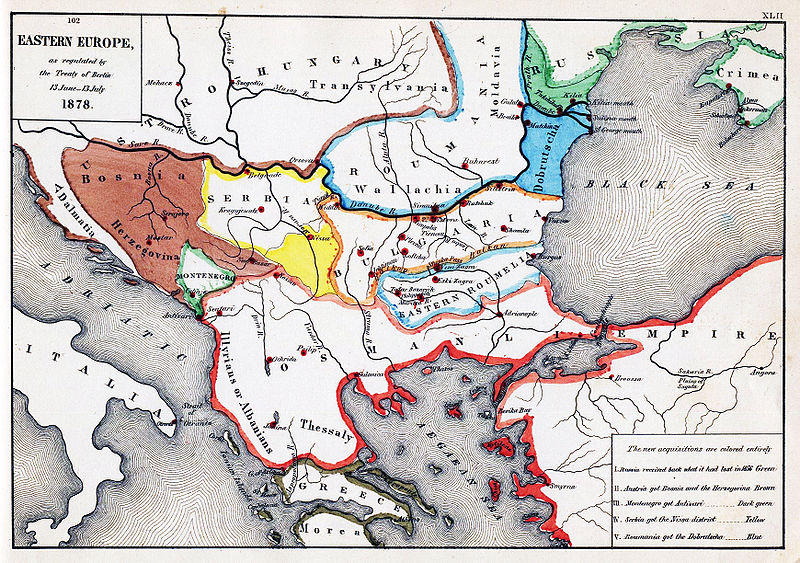
… 1878, the Treaty of Berlin, the final act of the Congress of Berlin, was signed by Britain, Austria-Hungary, France, Germany, Italy, Russia, and the Ottoman Empire. As a result, a Balkan crisis ended, and Serbia, Montenegro, and Romania became completely independent of the Ottoman Empire. Additionally, the treaty granted special legal status to some religious groups and served as a model for the minorities system that was subsequently established within the framework of the League of Nations. (credit for map of South-Eastern Europe after the Congress of Berlin)
… 1973, Alexander Butterfield, a deputy assistant to President Richard Nixon, revealed the existence of tapes to the special Senate committee investigating the Watergate break-in. Nixon had recorded almost every meeting in his White House offices since 1971 -- the tapes would prove vital in documenting that high-ranking officials had been involved in a cover up and other illegal activities. After a series of court battles, the Supreme Court unanimously ruled in United States v. Nixon (1974) that the President had to hand over the tapes; he ultimately complied. In recent weeks, many tapes have been made newly available to the public. (credit for July 30, 1973, cover of Newsweek)

(Prior July 13 posts are here and here.)

On July 12

On this day in ...
… 1926, Gertrude Bell (right) died. The England-born archaeologist, writer, and spy is an IntLawGrrls transnational foremother, thanks to guest/alumna Ursula Bentele. Bell was the first woman to graduate with a history degree from Oxford. She became fluent in Arabic, Persian, French, German, Italian, and Turkish. (image credit) The establishment of early 20th C. Iraq is attributed in part to her, so that she bears the nickname "uncrowned queen of Iraq." Bell also helped form the Baghdad Archaeological Museum, ensuring, against European wishes, that a collection of Iraq's antiquities would remain in that country. She is buried in Baghdad.
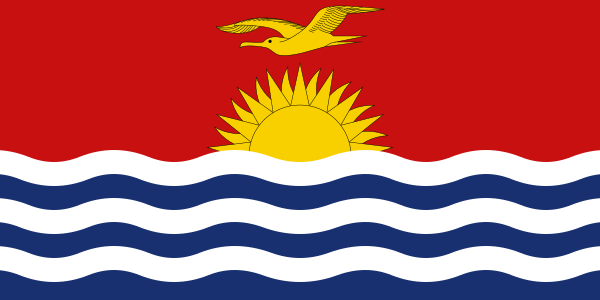
… 1979 (30 years ago today), the island nation of Kiribati (flag below left) became independent from Britain. In 1892 what were then called the Gilbert Islands had consented to become a British protectorate. They had gained self-rule in 1971, and were granted internal self-government by Britain thereafter. The island nation took the name Kiribati on its independence. In summer 2008, Kiribati officials asked Australia and New Zealand to accept Kiribati citizens as permanent refugees: it is expected to be the first country in which land territory disappears due to global climate change.

(Prior July 12 posts are here and here.)
 
Bloggers Team