Showing posts with label Ursula Bentele. Show all posts

On July 12

On this day in ...
… 1926, Gertrude Bell (right) died. The England-born archaeologist, writer, and spy is an IntLawGrrls transnational foremother, thanks to guest/alumna Ursula Bentele. Bell was the first woman to graduate with a history degree from Oxford. She became fluent in Arabic, Persian, French, German, Italian, and Turkish. (image credit) The establishment of early 20th C. Iraq is attributed in part to her, so that she bears the nickname "uncrowned queen of Iraq." Bell also helped form the Baghdad Archaeological Museum, ensuring, against European wishes, that a collection of Iraq's antiquities would remain in that country. She is buried in Baghdad.
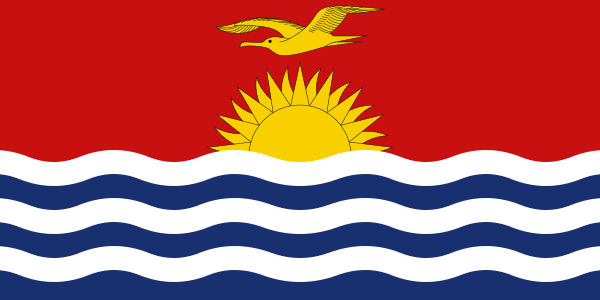
… 1979 (30 years ago today), the island nation of Kiribati (flag below left) became independent from Britain. In 1892 what were then called the Gilbert Islands had consented to become a British protectorate. They had gained self-rule in 1971, and were granted internal self-government by Britain thereafter. The island nation took the name Kiribati on its independence. In summer 2008, Kiribati officials asked Australia and New Zealand to accept Kiribati citizens as permanent refugees: it is expected to be the first country in which land territory disappears due to global climate change.
(Prior July 12 posts are here and here.)

Guest Blogger: Ursula Bentele

It's IntLawGrrls' great pleasure today to welcome guest blogger Ursula Bentele (right).
Professor of Law at Brooklyn Law School in New York, Ursula is a noted expert on capital punishment. Having argued numerous death penalty appeals, she was awarded the New York City Bar Association's Thurgood Marshall Award, given to attorneys who have represented those sentenced to death. As a participant in the National Science Foundation-funded Capital Jury Project, Ursula analyzed the findings of more than 1,000 persons who served on juries in capital cases. She is the author of Appellate Advocacy: Principles and Practice (4th ed., 2004) (with Eve Cary) and Capital Case Sentencing: How to Protect Your Client (1988). Ursula practiced at the Legal Aid Society before entering academia.
In her guest post below, Ursula discusses her most recent paper, an examination of the practice of using comparative analysis to interpret the South African Constitution. (That Constitution, incidentally, is among IntLawGrrls' Legal Wonders of the World. The subject of constitutional comparativism, moreover, is an issue of great interest to this IntLawGrrl, whose written on U.S. constitutional decisions here and here.) This paper joins her prior study on law in that country: Back to an International Perspective on the Death Penalty As a Cruel Punishment: The Example of South Africa, 753 Tulane Law Review 251 (1998).
Ursula dedicates her guest post to Gertrude Bell (1868-1926). Born to a wealthy British family, Bell (below left) was the 1st woman to earn a 1st-class degree in Modern History at Oxford University. She spent most of her life, after visiting an uncle serving as British envoy in Tehran, Persia, in 1892, traveling and working in the Middle East. Bell became fluent in Arabic, Persian, French and German, and her reports assisted the Arab campaign of T.E. Lawrence. Ursula writes: "Although controversy persists about her role in drawing the borders for the modern state of Iraq, I found inspiring, in addition to her great personal courage and independence, her ability to communicate and empathize with, and to learn from, people of strikingly varied backgrounds and beliefs." Janet Wallach's account of Bell's life in Desert Queen (2005) (left) is well worth a read. Bell -- who, incidentally, sailed on the SS Lotus 13 years before that steamship crashed and gave rise to a famous international law decision -- joins other transnational foremothers in the list at right, just below our "visiting from..." map.
Heartfelt welcome!

Constitutional comparativism in South Africa

(In this post, IntLawGrrls guest blogger Ursula Bentele describes her new paper, entitled "Mining for Gold: The Constitutional Court of South Africa's Experience with Comparative Constitutional Law")

Spurred by the attacks on references to foreign law in some recent United States Supreme Court opinions, particularly in the area of the death penalty that is my main scholarly interest, I decided to focus my next project on this topic. Having spent a sabbatical in South Africa in 1992, I had followed with admiration the creation and operation of that country’s new constitutional court, and I knew that the new Constitution of South Africa specifically authorized the court to look to foreign law. I was curious:
► How was the court using this provision?
► Did engagement with foreign law present the kinds of problems that critics here identified about the practice?
I was fortunate to have made connections over the years with several former and current justices of the Constitutional Court of South Africa (photo credit), who responded positively to my requests to discuss this topic. My article summarizes the face-to-face, audiotaped interviews I conducted with eight justices. In those interviews they discussed both the value gained from the practice of looking to foreign law and their ways of addressing the concerns expressed by American critics. In addition, the article provides detailed analysis of several cases containing significant references to foreign law, along with commentary from the justices on how particular opinions were enriched by examination of other courts’ treatment of the same issues.
Whether identifying universal norms, engaging in a dialogue to help clarify an issue, or gaining insight into comparable constitutional provisions, these justices see clear benefits from exploring the opinions of constitutional courts in other parts of the world. Yet they approach such outside sources with great care, fully aware of the potential hazards of transplanting foreign legal concepts and conscientiously avoiding selective citation only to favorable outside authorities. These findings bear on the current debate and, in a world where America’s stature as a leader in protecting human rights has been compromised by Abu Ghraib and Guantánamo, and where many other high courts engage in constitutional comparativism, suggest that the United States Supreme Court would do well by more active participation in the conversation.
 
Bloggers Team