Showing posts with label sovereignty. Show all posts

On April 9

On this day in ...
... 1949, the International Court of Justice decided its 1st case. Its judgment on the merits in Corfu Channel (United Kingdom of Great Britain and Northern Ireland v. Albania) held by a vote of 11 to 5 that Albania was responsible for destruction and loss of life stemming from the 1946 incidents in which British destroyers hit mines while traveling in Albanian waters. (map credit) By a vote of 14 to 2, the ICJ further declared that Britain's entry had not violated Albanian sovereignty. The ICJ ruled unanimously that its finding of responsibility constituted satisfaction, and so declined to award damages.

(Prior April 9 posts are here, here, here, and here.)

Sovereign immunity in Canada

(Thanks much to IntLawGrrls for inviting me to contribute this guest post on several important developments in human rights litigation in Canada)

One of the things that always strikes me in working with torture survivors and victims’ families is how consistently people say they want to help prevent others from experiencing the same trauma. They want something hopeful to result from such dramatic pain and loss, and often see the pursuit of justice as one of the means to achieve this.
That was certainly the message from Canadian-Iranian Stephan Kazemi as he digested the outcome of a key decision in his lawsuit against Iran for the torture and death of his mother, Zahra Kazemi (left). He could see that while the decision is a victory in terms of his own ability to proceed, it closes the door to most other cases in Canada for torture suffered overseas and undermines his broader goal.
Zahra Kazemi was a photojournalist from Montreal, Canada,, whose work sought to shed light on political and human rights issues, often highlighting the strength of women in situations of poverty and oppression. In 2003, she traveled to Iran during a time of demonstrations against the government, and with a press card took photographs of family members outside the notorious Evin prison who were seeking information about those thought to have been falsely imprisoned.
As a result, Zahra was herself detained, brutally raped and beaten. Her son in Canada, an only child in his twenties at the time, sought her return for treatment in Canada. This was denied, and she died of her injuries. No one was ever held accountable in Iran for Zahra’s torture and death. After other possible avenues to redress had been exhausted, a lawsuit was filed against Iran in Quebec Superior Court, on behalf of Zahra’s estate and of her son Stephan. The first hurdle in the case was the need to address the claims of the Government of Iran and the three named individual officials that they were immune from the lawsuit because of Canada’s State Immunity Act (SIA).
Passed in 1982, the SIA was intended to provide assurance to other governments that they would not be sued in Canada as they carried out their official or “sovereign” duties. A strong argument can be made that acts that are in clear contravention of international law – such as torture – cannot be considered “sovereign”. The SIA uses a restrictive approach and contains two exceptions to immunity – for commercial activities and for injuries suffered inside Canada. Unfortunately there is currently no exception in the legislation for torture or other serious violations of international human rights. The intervention of the Canadian Centre for International Justice, for which I serve as Executive Director, as a friend of the court in the Kazemi case was an attempt to remedy this.
The Quebec Superior Court took almost a year to issue its judgment on the state immunity issue. When it finally came in late January, it was a very mixed result. The court permitted Stephan's individual claims to proceed on the basis of the existing exception written into the SIA that eliminates immunity for injuries suffered inside Canada. It found that the nervous shock Stephan suffered as a result the mistreatment of his mother could fall under this exception. His individual part of the case will proceed and it will certainly be significant – the first trial of its kind in Canada.
However, the claims by the Estate of Zahra Kazemi were dismissed on the ground that the abuses Zahra suffered were only in Iran; she never suffered an injury in Canada. The court upheld immunity in those circumstances, rejecting arguments that immunity should not be permitted for torture and other serious human rights violations. The paradoxical result of the court's approach is that relatives in Canada of persons tortured or killed abroad may have a remedy while the persons who were actually tortured often will not.
Yet while the judgment is disappointing, there is still hope:
► Aspects of the case could be subject to appeal, and decisions about that will be made in the coming weeks.
► The judgment is also a clear invitation to Canadian Members of Parliament to act by passing a bill that is currently before them, intended to clarify that there should never be immunity for torture, war crimes, genocide or crimes against humanity. Bill C-483, a private member’s bill, was re-introduced in Parliament on March 3, 2010 by Liberal MP Irwin Cotler (right) with the support of MPs from the other three parties that hold seats: the Conservatives, New Democratic Party and Bloc Quebecois. The bill would deny immunity to countries and officials alleged to be responsible for torture, genocide, war crimes and crimes against humanity by creating a new exception to the general rule in the SIA that foreign governments cannot be sued in Canada. The exception would remove the key barrier to lawsuits involving allegations of these violations of human rights and humanitarian law, and create an important precedent as the civil courts of other countries also grapple with the issue of state immunity.
Further developments in the Kazemi case will be important to watch, as will progress on the parallel efforts at law reform through the legislature. It is my very deep hope that Stephan Kazemi will have the opportunity to offer this final tribute to the tremendous courage his mother demonstrated through her work and art.

Recognizing Palestine

One nation in the Middle East is seeking a change in status even as a neighboring state faces a change in regime.
The nation is Palestine.
Though some members of the Palestinian people are dispersed, many live in the West Bank and Gaza, the latter of which shares a border with Egypt, locus of recent political ferment about which we've posted.* (map credit)
In these Palestinian territories, the entity known as the Palestinian Authority governs by dint of circa-1990s international agreement. The Authority administers "within the framework of a semi-presidential multi-party republic, with a Legislative Council, an executive President, and a Prime Minister leading the Cabinet."
IntLawyers will see in the above paragraph 3 of the 4 traditional indicia of statehood:
1) Permanent population;
2) Defined territory; and
3) Government.
Not immediately apparent is this indicator:
4) Capacity to enter into relations with other states.
The declaratory theory of statehood would emphasize the word "capacity" in that last phrase, so that statehood would exist whenever an entity possessing Nos. 1-3 has the ability to effect No. 4. Yet in practice the constitutive theory holds sway. For if no fully recognized states themselves recognize the entity -- if no states actually enter into relations with it -- the entity cannot act as a state.
Put another way:

Not everything that looks like a state and quacks like a state is able fully to operate as a state.
(image credit) The trickiness of that 4th indicator has left scholars chewing for years over Palestine's status.
► Even without sufficient recognition by others, does it sufficiently possess the 4 attributes?
► Is it a "state" for purposes, say, of litigating before the International Court of Justice, by ICJ Statute Article 34(1) a forum open only to "states"?
► For purposes of referring a situation to the International Criminal Court, as the Palestinian National Authority in fact is attempting to do?
► Does it benefit -- and it is burdened -- by other rights and duties of states?
Developments may be shifting this debate.
In recent months, a series of states has recognized Palestine as an equal sovereign.
December began with the announcement, on the 3d day of that month, that Brazil "recognized the state of Palestine along the 1967 borders before Israel's seizure of the West Bank." The notice in response to a Palestinian request, Politico's Laura Rozen reported, "took Washington by surprise." She added:
Brazil was the last of the so-called BRIC nations [Brazil, Russia, India, China] to recognize Palestine. More than 100 countries, including almost all the African and Arab ones, had recognized it, "so it was the natural thing to do," a Brazilian official explained ....
Days later, Argentina said it would recognize Palestine.
Less than a week into the New Year came news that Chile had recognized Palestine.
A couple weeks ago, Russia reaffirmed its recognition.
Then came Peru, reportedly joining Bolivia, Ecuador, Guyana, and Uruguay in addition to South American countries already named.
Last week, Suriname added its name to the list.
Such news has compelled France to deny reports that it too was ready to recognize.
Yet elsewhere in Europe, there are calls for recognition and, in the case of Ireland, a late January upgrading of the Irish presence in Palestine to a "diplomatic mission," a step short of recognition. (France, Spain, and Portugal already had made the same move.) Palestine continues to seek wider European recognition. The European Union-U.N.-Russia-U.S. "Quartet" was expected to discuss Palestine "on the sidelines" of a conference in Munich this past weekend.
What of the United States?
As of mid-January, the U.S. official word for such recognitions was "premature." Given that more than half the world's countries appear already to have recognized, it's a word that may be meant to imply a policy change sooner rather than later.


* Not-unrelated aside: CNN reports that in recent days, West Bank rallies in support of pro-democracy protests in Egypt have been "shut down by Palestinian Authority security claiming the participants did not have the appropriate permits to hold such events."

On January 11

On this day in ...
... 1943, in what The New York Times called a "first concrete step toward the new era that is expected to follow the war in the Far East, with full restoration of China's sovereignty over her own soil," United States, Britain, and China signed treaties that ceded extraterritoriality and other special privileges that the 1st 2 countries had claimed over China (then flying the Republic of China/Nationalist flag at left) for the preceding hundred years. The Chinese-American treaty was signed in Washington; the Chinese-British treaty, by which Britain held on to its claims over Hong Kong, was signed in Chungking (today, the Sichuan province city of Chongqing).

(Prior January 11 posts are here, here, and here.)

On December 26

On this day in ...
... 1933, delegates at the 7th International Conference of American States, held in the capital of Uruguay, signed the Montevideo Convention on the Rights and Duties of States. Notable among its provisions were these:

ARTICLE 1
The state as a person of international law should possess the following
qualifications: a ) a permanent population; b ) a defined territory; c ) government; and d) capacity to enter into relations with the other states.
....
ARTICLE 3
The political existence of the state is independent of recognition by the other states. ...

The inter-American treaty thus embraced the declaratory theory of statehood, in contrast with the constitutive theory that makes other states' recognition the marker of statehood.
The Montevideo Convention entered into force exactly 1 year later; the United States was a charter member state. Among the 6 listed members of the U.S. delegation at Montevideo was Dr. Sophonisba Breckinridge (photo credit), a political scientist and attorney profiled in an earlier IntLawGrrls post.


(Prior December 26 posts are here, here, and here.)

On December 19

On this day in ...
... 2005 (5 years ago today), Armed Activities on the Territory of the Congo, the caption given a dispute between the Democratic Republic of Congo and Uganda, was issued. In this judgment the International Court of Justice decided, inter alia, that Uganda violated principles of non-use of force and non-intervention by acting militarily on Congolese territory and by supporting rebels. It also found Uganda responsible for breaching obligations under international human rights and international humanitarian law on account of the killings, torture, and other abuse that its troops committed against Congolese civilians, and its own failure to put an end to such crimes. In addition, the ICJ determined that Congo violated its Vienna Convention on Diplomatic Relations obligations toward Uganda on account of attacks that Congolese troops committed at Uganda's embassy in Kinshasa. Each country was held to owe reparations to the other.

(Prior December 19 posts are here, here, and here.)

On December 14

On this day in ...
... 1962, the U.N. General Assembly passed Resolution 1803 (XVII), "Permanent sovereignty over natural resources," which declared:
The right of peoples and nations to permanent sovereignty over their natural wealth and resources must be exercised in the interest of their national development and of the well-being of the people of the State concerned.

It then set forth principles framing the exercise of these rights. Among them was a right to nationalize property upon payment of "appropriate compensation"-- though not "prompt adequate and effective compensation," as the United States had urged. The resolution also promised "good faith" adherence to "[f]oreign investment agreements freely entered into by or between sovereign States," a formulation that omits investment contracts entered under colonialism. (photo credit)

(Prior December 14 posts are here, here, and here.)

Not liking Lotus in Kosovo

New sighting of old law is not always a welcome event.
Take glimpses of Lotus in Kosovo, for example.
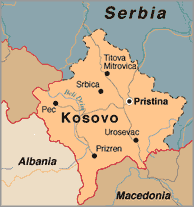
Kosovo, as detailed in yesterday's post, refers to the Advisory Opinion on Accordance with International Law of the Unilateral Declaration of Independence in Respect of Kosovo issued on July 22 at the Peace Palace (above) in The Hague, Netherlands. (photo credit)
About 7-1/2 months after the proclamation on February 17, 2008, of the Kosovo Declaration of Independence, the U.N. General Assembly asked the 15-member International Court of Justice: Is that declaration "in accordance with international law"?
"The answer to that question," the ICJ reasoned in ¶56 of its principal opinion, "turns on whether or not the applicable international law prohibited the declaration of independence." Below the surface of that phrasing, this reader caught sight of S.S. Lotus, the 1927 Permanent Court of International Justice holding that international law permits whatever it does not prohibit. Yesterday's post pointed to problems this methodology creates, and further noted that Lotus receives no citation on any of the principal opinion's 44 pages.
In point of fact, though the Kosovo judgment comprehends 9 additional, separate opinions, Lotus is discussed only once anywhere -- in the 3-page Declaration filed by Judge Bruno Simma (left).
Simma too saw Lotus lurking in ¶56. He did not like what he saw.
Adoption of the Lotus approach "reflects an old, tired view of international law," wrote Simma, whose many academic positions include former Law Dean at the University of Munich and current Visiting Law Professor at the University of Michigan. Simma's Declaration variously termed such reasoning "mechanical," "obsolete," "anachronistic, extremely consensualist," and "redolent of nineteenth-century positivism, with its excessively deferential approach to State consent." A onetime advocate before the Court in cases such as LaGrand, Simma lamented what he considered a missed opportunity for the ICJ "to move beyond" in Kosovo:

The Court could have considered the scope of the question from an approach which does not, in a formalistic fashion, equate the absence of a prohibition with the existence of a permissive rule; it could also have considered the possibility that international law can be neutral or deliberately silent on the international lawfulness of certain acts.
Simma imagined "a deeper analysis" of whether self-determination or remedial secession -- concepts raised in submissions during the pendency of the Kosovo case -- "permit or warrant independence (via secession) of certain peoples/territories." He continued:

[T]he Court could have delivered a more intellectually satisfying Opinion, and one with greater relevance as regards the international legal order as it has evolved into its present form, had it not interpreted the scope of the question so restrictively. To treat these questions more extensively would have demonstrated the Court's awareness of the present architecture of international law.
Forcing an act into a Lotus-like legal/illegal binary refuses to consider the act along a spectrum that includes other labels, such as "tolerated," "permissible," and "not illegal," that may be less clear yet, in Simma's view, clearly reflect the needs of present-day international law.
The future will tell whether Simma's succinct Declaration augurs something new in the ICJ, an institution whose 65-year-old Statute assumes -- as did the PCIJ in Lotus -- that international law primarily governs disputes between sovereign states, resoluble by litigation limited to states alone.


(Part 1 of a 2-part series; Part 1 is here)

Leviathan below Kosovo

Just below the surface of the recent advisory opinion on Kosovo lurks an international law leviathan.
Lotus may float again.
More than 80 years ago the Permanent International Court of Justice wrote in The Case of The S.S. Lotus, named after the steamship at right (prior post):

International law governs relations between independent States. The rules of law binding upon States therefore emanate from their own free will as expressed in conventions or by usages generally accepted as expressing principles of law and established in order to regulate the relations between these co-existing independent communities or with a view to the achievement of common aims. Restrictions upon the independence of States cannot therefore be presumed.

What followed from that passage is called the Lotus principle. Distilled to its essence by Lotus dissenter Bernard Cornelis Johannes Loder (right) (credit), a Judge who'd served as the PCIJ's President from 1922 to 1924, the principle is this:
[U]nder international law everything which is not prohibited is permitted.
As discussed here by Christopher Greenwood -- at that time an advocate before the PCIJ's successor, the International Court of Justice, and now a Judge on that Court -- the Lotus principle figured overtly in the ICJ's 1996 Advisory Opinion on the Legality of the Threat or Use of Nuclear Weapons. More subtle is the role that Lotus plays in the Court's most recent decision, the Advisory Opinion on Accordance with International Law of the Unilateral Declaration of Independence in Respect of Kosovo. That ICJ examination of the declaration proclaimed in Pristina on February 17, 2008 was issued on July 22. (See prior post and new ASIL Insight.)
Lotus is not cited once in the 44 pages of the principal opinion in Kosovo. Yet one hears loud Lotus soundings in Kosovo passages like these:

... the General Assembly has asked whether the declaration of independence was 'in accordance with' international law. The answer to that question turns on whether or not the applicable international law prohibited the declaration of independence. ...[¶56]

In no case, however, does the practice of States as a whole suggest that the act of promulgating the declaration was regarded as contrary to international law. On the contrary, State practice during this period points clearly to the conclusion that international law contained no prohibition of declarations of independence. [¶79]

Finding neither a general nor a specific international legal prohibition, the principal opinion left open space within which to act -- space that, in an unpublished analysis of U.S. counterterrorism policy, I have dubbed a "Lotus hole." (See n.114.) Combined with principles like territorial integrity and political independence -- guaranteed in Article 2(4) of the U.N. Charter -- the Lotus hole typically accords a state considerable freedom of action.
In Kosovo, however, that typical result took a curious turn.
Disputants in the 1927 Lotus case were France and Turkey, indisputably sovereign states. But the actors given freedom by the ICJ's newest ruling were not representatives of a State -- at least, the Court took pains in ¶51 to decline decision on "whether or not Kosovo has achieved statehood."
Nor did those actors comprise the Assembly of Kosovo, a body whose ultra vires actions are bound to be annuled by a U.N. Special Representative, head of UNMIK, the U.N. Mission in Kosovo. The Court held quite to the contrary. Labeling the actors "the authors of the declaration," the Court found their action "outside that order" set up by international civil institutions. [¶105]
That the declaration affected the territorial integrity of the State of Serbia mattered not, for the reason that the persons making the declaration were not agents of a state, and, as the Court wrote in ¶80,

the scope of the principle of territorial integrity is confined to the sphere of relations between States.
The Court reasoned, in brief, that the action was not prohibited by the international law which, to quote Lotus, "governs relations between independent States," and as a matter of that same international law, the "authors" thus were free to act.[¶ 121]
Call it a Lotus hole for nonstate actors.
One might see in this topsy-turvy result an end, for good or ill, to the Westphalian system. Before jumping to that position, however, consider downsides the declaration's authors face post-Kosovo.
The very finding of nonstate status leaves open the question of what, now, Kosovo is.
► Has it "achieved statehood"?
► May Kosovo, as the authors declared it would, "undertake the international obligations of Kosovo" [¶75], engaging in external relations as do other sovereign states?
► Or is Kosovo, rather, some interim entity, a collection of people who have proclaimed the place they inhabit to be independent, yet who cannot exercise all attributes of sovereignty?
Further navigation of international politics is required for closure of holes left open by this international law judgment.
As tomorrow's post will tell, one member of the Kosovo bench (credit) lamented this Lotus-driven result.


(Part 1 of a 2-part series; Part 2 here)

On July 27

On this day in ...
... 1990 (20 years ago today), a Declaration of Sovereignty was adopted by the Supreme Soviet of Belarus, naming the Republic of Belarus (map below)
a sovereign state established on the basis of the realization by the Belarusian nation of its inalienable right to self-determination, state-language status of the Belarusian language, and the supremacy of the people in the determination of its destiny.

Thus did the Belarus (prior posts) break from the Soviet Union with which it had been affiliated since the end of World War II. This declaration was among many in 1990, "The Year of USSR Independence and Sovereignty Declarations," as Helsinki Watch, predecessor of Human Rights Watch, called it.

(Prior July 27 posts are here, here, and here.)

New flash: Kosovo a state independent, per International Court of Justice

[FINAL UPDATE 8:42 p.m. EDT:] Now on the ICJ website is a pdf of the 40-plus-page Advisory Opinion on Accordance with international law of the unilateral declaration of independence in respect of Kosovo.
Voting on the ultimate opinion, that Kosovo's February 17, 2008, declaration of independence did not violate international law:
In favor:
ICJ President Hisashi Owada (Japan), as well as Judges Awn Shawkat Al-Khasawneh (Jordan), Thomas Buergenthal (United States), Bruno Simma (Germany), Ronny Abraham (France), Kenneth Keith (New Zealand), Bernardo Sepúlveda-Amor (Mexico), Antônio A. Cançado Trindade (Brazil), Abdulqawi Ahmed Yusuf (Somalia), and Christopher Greenwood (United Kingdom).
Against:
ICJ Vice-President Peter Tomka (Slovakia), as well as Judges Abdul G. Koroma (Sierra Leone), Mohamed Bennouna (Morocco), and Leonid Skotnikov (Russia).
Therein lies a rub.

* * *

[UPDATE 3 p.m. EDT:] Per this article, the 10-4 ICJ ruling did not go so far as to declare Kosovo a state:
[L]egal experts emphasized that while the court had ruled that Kosovo’s declaration of independence was legal, it had scrupulously avoided saying that the state of Kosovo was legal under international law, a narrow and carefully calibrated compromise that they said could allow both sides to declare victory in a dispute that remains raw even 11 years after the war there.
Website still inaccessible.

* * *

[1:04 p.m. original post:] So says this article respecting a just-issued Advisory Opinion on Kosovo, formerly a province of Serbia. Perhaps not surprisingly, the International Court of Justice website's overfull. More later.

An unfortunate detention incentive

(My thanks to IntLawGrrls for the opportunity to contribute this guest post)

In a surprising ruling with remarkably broad implications, the U.S. military has been told that it can seize suspected terrorists anywhere outside the United States, send them to the U.S.-run Bagram detention facility in Afghanistan, and thereby deprive them of the right to challenge their detention in a federal court.
Although the court didn’t address the issue, treating terrorism suspects this way is not supported by the laws of war as interpreted by the U.S. Supreme Court -- that Court has not authorized indefinite detention of individuals seized far from the battlefield.
The unanimous decision in Al Maqaleh v. Gates was issued last week by Judges David B. Sentelle, David S. Tatel, and Harry T. Edwards of the U.S. Court of Appeals for the District of Columbia Circuit. The case involves two Yemenis and a Tunisian, one of whom was arrested in Thailand and another in Pakistan, and all of whom were transported to Bagram by U.S. authorities and imprisoned there. Deemed “enemy combatants” when they were seized, they've been at Bagram, without charge or trial, for the past seven years. (Prior IntLawGrrls posts here and here.) (credit for U.S. Army photos made at BTIF, the Bagram Internment Theater Facility)
On its face, the situation of detainees brought to Bagram from outside of Afghanistan would seem to be similar to that of the detainees at Guantánamo Bay, who the Supreme Court in Boumediene v. Bush (2008) ruled do have the right to challenge their detention in a U.S. court.
► Both cases involve imprisoning foreign suspected militants captured abroad and brought to a U.S. military base for indefinite confinement. In Boumediene, the Supreme Court ruled that detainees do have habeas corpus rights because the U.S. has de facto sovereignty over its naval base in Cuba pursuant to a century-old lease. In Maqaleh, the appellate judges acknowledged that the United States appears to have similarly complete control over its Bagram facility in Afghanistan.
► As in Boumediene, the Court of Appeals also acknowledged in Maqaleh that the hearings the U.S. military was giving detainees at Bagram did not constitute due process; in fact, they were even worse than those provided at Guantánamo Bay. Although the hearings have improved over the past year under the Obama administration, the new Detainee Review Board system still doesn’t give Bagram prisoners the right to be represented by a lawyer or even to see the evidence against them. (Now detainees are appointed a “personal representative” who is not a lawyer, and may call witnesses who are “reasonably available” to testify. They still can’t see classified evidence, which may constitute the bulk of the government’s case against them.)
Still, although all this weighed in favor of the detainees’ demand for judicial review, the D.C. appeals court ultimately ruled last Friday that the “practical obstacles” of granting Bagram detainees habeas rights were just too great (p. 16), given that the prisoners are located in an active theater of war halfway across the world.
But should that determine whether the detainees are entitled to due process? Consider these responses:
► As American University Law Professor Steven Vladeck has pointed out, the only reason these detainees were in that theater of war is because the U.S. government had abducted them from other countries and sent them there. The ruling in Maqaleh thus creates a perverse incentive for the U.S. government to move every terror suspect seized anywhere outside the United States to a U.S.-run offshore detention facility, in order to imprison the suspect indefinitely and to evade judicial review.
► As Salon commentator Glenn Greenwald has put it, as a result of Maqaleh,
'the detainee's Constitutional rights depends on where the Government decides to drop them off to be encaged.'
If the detainees had been lucky enough to get sent to Gitmo, they might have had a federal court hearing by now.
Meanwhile, it’s not clear that the United States even has the legal authority to continue to detain anyone at Bagram.
The United States argues that its indefinite detention authority stems from the ongoing conflict in Afghanistan. But the war against the Taliban and al Qaeda is not an international armed conflict between nation-states. And there’s no legal authority for detention in a non-international armed conflict such as this one, where Afghanistan has its own domestic laws and criminal justice system. That may be why President Hamid Karzai during his most recent visit to the United States pressed President Obama to turn over the detention facilities to Afghan control as soon as possible.
The Obama administration says it eventually wants to do that.
But it says it doesn’t have enough confidence yet in the integrity and independence of the Afghan justice system to trust that the guilty will actually be imprisoned and the innocent will be allowed to go free. The United States has plans to train judges and lawyers at Bagram and to try to root corruption out of the justice system, at least in national security cases. But that effort has barely begun, and could take years to really have an impact. In the meantime, the U.S. is significantly expanding the prison facility.
Even if the Obama administration eventually does turn over Afghans arrested in Afghanistan to the local authorities, this question remains:
What to do with the rest of the prisoners – the ones who were the subject of the ruling in Maqaleh?
Some military officials want to keep the Bagram prison available for insurgents captured outside Afghan borders. U.S. military leaders in Afghanistan, meanwhile, fear that would inflame local tensions and make Bagram, like Gitmo, another recruiting tool for insurgents. Recent reports of prisoner abuse at Bagram only fuel that concern. But the prison expansion – which is reportedly adding three new detention housing units – suggest that plan has significant support.
International law is apparently not figuring much into these plans. If the laws of war had any say here, captured insurgents would be detained in the countries where they’ve been arrested or allegedly committed crimes. After all, the United States is not supposed to have detention facilities around the world – a point implicitly acknowledged when, upon taking office, President Obama publicly pledged to close most of them – from Guantánamo Bay to the CIA’s secret detention facilities around the world.
Bagram is the one prison he’s wavered on. Unfortunately, by its decision in Maqaleh the U.S. Court of Appeals in Washington has just handed Obama a big incentive to keep it open.

Haiti's Lesson to the World: Opportunity in Disaster

(My thanks to IntLawGrrls for the opportunity to contribute this guest post)

Today, Canada will host an emergency meeting in Montreal to draw a longer-term rebuilding plan for Haiti. On the table will certainly be a governance formula to assist Haitians on their road out of the current catastrophe and towards a viable stable and prosperous democracy. Haitian governance history has been fraught with disappointments since its independence in 1804, and more recently since the early 1990s. (credit for photo at left of Haiti's national palace post-earthquake).
A sustainable government is requisite as a care taker of not only ordinary and daily affairs for its citizens, but in Haiti’s case – an island geographically prone to nature’s onslaughts – also as a manager capable to face similar frequent challenges. At this backdrop, one wonders whether the current disaster and crisis, and the Monday international meeting, offer an opportunity to dust off the idea of international trusteeship and reconsider at least its partial revival in a fashion adapted to 21st century’s reality.
A long forgotten tool, the Trusteeship Council figures as one of the UN six main permanent organs. True, the historical circumstances prevailing at the time of the Charter’s adoption, namely post World War II decolonization, mostly no longer apply. Nevertheless, elements of the chief rationale underlying the two UN international trusteeship chapters XII and XII are as valid today as they were then. Equally true is that the trusteeship concept leaves a bad taste associated with past colonial misfortunes and coupled with fear of lurking neo-colonialism. To counter these concerns however, one should refer to the rich "acquis international", the extant body of international law accumulating since decolonization and designed to reassure newly independent states and peoples of their sovereignty, human rights, equality among the family of nations, to mention a few among the legal safeguards adopted since 1945. In this context, an international trusteeship concept, reconfigured and revamped, is worth giving a try.
Let’s face it. It is not a secret that Canadian assistance to Haiti was conceptualized to support the “establishment of a functioning state architecture” of a state loosely characterized as “fragile and failed”. As it currently stands, Haiti is not only fragile; it effectively lacks a functioning government, and some time will pass until such is re-instituted. Although legally sovereign, what is left after the earthquake is a government unable to discharge its duty of carrying out the attached jurisdiction. In a way, factually, Haiti’s sovereignty has been suspended. Some form of legal authority and institution must step in to fill the vacuum.
UN trusteeship is currently unavailable to Haiti because this system does not apply to members of the UN. Nevertheless, the spirit and the provisions laid down in both the UN Charter trusteeship chapters offer guidelines worthwhile embracing. These provisions are expressly instructed by Article 76.b. which lists among its objectives
to promote the political, economic, social, and educational advancement of the inhabitants of the trust territories, and their progressive development towards self government or independence as may be appropriate to the particular circumstances of each territory and its peoples and the freely expressed wishes of the peoples concerned and may be provided by the terms of each trusteeship agreement.

Some form of an “international partnership based trusteeship”, managed by a council made up of the Friends of Haiti and the participants in Monday’s meeting, and chaired by Haiti’s Prime Minister therefore offers a reasonable and workable governance solution.
Transitional internationally administered territories (TIAT) have featured as an important tool used by the UN in handling “governance gap” type of challenges in the Balkans, Africa, East and South East Asia, and Afghanistan. In many respects, they have mirrored the trusteeship concept quite closely. However, due to their ad hoc nature, knowledge gained from this valuable tool has been dispersed across UN bodies and documents, contributing members’ archives, academic publication, and the like. The benefit of an already extant UN permanent organ lies in its availability to operate as an institutional hub for such information and administrator for the purpose of drawing lessons for use in future similar cases. Therefore, while it will not be a surprise if TIAT becomes the next title of a post-earthquake formula for Haiti, it would be advisable to re-use the good offices of an already available UN trusteeship organ. The Trusteeship Council designated as custodian of a central library and home to assess, research, and educate about international trusteeship-like experiences is a first step towards rejuvenating and re-inventing this old institution.


Write On! Upcoming inaugural meeting of the Association for Law, Property & Society

(Write On! is an occasional item about notable calls for papers.) Syracuse Law Professor Robin Paul Malloy has spearheaded an effort to create the Association for Law, Property, and Society (ALPS), which will hold its first annual meeting on March 5-6, 2010, at Georgetown Law School in Washington, D.C. Save the date.
Topics will include all areas of property (real, personal, intangible, cultural, and intellectual property), and themes will center on Property and issues related to Entrepreneurship, Development, Identity, Takings, Sovereignty, Finance, Mortgage Markets, Securitization, Environment, Sustainability, Land Use, Patents, Copyright, Trade Secrets, Internet, and the concept of Home. While all types of paper topics are welcome and encouraged, two particular themes are being developed for book publications. These two themes are:
► Property, Identity, and Sovereignty; and
► Property and Entrepreneurship.
Individual paper proposals or session proposals for a panel composed of three to four paper participants are welcome (panels may include a chair and discussant as well). Send proposals or questions to Malloy at rpmalloy@law.syr.edu -- send him an e-mail and he will put you on the mailing list for e-updates on the ALPS Annual Meeting. More details to follow.)

P.S. on Colombia/Ecuador

Anyone whose interest's been piqued by posts on counterrorism activities in Colombia and Ecuador -- which IntLawGrrl Naomi Norberg criticized yesterday and for which Luz Estella Nagle articulated possible justifications in an April guest-post -- will want to look at a recent ASIL Insight on the subject.
The author is Tatiana Weisberg, formerly an Associate Professor of International Law at the Catholic University of Minas Gerais, Brazil, and now an LL.M. student at the Center for Advanced Legal Studies, Buchman Faculty of Law, Tel Aviv University, Israel. Her Insight focuses on the March 5, 2008, resolution by the Permanent Council of the Organization of American States that Colombia's entry into Ecuador a week earlier

constitutes a violation of the sovereignty and territorial integrity of Ecuador and of principles of international law ...

With some understatement, Weisberg observes that the OAS resolution "is in tension with the declared policy and practice on this issue of the United States, an OAS Member State, and with the UN Security Council’s post-September 11th willingness to consider that terrorist violence can trigger the right to use force in self-defense."

(credit for map of Colombian incursion -- courtesy of The Economist)


Bloggers Team