Showing posts with label Portugal. Show all posts

On December 10

On this day in ...
... 1945 (65 years ago today), Gabriela Mistral addressed a banquet at City Hall in Stockholm, where earlier in the day she'd been awarded the Nobel Prize in Literature. She stressed the bonds between Sweden and her own country:

As a daughter of Chilean democracy, I am moved to have before me a representative of the Swedish democratic tradition, a tradition whose originality consists in perpetually renewing itself within the framework of the most valuable creations of society. ...
At this moment, by an undeserved stroke of fortune, I am the direct voice of the poets of my race and the indirect voice for the noble Spanish and Portuguese tongues. Both rejoice to have been invited to this festival of Nordic life with its tradition of centuries of folklore and poetry.
Mistral (prior posts), who'd been born Lucila Godoy y Alcayaga 56 years earlier, was not only a renowned poet, but also a diplomat, serving on League of Nations cultural committee and as a Chilean consul in Italy, Spain, and Portugal. (credit for photo of 5,000-peso note honoring her) She's the transnational foremother of IntLawGrrl Naomi Roht-Arriaza.

(Prior December 10 posts are here, here, and here.)

On December 8

On this day in ...
... 1970 (40 years ago today), the U.N. Security Council "strongly condemn[ed]" Portugal for its attack against Guinea 2 weeks earlier, mounted from the Portuguese colony of Guinea-Bissau. The attack caused "loss of life and extensive damage," according to Resolution 290. The Council insisted that Portugal compensate Guinea for these injuries, and urged U.N. member states not to provide Portugal with assistance in its military intervention. The vote on the resolution was 11 ayes and 0 nays. Abstaining were 4 countries: Britain, France, and the United States, all permanent Council members, plus Spain.

(Prior December 8 posts are here, here, and here.)

Enforcing Roma Rights

Last month, the European Roma Rights Centre (ERRC) filed a complaint against Portugal under the Revised European Social Charter, charging violations of the rights to housing and non-discrimination as well as the rights of the family to social, legal, and economic protection and the right to protection against poverty and social exclusion. The Charter, originally drafted in 1961 and revised in 1996, protects a broad range of negative and positive social and economic rights that are not fully covered by the European Convention on Human Rights.
The Charter has been signed and ratified by most European nations, from Albania to the United Kingdom, and fourteen states, including Portugal, have accepted its collective complaint procedure. This mechanism allows certain trade unions and international NGOs to file against member states claims that are adjudicated by the European Committee of Social Rights (ECSR), a group of fifteen independent experts. Where the Committee of Social Rights finds a violation of the Charter, the Council of Europe's Committee of Ministers adopts a recommendation to the relevant State Party. While the Committee of Social Rights is far from attaining the stature of the European Court of Human Rights, it is increasingly being used as a venue for vindicating social and economic rights in Europe. Sixty-one complaints have been filed through the collective complaint procedure since its creation in 1998, with nearly half of those complaints filed since 2006.
The European Roma Rights Centre's current claim against Portugal is based on
problems of access to social housing, substandard quality of housing, lack of access to basic utilities, residential segregation of Romani communities and other systemic violations of the right to housing. . . compounded by a lack of practical access to effective legal remedies for redress.
This is the seventh complaint filed before the Committee of Social Rights by the Centre, which has presented similar housing claims against Bulgaria, France, Greece, and Italy, creating an ECSR jurisprudence on which it can draw. Moreover, the ERRC "aims to establish beyond any doubt that the right to housing, particularly concerning vulnerable groups such as Roma, is firmly entrenched in international law" by drawing from existing treaty law, including the European Convention on Human Rights, and relevant soft law.
The ERRC's strategy and the ECSR itself present interesting models for the enforcement of social and economic rights of migrants, though it's hard to imagine the creation of a similar mechanism to which the United States would submit itself. In the wake of frightening state experiments with immigration law, though, it's worth considering how we might start taking the first steps towards creating an equally robust human rights regime right here in North America. A distant dream, but one worth pondering nonetheless.

Dealing with Corruption in Haiti

Seconds after the Chile tremors subsided, the comparisons began: Haiti suffers a category 7.0 earthquake and well over 200,000 die (President Rene Preval recently has been predicting 300,000 as the final toll ). Chile experiences a category 8.8 quake--roughly 500 times stronger than Haiti's--and the death toll hovers at less than 200. In the last few days, I have read multiple variations on this theme, and you know what surprises me? That anyone is surprised.

The very idea that a middle income country like Chile, with its strong building codes, low level of perceived corruption, and responsive government could be compared with Haiti is just ludicrous. Chile is a Latin American "dream" poised to become the first OECD member from that region, and Haiti is widely regarded as the poorest country in the Hemisphere. Is it so surprising that their experience of any catastrophe would be vastly different? (Not to mention, of course, that Haiti's earthquake centered around its densely populated capital, while Chile's hit its more remote outer region.) It seems to me the more relevant question is this: How do we help prepare Haiti for the next inevitable crisis?

Experts credit Portugal's 1755 earthquake--which demolished the city of Lisbon, killed as many as 40,000 residents, and precipitated multiple fires and a devastating tsunami--as "the first modern disaster." Citizens demanded change in the way government prepared for and responded to natural disasters. As a result, Portugal reconstructed Lisbon with the zeal of the newly converted: a scientific inquiry into the mechanics of earthquakes was launched, strict zoning rules were passed, and Portugal became the first country in Europe to adopt building codes for seismic activity. In short, Portugal's 1755 catastrophe became the vehicle for change. Is that likely to happen to Haiti as well? Probably not.

The US Geological Survey recently predicted even more seismic activity in the region. There is no question that Haiti (and the island of Hispanola) is likely to experience further significant tremors. But rather than allowing the information to galvanize them into action, the Haitian government is engaged in more of its business-as-usual antics. The Washington Post reported President Rene Preval interrupted a high-level meeting with Admiral Mike Mullen, Chairman of the Joint Chiefs of Staff, to chide Post reporters for publishing stories of government corruption. "There is no corruption here," Preval reportedly declared. "We have a high sense of morality." Preval is either woefully uninformed or simply unwilling to tackle a serious problem that threatens Haiti's future.

Transparency International ranks Haiti 168 out of 180 countries in terms of the level of perceived corruption of the country's public sector (Chile is ranked 25). Preval might believe there is no corruption, but Haiti's international business partners would respectfully disagree. Indeed, even as Preval was adopting his "no corruption here" mantra, stories abounded of Haitian customs officials demanding humanitarian organizations pay exorbitant "taxes" on donated goods entering the country to aid the millions of displaced Haitians. It seems even in the midst of this epic crisis, the Ministry of Economy and Finance found the time to adopt a new set of procedure for getting supplies into the country: Organizations now were to sign over the goods to the Haitian Department of Civil Protection, which would review their request to get a tax exemption before releasing the goods. The rationale for this new, onerous procedure? To prevent businesses from sneaking in goods tax free under the banner of relief agencies. Ministry officials quickly denied they were taxing humanitarian goods. But for organizations who have volunteered a week or two of service to Haiti, the burdensome new procedures simply ensure the work they went to do would not get done.

There is no great mystery here. We know how to rebuild Haiti's infrastructure to avoid the kind of catastrophic outcome that occurred on January 12: Adopt strong building codes and land use planning procedures that avoid building in hazardous areas, and appoint government agents to ensure compliance. Chile (and Portugal) has shown us the way. But none of that is likely to happen until Haiti's pervasive corruption is resolved . . . or at least circumvented.

Why not appoint an authority responsible for overseeing Haiti's rebuilding effort (I admit here that I am building on a proposal offered up by another at a wonderful conference on Haiti hosted by California State University Sacramento last week)? The authority would be composed of Haitian government officials, to be sure, but also Haitian businesses and citizens, NGOs, and international donors, all of whom have an ultimate stake in the outcome. Who would demand that Haiti establish such an authority? Certainly the Haitian people should, but Haiti's government is not susceptible to the popular will. The international community, which is bringing in millions of dollars to sustain Haiti, does have the clout to demand the creation of such an authority. We should use it.

The Haitian earthquake is a catastrophe of unfathomable proportions. It should serve as a galvanizing force for change in the way Haiti has functioned. This cannot happen without a fundamental shift in the way Haiti does business. We need change.

On December 14

On this day in ...

... 1955, by Resolution 109, the U.N. Security Council admitted 16 new member states to the United Nations. Simultaneously admitted were Albania, Austria, Bulgaria, Cambodia, Ceylon (today, Sri Lanka), Finland, Hungary, Ireland, Italy, Jordan, Laos, Libya, Nepal, Portugal, Romania, and Spain. The vote was 8-0-3; abstaining were Belgium, China, and the United States.

(Prior December 14 posts are here and here.)

On April 18

On this day in ...
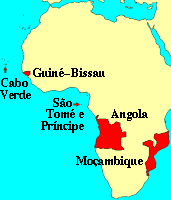
... 1961, in Casablanca, Morocco, national liberation groups in lusophone Africa (map credit) -- Angola, Cape Verde, Guinea-Bissau, Mozambique, and São Tomé and Príncipe -- joined together to form tThe Conference of Nationalist Organizations of the Portuguese Colonies, or CONCP. This a common front in opposition to Portuguese rule disbanded in the mid-1970s as the affected colonies won independence.
... 1988, a 3-judge Israeli court found John Demjanjuk guilty of war crimes that it ruled he had committed while a prison guard for the Nazis at the Treblinka death camp in Poland during World War II. (Prior IntLawGrrls post.) The capital case against the Ukraine-born man said once to have been known as "Ivan the Terrible" eventually was thrown out for lack of sufficient evidence, and the defendant then returned to the United States, where he'd worked in an Ohio car factory before retirement and before his 1986 extradition to Israel. Proceedings against him did not end, however; early in this month a U.S. immigration judge stayed a deportation order that if executed would result in the transport of Demjanjuk, now 89 years old, to Germany to face possible prosecution. Then, this Tuesday, the U.S. Court of Appeals for the Sixth Circuit issued an emergency stay pending review of Demjanjuk's challenge to transfer on grounds that he is too ill. (David Shankbone photo credit)

(Prior April 18 posts are here and here.)

Refuse/Refuge

This dispatch from Le Monde will sober anyone hoping that the news of France's willingness to take in a Guantánamo detainee opened the way for global resettlement of inmates who cannot go home again:
According to the Paris paper's special correspondent in Luxembourg, French President Nicolas Sarkozy "did announce that 'France was ready to accept an ex-detainee from Guantánamo,'" but with the intention of "'putting him in prison.'" That kind of "acceptance" would mirror the fate of the 6 ex-detainees who stood trial in France after their release from Guantánamo in 2004 and 2005.
Still more sobering is the reporter's observation that only 4 other countries besides France -- Britain, Italy, Portugal, and Spain -- have shown any such inclination. "For the most part," he wrote, "the ministers of interior and justice from the 27 European Union countries meeting in Luxembourg showed reticence to accept ex-detainees."
No doubt complicating diplomatic efforts at resettlement is the United States' unwillingness so far to take in any detainees itself. Last October, as we posted, the U.S. District Court ordered the release into the United States of 17 Uighur detainees, Chinese Muslims whom the government admits are not enemy combatants but who are likely to be persecuted if returned to China. But the Court of Appeals for the District of Columbia Circuit overturned that decision in February, and so yesterday the matter found its way to the U.S. Supreme Court. The petition for certiorari in Kiyemba v. Obama raises the critical issue, as SCOTUSblog reporter Lyle Denniston's superb analysis points out, of whether it is "unconstitutional to continue to hold in some form of custody an individual who has been found not to be dangerous and who has not been charged with any crime." The answer to that question would affect not only the Uighurs, but potentially many more of the 241 persons remaining at Gitmo. (Indeed, if last week's opinion extending Boumediene to 3 Bagram detainees survives appellate review, its scope could be even greater.)
One hopes that the new administration will not wait for the Court to act, but rather will decide on its own to accept the Uighurs, as Attorney General Eric Holder hinted the United States might do. As a policy matter, this could make other detainees more welcome in more other countries, as IntLawGrrl Beth Van Schaack posted. As a legal matter, it would comport with our traditions, as I've written in a New York Times Room for Debate exchange:

These men cannot expect safety back home in China. No other country has welcomed them. It is time for the United States to do just that – to grant the Uighurs asylum within U.S. borders. We should learn that this result is a foreseeable consequence of denying such persons their rights under the law.

On March 6

On this day in ...
... 1480, Spain ratified the Treaty of Alcáçovas, which had been concluded in that Portuguese town on September 4 of the previous year. Thus entered into force this bilateral agreement, by which Portugal gave up its claim to the Castillian throne and to the Canary Islands off the coast of Africa. In exchange, Spain "recognized the Portuguese primacy in Azores islands as well the North and West African coasts."

... 1944 (65 years ago today), at Gisborne, on the east coast of New Zealand’s North Island, Kiri Te Kanawa was born. Of Maori ancestry, she was adopted by an Irishwoman and a Maori man. In 1965, having won 2 singing contests, the soprano "was accepted without audition to study at the London Opera Centre." As is evident from the Nozze de Figaro aria below, she became an international operatic star -- a genuine diva. In sang a solo at the 1981 wedding of Prince Charles to Princess Diana. In 1982 Queen Elizabeth II named Te Kanawa a Dame of the British Empire. (photo credit)


(Prior March 6 posts are here and here.)

On January 18

On this day in ...
... 1930, Maria de Lourdes Pintasilgo (left), a "pioneer feminist," was born in Abrantes, in Portugal's Tagus Valley. Having "she opted for a 'man's subject' so as to demonstrate the abilities of women," in 1953 she earned an engineering degree in industrial chemistry. She was active in Catholic women's political groups beginning in her university days, and served as the 1st woman on an advisory group to the country's long-in-power dictatorship. But after that dictatorship ended in 1974, Pintasilgo served in the new government, 1st as Minister for Social Affairs, then as UNESCO minister, and, in 1979, as the 1st woman Prime Minister of Portugal -- and the 2d woman to hold such a post anywhere in Europe. Her later bid for the presidency having failed, she served as a Member of the European Parliament for 2 years in the late 1980s. Pintasilgo, who died in Lisbon in 2004, once said of her male colleagues:
'You know, they never forgive me for having dared to enter their world.'

... 1689 (320 years ago today), Charles-Louis de Secondat, Baron de Montesquieu, known through history simply as "Montesquieu," was born at his family's chateau near Bordeaux, France. Following education and marriage he launched a career as "one of the great political philosophers of the Enlightenment." An enduring work is his 1751 treatise De L'Esprit des Lois (Spirit of the Laws) (right). In it Montesquieu articulated a theory of separation of powers that -- in an early instance of comparative constitutionalism -- inspired the framers of the U.S. Constitution and bedevils commentators on the powers of the U.S. President in this new millennium.


On November 1


... 1998 (10 years ago today), at Abuja, Nigeria, a peace agreement was signed by the government of Guinea-Bissau and a "self-proclaimed Military Junta" led by the former Army Chief of Staff for the country. The agreement ended a civil war begun 4 months earlier. But "security concerns" remained in the West African state (left), which had been a Portuguese colony until the early 1970s.

... 1848 (160 years ago today), 12 women entered the New England Female Medical College, the 1st of its kind, established by a man who objected to male physicians attending to women at childbirth. A quarter-century later the Boston-based college merged with Boston University School of Medicine, making it 1 of the world's 1st coeducational medical schools. (image credit)

On September 24

On this day in ...
... 1973 (135 years ago today), a movement begun 17 years earlier culminated in the African Party for the Independence of Guinea and Cape Verde unilaterally declaring Guinea-Bissau and Cape Verde independent from Portugal. De jure independence was achieved a year later for the each states -- Guinea-Bissau (top flag), located on the mainland of West Africa, and Cape Verde (bottom flag), a group of islands off the West African coast.
... 1852, Mercedes de Velilla (left) was born into a literary family in Sevilla, Spain. She herself would become an acclaimed poet; her principal works were published in collections entitled Ráfagas (1873) and Poesías, the latter published soon after her death in 1918.

On August 30

On this day in ...
... 1943 (65 years ago today), during World War II, in its version of an Anglo-American "Declaration on German Crimes in Poland," the U.S. Department of State detailed allegations that Polish civilians were being killed, displaced, and sent to work camps in Germany, then stated: "The United States Government reaffirms its resolve to punish the instigators and actual perpetrators of these crimes."
... 1999, "the population of East Timor voted overwhelmingly for independence from Indonesia," which had invaded the country 9 days after it declared its independence from Portugal in 1975. The country, officially known as the Democratic Republic of Timor-Leste, occupies the eastern half of an island within the Indonesian archipelago. (map credit)

On July 12

On this day in ...

... 1867, acrobat Maria Spelterina became the only woman to walk across Niagara Falls on a tightrope. The 23 year old from Italy "walked backwards, put a paper bag over her head, and wore peach baskets on her feet to inject some drama into her crossings." (photo credit)

... 1975, São Tomé and Príncipe gained independence from Portugal; Manuel Pinto da Costa became its 1st president of the island state (flag at right) located in the Gulf of Guinea off the coast of Western Africa.

About Maria Velho da Costa

IntLawGrrls' recent post on Portugal's "Carnation Revolution" of April 24, 1974, prompts me to make this post about a leader in Portugal's transformation.
She is Maria Velho da Costa (right), one of “Three Marias” whose collection of feminist, anti-fascist writings was published in the last years of the Salazar-Caetano dictatorship in Portugal. (The other 2 are Maria Isabel Barreno and Maria Teresa Horta.) As detailed here their work, entitled The New Portuguese Letters (1972), attracted international attention when the Portuguese government banned and confiscated all copies and arrested its authors for “outrage to public decency” and “abuse of freedom of the press.” The authors were acquitted two years later, shortly after the “Carnation Revolution” that put an end to the forty-year Salazar-Caetano dictatorship.
Since that time, Velho da Costa, who was born on June 26, 1938, in Lisbon, has devoted herself to filmmaking projects.

On April 25

On this day in ...
... 1983 (25 years ago today), Samantha Smith, a 10 year old schoolgirl from Maine, received a letter in which President Yuri Andropov invited her to visit the Soviet Union. His letter came in response to hers of a few months earlier, in which Samantha (left) wrote, in part:
I have been worrying about Russia and the United States getting into a nuclear war. Are you going to have a war or not? If you aren't please tell me how you are going to not have a war.

She and her parents made the trip that summer, and she became known as a child emissary for peace. She and her father died in a plane crash in 1985. (photo credit)
... 1974, a military coup took place in Portugal. What came to be known as the Carnation Revolution brought to an end a dictatorship that had lasted for 50 years, longer than any other in Europe. The people of Portugal (flag at right) celebrate this date as Freedom Day.

On this day

On April 7, ...
... 1970, Josina Machel (left), a fighter for the Liberation Front of Mozambique (FRELIMO), died in a gun battle with Portuguese troops. She was the wife and "comrade-in-arms" of Samora Machel, the president of FRELIMO, who would become the 1st President of Mozambique when it gained its independence in 1975. (He later married Graça Machel; as we've posted, she later would become a U.N. Special Rapporteur on the plight of child soldiers.) In Josina's honor Mozambicans observe Women's Day every April 7.
... 2003 (5 years ago today), in Virginia v. Black, the U.S. Supreme Court affirmed convictions of 2 persons charged with violating a state's hate crimes law, which prohibited "any person … with the intent of intimidating any person or group … to burn … a cross on the property of another, a highway or other public place," and further provided that cross burning "shall be prima facie evidence of an intent to intimidate a person or group." Based on a principal opinion by Justice Sandra Day O'Connor (right) a divided Court rebuffed defendants' claim that the statute violated the free speech guarantees of the 1st Amendment.

Tasers and torture

Even as some in the United States, including its Attorney General, ponder whether practices like waterboarding are "torture," the 10-member U.N. committee that monitors compliance with the Convention Against Torture attached that label to a different practice: It declared Friday that use of the stun-gun weapons known as the Taser "causes acute pain, constituting a form of torture."
Earlier in the week, in Maryland, the NAACP had called for a moratorium on use of the weapons. And in the last month and a half 8 persons, in Poland, Canada, and the United States, have died after police used Tasers on them. The manufacturer, which offers cybersurfers a "virtual tour" of the TaserX26 (above), maintains that the deaths were caused by pre-existing medical problems, and not by "the low-energy electrical discharge of the Taser" of its product; to this, CBS News retorted: "That's 50,000 volts."
The recent fatalities did not directly give rise to the declaration that Taser use constitutes torture; rather, that occurred in Concluding Observations of the Committee Against Torture after reviewing the 4th periodic report of Portugal, which has bought the weapons for its police forces. According to a U.N. release, when an expert "reiterated concern" about this, the state party responded as follows:

Portugal strictly observed the principles of proportionality and reasonableness in the police use of firearms, and existing rules on coercive measures would continue to apply. Twenty taser weapons had been bought and they would only be issued to very specific units dealing with the most serious crimes where there was danger to human life. Prison security services were still evaluating the specific controls that would apply to the use of these weapons. All use of firearms was governed by strict procedures. There had been recent evaluations by the Inspectorate General of Internal Administration and the police were strongly discouraged from using firearms in car chases.

Portugal seems to be following a global trend: in addition to the countries named above, the same weapon already is used by "some 3,000 police officers and gendarmes in France," and expansion of its use to thousands more is contemplated.
Portugal's assurances apparently did not impress Committee experts, however. Page 4 of its Concluding Observations, by my translation from the French, the only version yet available on the web, states:

Utilization of "TaserX26" weapons
14. The Committee is greatly concerned about the State party's recent acquisition of "TaserX26" electric weapons, to be distributed to the Lisbon Metropolitan Command, the Intervention Corps, the Special Operations Group, and the Personal Security Corps. The Committee is worried that the use of these weapons provokes an acute pain, constituting a form of torture, and that in certain cases, it could even cause death, as has been revealed in reliable studies and by recent, actual events.

The Committee then expressly invoked 2 articles of the Convention Against Torture, concluding ¶ 14 in boldface, as follows:

The State party ought to consider renouncing the use of "TaserX26" electric weapons, the consequences of which to the physical and mental state of targeted persons could be of a nature that violates Articles 1 and 16 of the Convention.


The reaction of Portugal -- not to mention other states parties to the Convention -- to this exhortation to abandonment of the weapon remains to be seen.

On September 20, ...

.... 1973, Carol C. Laise became the 1st woman Assistant Secretary in the U.S. State Department. Appointed Assistant Secretary of State for Public Affairs, she held the post until March 27, 1975, then served as the 1st woman Director General of the Foreign Service (1975-1977). Other government posts included the U.S. Civil Service Commission; State Department international relations officer in Indian and South Asian affairs (1948 to 1956); and U.S. Ambassador to Nepal (1966-1973). In 1991, she died at age 73, having survived her husband, diplomat Ellsworth Bunker.
... 1999, a force of 1,190 soldiers, most from Australia or New Zealand, landed at the airport in the capital city of Dili in a U.N. effort "restore law and order" in East Timor, where militias "are thought to have killed thousands" in the couple of weeks since the electorate voted overwhelmingly for independence from Indonesia, which had invaded in 1975 after Portugal ended its 450-year colonization of the tiny state (flag at left), which occupies half an island.

On September 6, ...

...1974, in Zambia, leaders of Portugal and of the liberation front known as FRELIMO signed a treaty known as the Lusaka Agreement establishing Mozambique as an independent nation-state, and so ending more than 400 years of Portuguese colonial rule. This week Forbes magazine named Mozambican Prime Minister Luisa Diogo the 89th most powerful woman in the world.
... 1860, Jane Addams was born in Cedarville, Illinois, the 8th of 9 children in a family "with Quaker roots" who counted among its friends President Abraham Lincoln, who'd served in the Illinois Senate with Addams' father. "Lincoln's creed of the equality of men became Miss Addams's ideal as a child," the New York Times wrote on the occasion of her death in 1935. It must be supposed that a contemporary reporter would insert "and women" after "men," given this passage from her 1931 Nobel Peace Prize biography:
Jane Addams was an ardent feminist by philosophy. In those days before women's suffrage she believed that women should make their voices heard in legislation and therefore should have the right to vote, but more comprehensively, she thought that women should generate aspirations and search out opportunities to realize them.
The opportunity that she seized was founding of Hull-House, a "settlement house" where Chicago's poor were given access to health care, job leads, education, exercise, and the arts. Over time Addams became active in civic and pacifist movements at home and abroad. She spoke at the 1913 ceremony opening the Peace Palace at The Hague, for instance, and served as President of the Women's International League for Peace and Freedom established there 2 years later. Because of her opposition to World War I, the Daughters of the American Revolution expelled Addams from its ranks. Addams' memoir Twenty Years at Hull-House (1910) is an inspiration. (photo of Addams, holding a peace banner at right, with a flag-holding woman believed to be Mary McDowell, courtesy of Library of Congress.)

On June 3, ...

... 1906, Freda Josephine McDonald was born to a washerwoman and a vaudeville drummer, in St. Louis, Missouri. The infant would come to be known as Josephine Baker (left), who became an "overnight sensation" in the 1920s, when she traveled to Paris and danced scantily clad in costumes of feathers or bananas. During World War II she smuggled messages, scrawled on music sheets, for the French Resistance, and served in the Women's Auxiliary Air Force -- service for which she was awarded a Médaille de la Résistance française and appointed a Chevalier de la Légion d'honneur. In postwar years she returned to the United States to fight racism, which had thwarted her attempts for success at home. Following her death in Paris in 1975, Baker became the 1st American woman ever to be buried with French military honors.
... 1621, the Republic of the Seven United Netherlands granted a charter to the Dutch West India Company. Authorizing the company to pursue trade throughout much of the globe, the charter was intended to stymy competition from Spain and Portugal, and it operated to advance Dutch colonization and slave trafficking in the Americas.
 
Bloggers Team