Showing posts with label prosecutors. Show all posts

Expressive case selection at the ICC

(Delighted to welcome back alumna Margaret deGuzman, who contributes this guest post)

My draft article, Choosing to Prosecute: Expressive Selection at the International Criminal Court, tackles what I believe to be the most important challenge facing the ICC: how to allocate its extremely scarce resources.
The ICC has the mandate to “end impunity” for serious international crimes around the world but the resources to prosecute only a handful of cases each year. Unlike national courts, which are expected to prosecute most serious crimes in their jurisdictions, the ICC’s legitimacy is closely tied to perceptions of relevant audiences that it is choosing to prosecute the “right” crimes and the “right” defendants. Audiences who believe that the Court’s prosecutor, and to a lesser extent its judges, are focusing on the “wrong” cases tend therefore to challenge the legitimacy of the institution itself. Such challenges have been discouragingly common recently with African voices in particular speaking out against the ICC and one state – Kenya – threatening to withdraw from the regime.
The debate in academic and advocacy circles about how the ICC should select cases for prosecution currently centers on the role politics plays and should play in such decisions. Critics charge that the ICC operates as a tool of powerful states, while the Court’s Prosecutor, Luis Moreno-Ocampo (right), claims that his decisions are apolitical. Some scholars argue for greater recognition of the inevitable influence of politics on selection decisions, while others advocate selection procedures they believe will insulate the Court from such influence. Those who focus on process, including Moreno-Ocampo, suggest that selection decisions can enhance the Court’s legitimacy if they adhere to recognized principles of good process such as independence, impartiality, objectivity, and transparency. In particular, Moreno-Ocampo and others claim that cases can be selected according to an objective analysis of their relative gravity.
This focus on politics and process has obscured what I believe to be the chief threat to the ICC’s legitimacy: the absence of generally accepted goals and priorities for the institution’s work.
My article therefore seeks to reframe the debate about prosecutorial and judicial selection discretion at the ICC. The article demonstrates that the ICC’s selectivity threatens its legitimacy not merely because of the potential for improper political influence, but more centrally because the international community failed to endow the institution with clear objectives to guide its actions. To enhance the Court’s legitimacy, therefore, its supporters must engage in a constructive dialogue about the institution’s role in the global legal order.
In additional to highlighting the inadequate theoretical underpinnings of the Court’s work, the article proposes that the ICC adopt an expressive approach to selecting situations and cases to investigate and prosecute.
I do not dismiss the other dominant philosophies of international criminal law: retribution, deterrence, and restorative justice. Rather, I accept that each of these may help to justify particular prosecutions under particular circumstances.
At the same time, I argue that the primary basis for selecting one case or situation over another should not be the relative desert of perpetrators, which is extremely hard to measure, or the prospects for deterrence, which are virtually unknowable, or even the extent to which different individuals or communities are in need of restoration.
Rather, the best use of the ICC’s very limited resources is to focus on situations and cases that maximize the ICC’s expression of global norms. Such expression provides the best hope of contributing to crime prevention, not by deterring potential criminals, but by transforming the normative framework in which decision-makers operate.
My expressive prescription raises questions about what global norms the ICC should seek to express and in what order of priority – questions to which there are no clear answers, just as there is no international consensus about the goals of the Court more broadly. Nonetheless, I argue that by focusing explicitly on an expressive agenda, ICC selection decision makers can stimulate a dialogic process where norms are expressed, feedback received and, ideally, consensus builds over time.
To some extent this is already happening. When the ICC has pursued cases involving child soldiers or crimes against peacekeeper or election-related violence, it has sent a message that members of the international community – or at least the parties to the Rome Statute – feel strongly about condemning and preventing those types of crimes. In fact, as I posted, in a recent address at the American Society of International Law annual meeting, ICC Deputy Prosecutor Fatou Bensouda (left) highlighted this messaging function of the Court.
In my view, this focus on norm expression should be more explicitly adopted as a selection strategy, replacing the current pretense that selections are made based on objective assessments of relative gravity or the consistent application of other criteria.
An expressive agenda has at least the potential to enhance the ICC’s legitimacy by highlighting the value choices that undergird the Court’s selection decisions, inviting relevant audiences to react, and permitting the Court to adjust its choices to reflect the values of its constitutive communities.
The article is in draft form, and I welcome comments!


On March 19

On this day in ...
... 1891 (120 years ago today), a son was born in Los Angeles, California, to an immigrant couple -- a mother born in Sweden and a Norway-born father who worked as a railroad car repairer and inspector. They would move to the Central Valley town of Bakersfield, where the father "slipped into the way of an eccentric who did not live with his family," and the son worked odd jobs while attending public schools. The son, Earl Warren (left), earned law degrees from the University of California, Berkeley, served in World War I, and then began a career in law and Republican politics that culminated in his 1953 appointment to be the 14th Chief Justice of the United States. Though he'd served as a prosecutor and also supported the World War II internment of Californians of Japanese ancestry, the Supreme Court over which Warren presided is known to this day for its pathbreaking recognitions of the rights of the accused and its condemnations of racial segregation. (image credit) Most noted among the latter is Brown v. Board of Education (1954), an opinion that Warren wrote after securing a unanimous holding that the segregation of schools by race is, in his words, "inherently unequal." Warren died at age 83 in 1974, 5 years after his retirement from the bench.


(Prior March 19 posts are here, here, here, and here.)

Women & ICL series continues

Our readers will recall that this past fall, IntLawGrrls co-sponsored our first symposium along with the American Society of International Law, on the topic of Women and International Criminal Law (full program here).
The papers featured at this symposium will be published in a special 2011 issue of the International Criminal Law Review dedicated to Judge Patricia M. Wald, an IntLawGrrls guest/alumna. Some papers were commissioned; others we received through a global call to papers. We've been spotlighting these papers over the last few months -- Diane Marie Amann's post on her paper is here, Jaya Ramji-Nogales' post on hers is here, and that of Dina Francesca Haynes, Naomi Cahn, and Fionnuala Ní Aoláin is here. Jaya's paper, also subject of an earlier post, is now available online here. We'll continue to post these as we move into the production phase.
Today we feature another paper, posted below, by Margaret deGuzman (left), another IntLawGrrls alumna and Assistant Professor of Law at Temple University Beasley School of Law in Philadelphia. We're delighted to welcome her back. Meg's paper engages the question of "Why Should International Courts Prosecute Sex Crimes?" The full paper, available here, is part of her ongoing work on gravity as an organizing principle for international criminal law and prosecutorial discretion.

Should international courts prosecute sex crimes?

(Alumna Margaret deGuzman contributes this guest post, another in our series of posts on essays forthcoming in "Women and International Criminal Law," a special issue of the International Criminal Law Review)

As a participant in the IntlawGrrls-sponsored roundtable on “Women in International Criminal Law” last October, I presented my research on the philosophical justifications for giving priority to the prosecution of sex crimes at international criminal courts. My essay will appear in our special issue under the title "Why Should International Courts Prosecute Sex Crimes?"
International courts face serious resource constraints; they can generally prosecute only a small fraction of the serious crimes within their jurisdictions. Ever since the Nuremberg and Tokyo trials, where sex crimes were largely ignored or prosecuted under such euphemistic labels as “failure to respect family honor,” feminists have advocated for more resources to be allocated to the prosecution of sex crimes. (credit for 2009 photo of ICTY in session)
International prosecutors have heeded this call to some extent, placing greater emphasis on the investigation and prosecution of sex crimes. Selecting sex crimes for prosecution, however, often requires leaving other serious crimes unpunished, including crimes that resulted in death.
Some have questioned the appropriateness of such selection decisions. For example, in a 2002 article (pp. 310-11) a former trial attorney at the International Criminal Tribunal for the former Yugoslavia, Peggy Kuo (right), reported that in the early days of the ICTY investigators made comments like:

'I’ve got ten dead bodies, how do I have time for rape?'
Moreover, empirical evidence from various national fora indicates that many people consider sex crimes less serious than crimes resulting in death.
My symposium contribution represents an initial effort to provide philosophical justification for giving priority to sex crime prosecutions at international courts.
The essay examines each of the primary philosophical bases advanced for international prosecution to determine how they inform decisions whether to give priority to sex crime. These are:
► Retribution,
► Deterrence,
► Expressivism, and
► Restorative justice.
The essay finds that retribution and deterrence support such selections at least some of the time, and that expressivism and restorative justice provide an even stronger foundation for giving priority to sex crimes.
► While notions of retributive desert are complex, an argument can be made that at least some perpetrators of sex crimes are more deserving of punishment than some perpetrators of crimes resulting in death. In particular, killing crimes are sometimes unintentional, while sex crimes generally involve purposeful conduct.
► Prosecution of sex crimes may also provide greater deterrent benefits at least under some circumstances, such as when conviction for such crimes carries a greater stigma than conviction for illegal killings.
► Most importantly, there is a significantly greater need for the international community to express condemnation of sex crimes than of killing crimes, which are already considered serious violations of moral norms throughout the world.
► Finally, restorative justice goals may be more achievable in the context of sex crimes than crimes involving killing, because the immediate victims remain alive and thus potentially able to participate in and benefit from restorative processes.
I will be further developing the ideas sketched in this essay in the context of "Thematic Investigation and Prosecution of International Sex Crimes," a conference in which IntLawGrrl Valerie Oosterveld also will take part. Cosponsored by Yale University and the Belgium-based Forum for International Criminal and Humanitarian Law, the conference will be held in Cape Town, South Africa, on March 7-8, 2011. A publication will follow.

Breaking News: The OTP Prosecutor Dodges Another Bullet


The ICC Appeals Chamber, with Judge Sang-Hyun Song (Korea) presiding (above right)), ruled today that Thomas Lubanga Dyilo (above left) should not be released on account of the prosecutor's failure to comply with a court order to reveal the identity of an informant ("intermediary 143").
If you recall, on July 8, 2010, a Trial Chamber ordered a stay of the proceedings; a week later, it ordered the defendant's release. (See our prior coverage here & here).
Judge Song ruled today that while it was undisputed that the Prosecutor did not comply with a court order, releasing the defendant was not the appropriate remedy. Rather, the Trial Chamber should first impose sanctions on the Prosecutor to bring about compliance. He explained:
Sanctions are a key tool for Chambers to maintain control of proceedings within the trial framework and to safeguard a fair trial without having to have recourse to the drastic remedy of staying proceedings.
The full opinion is available here.

Prosecutorial parlance

Snippets from comments by international prosecutors at the recent International Humanitarian Law Dialogs, subject of posts by cosponsoring IntLawGrrls:
The forced enlistment and use of children in armed conflicts is, I believe, one of the most serious crimes within the jurisdiction of the court.
-- Fatou Bensouda (left), Deputy Prosecutor of the International Criminal Court, on the charges against Thomas Lubanga Dyilo, defendant in the ICC's 1st trial, which, as IntLawGrrls have posted here and here, has been suspended over a dispute respecting disclosure of witness-preparation information.
Be sure to ask countries to support the tribunal. There is a tendency to think, 'Let's move on. Let's take the countries into the international community. We are saying, 'There can be no compromise. There can be no alternative to bringing the fugitives to justice.'
-- Serge Brammertz (right), Chief Prosecutor of the International Criminal Tribunal for the former Yugoslavia, disagreeing with proposals to allow the European Union admission of Serbia even though indictees like former Bosnian Serb General Ratko Mladić remain at large.
My sense is that it is a completely traumatized nation, so it is extremely important that this period be put to rest so that the community can move on.
-- Andrew T. Cayley (left), on the work of the Extraordinary Chambers of the Courts of Cambodia, for which he serves as International Co-Prosecutor.
We are losing experienced staff, staff with institutional memory, and we are finding some of the essential tasks are not being done. This is especially the case with the writing of judgments.
-- Bongani Majola (right), Deputy Prosecutor of the International Criminal Tribunal for Rwanda, echoing a complaint that, as posted, ICTY President Patrick Robinson has made, with respect to the Yugoslavia Tribunal, to the U.N. Security Council.
All of the news coverage did come back in the end to the conflict, to the horrible things that happened, and so I think that was very much a good thing to see.
-- James Johnson (right), Prosecutor at the Special Court for Sierra Leone, on publicity that attended the conflicting testimony that celebrity witnesses Naomi Campbell and Mia Farrow recently gave respecting conflict diamonds that the defendant before the court, former Liberian President Charles Taylor, is alleged to have given Campbell.

4th Chautauqua Declaration

As a cosponsor of the 4th International Humanitarian Law Dialogs, just concluded at the Chautauqua Institution in upstate New York, IntLawGrrls is proud to reproduce in full the 4th Chautauqua Declaration signed yesterday by a host of prosecutors from present and past international criminal courts and tribunals, depicted above. They are: top row left to right, Andrew T. Cayley of the Extraordinary Chambers in the Courts of Cambodia, Serge Brammertz of the International Criminal Tribunal for the former Yugoslavia, Fatou Bensouda of the International Criminal Court, James Johnson of the Special Court for Sierra Leone, and Bongani Majola of the International Criminal Tribunal for Rwanda; and bottom row left to right, Robert Petit of the Extraordinary Chambers in the Courts of Cambodia, David M. Crane of the Special Court for Sierra Leone, Benjamin B. Ferencz and H.W. William Caming of the International Military Tribunals at Nuremberg, and Richard J. Goldstone of the International Criminal Tribunals for Rwanda and the former Yugoslavia. (Seated next to Goldstone is Stephen J. Rapp, a former prosecutor at the Special Court for Sierra Leone. Now the U.S. Ambassador for War Crimes Issues, he did not sign.)
Here's the Declaration:

In the spirit of humanity and peace the assembled current and former international prosecutors and their representatives here at the Chautauqua Institution ...
Recognizing the continuing need for justice and the rule of law as the foundation to international security, and cognizant of the legacy of all those who preceded us at Nuremberg and elsewhere:
Recognize the tenth anniversary of the Robert H. Jackson Center and its important mandate to preserve, promote, and advance the legacy of Justice Robert Jackson through education, exhibits, and events, which emphasize the current relevance of Jackson’s ideas on individual freedom and justice;
Honor the life of our colleague and friend Whitney R. Harris, a prosecutor of the International Military Tribunal at Nuremberg who passed away this year; commend his drive and force in ensuring that the spirit of Nuremberg continued; and note the awarding posthumously to Whitney Harris the first annual Joshua Heintz Humanitarian Award for distinguished service to mankind;
Applaud the efforts of the states parties to the Rome Statute, and other delegations in Kampala this year in their willingness to openly take stock in the progress of international criminal law in general and the concrete recommendations to ensure justice for victims of international crimes; and for reaching consensus on a definition of the crime of aggression and for their determination to press for appropriate mechanisms for its enforcement and prosecution;
Noting that after thirty years of impunity the first judgment has been rendered in respect of the crimes of the Khmer Rouge in Cambodia;
Reflecting upon the fifteenth anniversary of the genocide at Srebrenica and the continuing need for the accountability of those responsible;
Expressing concern at the continuing plight of civilians caught up in armed conflict and particularly for those crimes committed against women and children;
Now do call upon the international community to:
Keep the spirit of the Nuremberg Principles alive by:
Ensuring the enforcement of the laws of armed conflict and in particular those relating to the protection of civilians;
Calling upon parties in armed conflict to respect international law applicable to the rights and protection of women and girls;
Ensuring that gender crimes are investigated and prosecuted appropriately;
States refraining from the use or threat of armed force and settling their disputes by peaceful means and in accordance with the United Nations Charter and international law;
Supporting and adequately funding the tribunals and courts in their work to maintain the rule of law at both the international and domestic level;
Implementing their obligations under international law in the sharing of information, investigating, prosecuting or transferring to an appropriate judicial body those who violate international criminal law to ensure accountability of all persons, including sitting heads of state;
Considering the adoption of a Convention on the Suppression and Punishment of Crimes Against Humanity; ...

Outsourcing Investigations: The ICC and Intermediaries

The International Criminal Court’s first trial is once again on the verge of coming to an abrupt end before the completion of the proceedings. The defendant, Thomas Lubanga has again been ordered released, and the Office of the Prosecutor (“OTP”) is again appealing that order. (Prior IntLawGrrls posts) It’s déjà vu all over again – and why? For the second time, because of the controversial role of intermediaries in building the prosecution’s case.
What’s all the hubbub about? IntLawGrrl guest/alumna Yvonne McDermott's earlier post provides the details, but the big picture is this: the OTP has been using third parties to assist it in conducting its investigation of the situation in the Democratic Republic of Congo (“DRC”). These third party intermediaries include organizations like MONUC (the UN Mission in Congo) (emblem below left) that have long been involved in investigating the atrocities that have occurred in the conflict there. In June 2009, the OTP was unable to disclose evidence as ordered by the court because of confidentiality agreements with the third parties who provided the evidence; now, the OTP has not identified an intermediary whom witnesses have claimed encouraged them to provide false testimony.
In my recent article, Outsourcing Investigations, I assessed the benefits and risks that come with using third parties as intermediaries in an international criminal investigation.
On the one hand, it makes enormous sense for the OTP to make use of the contacts that MONUC and other IGOs and NGOs already have with victims and witnesses in the DRC and to take account of the evidence they have already uncovered. These organizations know the country, the situation and the involved parties very well. They have already carried out their own investigations and produced their own reports on the war crimes and crimes against humanity that the OTP began investigating far more recently. The OTP is also no competition for MONUC in the size and scope of its investigations, particularly since it has adopted a targeted and sequenced investigations policy that deliberately limits its investigations’ aims and resources. Due to all of these factors, the OTP has relied on the work done by third party intermediaries at a minimum as the basis for selecting the incidents on which it has focused, making initial contact with the witnesses the third parties have already interviewed, and obtaining and reviewing any evidence they have already secured.
But this reliance creates problems: problems with reliability, credibility, equality of arms, the right of the defense to confront witnesses, and confidentiality. The Lubanga case has demonstrated that these problems are very real. And the Lubanga case is not a one-off: similar questions have emerged in at least one other DRC case. Unless the OTP radically changes its investigations strategy and the amount of resources it puts into its investigations, it will continue to need intermediaries. But unless the OTP changes its approach to using intermediaries, the problems that have arisen in the Lubanga case are not going to disappear on their own.
Accordingly, the OTP needs to develop a more effective set of policies and practices for dealing with intermediaries. At a minimum, it needs to reach agreements with intermediaries in advance that will permit the disclosure of evidence and of sources of evidence that is necessary for the defendant to have a fair trial. In Outsourcing Investigations, I suggest two approaches that could help the OTP maximize the benefits and minimize the risks of using intermediaries:
► (1) The OTP could draw experts into its investigations from the UN mission and other IGOs and NGOs operating in the area and/or
► (2) The OTP could develop a detailed set of guidelines for intermediaries to follow in carrying out their investigations.
By taking either or both of these steps, the OTP could maintain some control over the methods of the investigation and thereby maximize the reliability of the evidence it obtains as well as the transparency of its provenance.

Prosecutor Haag confirmed

Tucked away on the Senate's docket Thursday -- lost in the hubbub about Elena Kagan -- was news of another confirmation of note:
Senators unanimously approved the nomination of Melinda Haag (right) to be the top federal prosecutor for the Northern District of California. As posted at the time of her nomination, Melinda, with whom this 'Grrl was privileged to serve as defense co-counsel in a federal case a while back, becomes the 2d woman ever to serve as U.S. Attorney in San Francisco, headquarters of the district.


Heartfelt congratulations!

Abuse of process & the ICC trial in Lubanga

(My thanks to IntLawGrrls for the opportunity to contribute this guest post)

As is well known to readers of this blog, the first trial of the International Criminal Court, respecting charges that Congolese rebel leader Thomas Lubanga Dyilo (left) had recruited child soldiers, was delayed back in 2008 because the Prosecutor’s failure to disclose exculpatory materials rendered the fair trial of the accused impossible. Late in that year a resolution was reached, and the ICC trial commenced in January 2009. (photo credit)
Difficulties in the proceedings did not, however, end.
To the contrary, the first prosecution witness raised eyebrows and paved the way for what was to become the singlemost controversial issue in the trial to date: the pretrial conduct of 'intermediaries', non-ICC employees who interviewed potential witnesses in the field on behalf of the Prosecutor.
The first witness testified that his initial statement was untrue and that he had been trained what to say by one of the prosecution intermediaries. This testimony later was recanted. But as summarised in the Decision on Intermediaries (Trial Chamber I, 15 May 2010), several later witnesses provided similar accounts of promises in exchange for giving fabricated accounts of having served as child soldiers. In that decision, the Chamber ordered the disclosure of further details on some intermediaries who were already known to the Prosecutor. Crucially, the disclosure of one intermediary, P-143, was ordered, pending protective measures.
The P-143 disclosure order-- and the issues it raises in the context of the "abuse of process" doctrine that has emerged out of the jurisprudence of the ad hoc international criminal tribunals -- is the crux of this post.
Before discussing the P-143 order further, however, it is important to note another ruling, Decision on the press interview with Ms Le Fraper du Hellen, issued on the same date. In that ruling, Trial Chamber I took serious issue with an interview in which a member of the prosecution team inter alia insinuated that the accused, Lubanga, had intimidated witnesses while they testified. The Chamber, which comprises Judges Adrian Fulford (Britain) (far right), Elizabeth Odio Benito (Costa Rica) (middle right), and René Blattmann (Bolivia) (near right), said that the remark by the interviewee

involved a clear imputation against the judges.
The Chamber further held that the interviewee had “seriously intruded” on the role of the Chamber, in a way that prejudged the outcomes of the abuse of process issue and the trial itself.
The Press Interview decision is significant in that it points to the emerging pattern of frustration over the conduct of the prosecution. An apex was reached on 8 July, when Trial Chamber I granted another stay of proceedings on account of the Prosecutor's failure to comply with the Decision on Intermediaries.
The Chamber based this stay on two grounds:
► Disclosure of P-143 had not been carried out as ordered, even though the ICC Victims and Witnesses Unit had expressed confidence that the limited disclosure agreement reached would protect the safety of P-143; and
► It appeared that the Prosecutor was operating in accordance with his own interpretation of the Rome Statute. The Prosecutor, Trial Chamber I underscored,

declines to be 'checked' by the Chamber.

Whether the Prosecutor’s delay in following orders stands as an abuse of process in and of itself is debatable. A stay of proceedings stemming from an abuse generally only stems from the most exceptional of circumstances, and specifically for prosecutorial misconduct, when a court is convinced that a suitable caution could not cure the prejudice. It is notable that the current stay arose not from an abuse of process motion from the defence, but from the Chamber itself, as a Decision on the Prosecution's Urgent Request for Variation of the Time-Limit to Disclose the Identity of Intermediary 143 or Alternatively to Stay Proceedings Pending Further Consultations with the VWU.
Speaking for the trial panel, Judge Fulford further had indicated that, pursuant to Article 71 of the ICC Statute, Trial Chamber I would consider sanctioning the Prosecutor at some later date:
'The Prosecutor has failed to implement two of the Chamber's orders; those of 7 July, 2010. For the reasons set out in the decision imposing the stay, this constituted a deliberate and in our judgment, wholly unjustified refusal to comply with the directions of the Court. ... [However, i]t is fair that the issue of sanctions should await the outcome of the appeal.'
Despite the stay, the accused remains in custody. At July's end, citing a risk that the defendant might flee, the ICC Appeals Chamber suspended an order to release Lubanga that Trial Chamber I had issued mid-month.
Meanwhile, developments in Lubanga are beginning to affect another case arising out of the ICC's Situation in Democratic Republic of the Congo.
In the background to the drama of the Lubanga stay, defendants in Prosecutor v. Germain Katanga and Mathieu Ngudjolo Chui have continued to express their discontent, asserting that they are affected by the same issue of intermediaries. Accordingly Trial Chamber II, in its mid-July Ordonnance urgente relative à la mise en oeuvre de mesures de protection, ordered that the Victims and Witnesses Unit provide a report on the safety situation of intermediary P-143, the central figure in the Lubanga stay. It may be presumed that the Unit's confidential report will reiterate its assertion in Lubanga that the limited disclosure, as ordered, would not place P-143 under threat. If so, stays of proceedings -- as well as consideration of prosecutorial misconduct -- may be forthcoming in the cases against Katanga (near left) and Ngudjolo (far left).
Whether the most recent finding of Trial Chamber I with respect to abuse of process in Lubanga will be upheld on appeal remains to be seen.
In 2008, the Chamber lifted its stay of proceedings at the point that the conditions of abuse no longer existed, due to the Prosecutor's assurances that he would disclose the material he had previously failed to reveal. Regarding the present situation, if the Prosecutor offered finally to release the identity of P-143 and promised to comply unhesitatingly with all orders of the Chamber, the stay could very well be lifted, and the trial would proceed.
If this were to happen, the Court would then have to examine what is, in my view, the real issue at hand. The real questions concern the intermediaries:
► Whether the intermediaries in fact were involved in encouraging false witness testimony; and
► If yes, whether the Prosecutor knew or should have known about this.
If both points are answered in the affirmative, and another stay is therefore granted, it is difficult to imagine how the abuse of process could be remedied. The prosecution's case is closed, and all of its witnesses have been heard. The result in such a scenario could very well be “third time lucky” -- permanent release for Lubanga.

Once & future U.S. Attorneys

The surprise in President Barack Obama's nomination for U.S. Attorney for the Northern District of California was not that he'd chosen Melinda Haag (left), a litigation partner at San Francisco's Orrick Herrington and former federal prosecutor. Based not only on her sterling profile, but also on my experience working with her as joint defense counsel in a transnational criminal case before the U.S. Court of Appeals for the Ninth Circuit, I'm confident that Melinda will prove an excellent leader for an office long in need of excellent leadership.
Nor was it a surprise to read these words in The Chronicle's story on the nomination:
She would become the first woman to hold the job in San Francisco ....
The surprise was how that sentence ended:
... since Annette Adams, who served from 1918 to 1920.
The 1st woman was appointed in 1918? Two years before passage of the 19th Amendment?
This news prompted further inquiry.
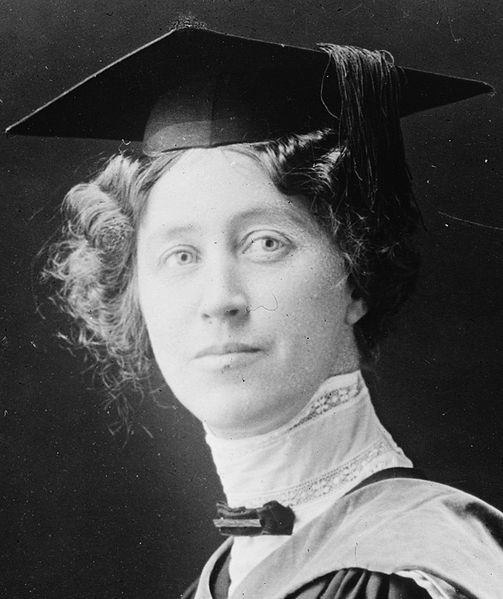
According to a contemporaneous New York Times article, "Mrs. Annette Abbott Adams of San Francisco" was appointed an Assistant U.S. Attorney on September 29, 1914. Noting that Adams (below right) thus became "the first woman in the United States to occupy such a position," The Times recounted that U.S. Rep. John E. Raker of California considered the appointment "a recognition of woman suffrage." (Raker, Adams' mentor and the suffragist husband of a suffragist, was referring to the passage of women's suffrage in California in 1911.)
The Times appears not to have reported on Adams' appointment 4 years later as San Francisco's lead federal prosecutor. Happily, though, the website for California's courts and a paper from Stanford's women's legal history project provide biographical details. Here's the story those sources tell:
Born the daughter of a Gold Rush 49er on March 12, 1877, in the Sierra Nevada town of Prattville, Annette Abbott earned a bachelor in law degree from the University of California, Berkeley, in 1904, but could not find a job in law. So she entered marriage and a teaching career. Both turned out to be brief, though she did serve as 1 of the 1st women school principals in California.
Adams then went back to Berkeley, where in 1912 she was among the 1st women to receive her J.D. and to be admitted to the state bar.
She served as San Francisco's lead U.S. Attorney for 2 years, then moved to Washington, D.C., to serve a stint as Assistant U.S. Attorney General that included work on 5 U.S. Supreme Court cases. Again, she was the 1st woman to hold the position.
She then returned home and practiced law. In 1942, California's governor appointed her the 1st woman Presiding Justice of the Court of Appeal, for the San Francisco-based Third Appellate District. In 1950, by special assignment, she presided over 1 case on the state's highest court, and so became the 1st woman to sit on the Supreme Court of California. She died in 1956, at age 79.
Adams shared her thoughts on the challenges facing women in a 1922 foreword to Who's Who Among Women in California:

Conviction, courage and co-operation should be our watchwords: conviction in the justice of our cause, courage born of that conviction and a growing consciousness of our power, and, above all, co-operation in order that our combined forces may constitute an influence worthy to be reckoned with.


Adams surely is a fitting foremother for Melinda Haag, to whom we offer heartfelt best wishes for a speedy confirmation as San Francisco's U.S. Attorney.

Cheer the Beloved Country?

(My thanks to IntLawGrrls for the opportunity to contribute this guest-post)

Many people in South Africa cheered the announcement earlier this week by Mokotedi Mpshe (top right), acting Director of South Africa's National Prosecuting Authority, that the Authority had dismissed longstanding corruption charges against Jacob Zuma, the head of the African National Congress and the likely President of South Africa after elections on April 22. Amongst those cheering the announcement were ordinary South Africans, supporters of the ANC, trade union members, and members of South Africa's Communist Party. Perhaps even former President Thabo Mbeki cheered the part of Mpshe's announcement declaring the absence of evidence linking Mbeki to wrongdoing in the Authority's prosecution of Zuma (below right).
The cheering was not universal. The announcement was loudly protested by opposition parties such as the recently established Congress of the People, the Democratic Party, and their supporters, and many ordinary South Africans. They are left wondering what it all means for South Africa’s fledgling and fragile legal system.
Americans reading the news of Mpshe's action may initially think it is merely a parallel to the recent action of U.S. Attorney General Eric Holder dismissing charges against former U.S. Senator Ted Stevens. In both situations, the chief federal prosecutor in the nation dismissed
corruption charges against a high-ranking political official, and in both instances the court having jurisdiction over the case raised questions of prosecutorial abuse. In the Stevens case, the federal court even held prosecutors in contempt for withholding evidence, while in the Zuma case the court had gone so far as to dismiss the charges on the ground, subsequently overturned, that the then-President of South Africa had influenced the prosecution.
Notwithstanding the similarities, important differences exist between the two cases:
► First, Holder, a Democrat, was not a member of the same political party as Stevens, a Republican, and thus could not be suspected of acting out of party loyalty. This can't be said of Mpshe, who is a member of the ANC and a strong supporter of Zuma.
► Second, the justification cited by Holder for dismissing the prosecution -- namely, the withholding of potentially exculpatory evidence -- was a factor relevant to whether abuse of process had occurred and whether prosecution should continue. For reasons which will be apparent later, Mpshe's justification for discontinuance left the question of relevancy hanging.
It is important, however. to recognize that it would not be possible to assess the relevancy issue had Mpshe not made available for public review the contents of the surreptitiously recorded telephone conversations upon which he based dismissal of the charge. This was an important step, and Mpshe performed a great service for the nation in taking it. The secretly taped conversations were between the former head of the National Prosecuting Authority and the chief of Scorpions, the nation's chief police force. Mpshe promised an investigation of the secret recordings of these conversations. But having verified their authenticity, he took full account of them, had them declassified, and released them for public review. He should be commended for this, and for the terms of the announcement respecting the dismissal of the Zuma charges. They include, as previously stated, clearing Mbeki of any wrongdoing, disclosing the existence of disagreement amongst his staff about the dismissal, and informing the public of the criterion he applied in determining if the charges should be dismissed. That criterion, he said, was whether prosecutors had abused the legal process.
These actions of Mpshe are good for South Africa because transparency in governmental affairs is critical for the functioning of the country's democracy.
Where Mpshe's actions fell short was in the application of his criterion for determining whether to dismiss the charges. The failure was two-fold:
► First, the tapes appear principally to show only that political considerations were interjected into the timing of the prosecution against Zuma, yet to show nothing in connection with the prosecution itself.
► Second, Mpshe didn't specify which parts of the taped conversations he regarded as evidence of an abuse of process sufficient to warrant dismissal of the charges.
From this, the only conclusion to be drawn is that for Mpshe, the mixing of political considerations with the timing of the commencement of the lawsuit constituted by itself sufficient infection of the judicial process to warrant dismissal of corruption charges against Zuma. Since there was no allegation the timing of the lawsuit had anything to do with the course, or outcome, of the trial, this is a rather surprising conclusion, and one providing little guidance to other prosecutors.
The next step is for a South African court to decide whether to accept the dismissal. However, the court may simply defer to the discretion of the prosecutor, leaving unsettled the issue of how the criterion of abuse of process should be applied in such dismissals.
What I think we can all cheer at this point is the enormous importance of the transparency Mpshe has brought to this issue, a transparency which also allows for accountability of Mpshe's action. On the other hand, Mpshe has set a precedent which may afford too much leeway for injecting politics into decisions of prosecutors on whether to dismiss criminal charges.
In some ways this decision stands as a gauge of the state of fifteen years of South African constitutional democracy; that is, there is much to commend it, but some misgiving persist.

Go On! International prosecutors' chautauqua

(Go On! is an occasional item on symposia of interest.) The meaty topic to be addressed at an August 29 discussion at New York's Chatauqua Institution is "The Laws of War: Past, Present, and Future". Featured is a stellar panel of men who've served as prosecutors in international criminal tribunals; in order of tribunal seniority, they are:
►International Military Tribunal at Nuremberg: Whitney Harris, Henry King
►International Criminal Tribunal for the former Yugoslavia: David Tolbert
►International Criminal Tribunal for Rwanda: Hassan Jallow
►International Criminal Court: Luis Moreno-Ocampo
►Special Court for Sierra Leone: David M. Crane, Desmond DeSilva, Stephen Rapp
►Extraordinary Chambers in the Courts of Cambodia: Robert Petit
Moderating the event, whose cosponsors include the American Society of International Law, will be a number of international criminal law experts. Among them is our colleague Leila Nadya Sadat. She's the only woman on the program, though women've worked on the prosecution in all these jurisdictions. One is Cecilia Goetz (above), among a number of women prosecutors at Nuremberg. Learning more about them is, thanks to our own Beatrice, an ongoing IntLawGrrls quest. (More on Goetz' colleagues -- IntLawGrrls Women at Nuremberg series --begins tomorrow.)
Understood that U.N. High Commissioner for Human Rights Louise Arbour, once Chief Prosecutor at the ad hoc tribunals, and her successor, Carla del Ponte, might be tad busy these days. But perhaps future sessions -- with luck, this "International Humanitarian Law Dialog" will become an annual event -- will feature them or others who might add insights to what promises to be a powerful dialogue.
 
Bloggers Team