Showing posts with label San Francisco. Show all posts

On March 18

On this day in ...
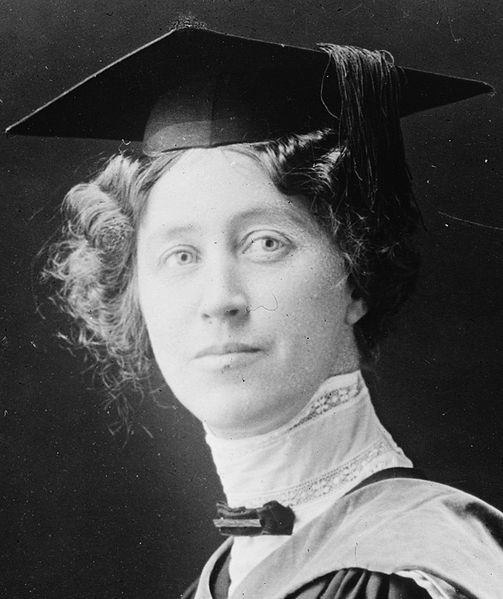
... 1890, Kate Kennedy (left), a pioneer Californian, died in Oakland. (photo credit) Born in Gaskinstown, County Meath, Ireland in 1827, she'd arrived in San Francisco in 1856. Largely self-educated, she worked for 3 decades as a public-schools teacher and principal, becoming, in the words of the San Francisco Chronicle, "a distinguished educator ... of national repute." The Board of Education nonetheless demoted her; she objected, eventually winning $5,000 in back pay. She was a suffragist, labor activist, and "ardent feminist" who fought successfully for equal-pay-for-equal-work legislation.

(Prior March 18 posts are here, here, here, and here.)

Once & future U.S. Attorneys

The surprise in President Barack Obama's nomination for U.S. Attorney for the Northern District of California was not that he'd chosen Melinda Haag (left), a litigation partner at San Francisco's Orrick Herrington and former federal prosecutor. Based not only on her sterling profile, but also on my experience working with her as joint defense counsel in a transnational criminal case before the U.S. Court of Appeals for the Ninth Circuit, I'm confident that Melinda will prove an excellent leader for an office long in need of excellent leadership.
Nor was it a surprise to read these words in The Chronicle's story on the nomination:
She would become the first woman to hold the job in San Francisco ....
The surprise was how that sentence ended:
... since Annette Adams, who served from 1918 to 1920.
The 1st woman was appointed in 1918? Two years before passage of the 19th Amendment?
This news prompted further inquiry.
According to a contemporaneous New York Times article, "Mrs. Annette Abbott Adams of San Francisco" was appointed an Assistant U.S. Attorney on September 29, 1914. Noting that Adams (below right) thus became "the first woman in the United States to occupy such a position," The Times recounted that U.S. Rep. John E. Raker of California considered the appointment "a recognition of woman suffrage." (Raker, Adams' mentor and the suffragist husband of a suffragist, was referring to the passage of women's suffrage in California in 1911.)
The Times appears not to have reported on Adams' appointment 4 years later as San Francisco's lead federal prosecutor. Happily, though, the website for California's courts and a paper from Stanford's women's legal history project provide biographical details. Here's the story those sources tell:
Born the daughter of a Gold Rush 49er on March 12, 1877, in the Sierra Nevada town of Prattville, Annette Abbott earned a bachelor in law degree from the University of California, Berkeley, in 1904, but could not find a job in law. So she entered marriage and a teaching career. Both turned out to be brief, though she did serve as 1 of the 1st women school principals in California.
Adams then went back to Berkeley, where in 1912 she was among the 1st women to receive her J.D. and to be admitted to the state bar.
She served as San Francisco's lead U.S. Attorney for 2 years, then moved to Washington, D.C., to serve a stint as Assistant U.S. Attorney General that included work on 5 U.S. Supreme Court cases. Again, she was the 1st woman to hold the position.
She then returned home and practiced law. In 1942, California's governor appointed her the 1st woman Presiding Justice of the Court of Appeal, for the San Francisco-based Third Appellate District. In 1950, by special assignment, she presided over 1 case on the state's highest court, and so became the 1st woman to sit on the Supreme Court of California. She died in 1956, at age 79.
Adams shared her thoughts on the challenges facing women in a 1922 foreword to Who's Who Among Women in California:
Conviction, courage and co-operation should be our watchwords: conviction in the justice of our cause, courage born of that conviction and a growing consciousness of our power, and, above all, co-operation in order that our combined forces may constitute an influence worthy to be reckoned with.


Adams surely is a fitting foremother for Melinda Haag, to whom we offer heartfelt best wishes for a speedy confirmation as San Francisco's U.S. Attorney.

On March 21

On this day in ...
... 1970 (40 years ago today), was marked the 1st-ever Earth Day, by proclamation of San Francisco Mayor Joseph L. Alioto, who set aside that year's Vernal Equinox as "a day to celebrate our global unity and destiny," "a special day to remember Earth's tender seedlings of life and people; a day for planting trees and flowers; a day for cleaning streams and wooded glens." His proclamation further provided that
on EARTH DAY the EARTH FLAG which portrays in its center our "Beautiful Blue Planet", be flown to encourage mutual respect for Earth and all its people.
On this day 1900 to 2000 Universal Time (11:00 a.m. to 12:00 noon PST) be designated EARTH HOUR - a Silent Hour For Peace ...

As promoted by the poster above left, the global Earth Day's set for April 22 of this year.

(Prior March 21 posts are here, here, and here)

On December 2

On this day in ...
... 1946, The New York Times reported that the United States had "formally offered to turn over the historic Presidio in San Francisco to the United Nations as its permanent world capital." The offer came after U.N. delegates had visited potential sites in Philadelphia, Westchester, and New York City. In the end U.N. headquarters would be established in the last of those cities, a decision decried in chapter 13 of the memoir of then-Secretary of State Dean Acheson:
When later the United Nations was looking for a site, I believed that it should be in Europe and favored Geneva or Copenhagen, but pressure grew for its headquarters to be in the United States. President Truman’s offer of the beautiful Presidio site on the shore of the Pacific at the Golden Gate seemed a perfect one, establishing its home in the city of its birth. The misplaced generosity of the Rockefeller family, however, placed it in a crowded center of conflicting races and nationalities.

Decades later a proposal to move part of UNICEF's operations to the Presidio (above left), a longtime Army base, also would go nowhere.

(Prior December 2 posts are here and here.)

On October 12

On this day in ...
... 1906, the San Francisco Board of Education ordered that Japanese children be be taught in racially segregated public schools, and so touched off "a diplomatic crisis between Japan and the United States." President Theodore Roosevelt sent native Californian Victor Metcalf, the Secretary of Commerce and Labor, to urge school officials to rescind the order. Metcalf is depicted in the cartoon at right, begging a white schoolchild,
'For heaven's sake do not embarrass the Administration!'

while a Japanese mother and son look on. (credit) In a December speech to Congress, Roosevelt denounced the schools' order as a "'wicked absurdity,' asked Congress to grant citizenship to those Japanese immigrants who wanted it, and vowed to protect the rights of all Japanese residents in the United States." His request was not popular. A 1907 "Gentlemen's Agreement" was entered, by which the united States informally agreed not to restrict Japanese immigration or schooling and Japan agreed not to permit further migration from Japan to the United States.


(Prior October 12 posts are here and here.)

On August 8

On this day in ...
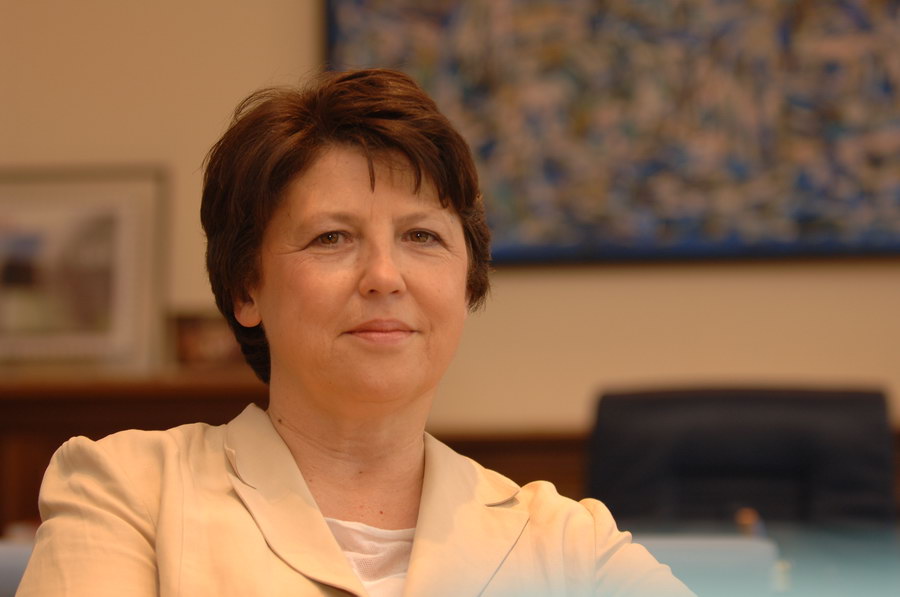
1950, Martine Aubry (left), current leader of the French Socialist Party, was born in Paris. (photo credit) As Minister for Employment and Solidarity from 1997 to 2000, she implemented the "Loi Aubry," reducing the full-time working week from 39 to 35 hours. During that time, she also introduced the universal health coverage initiative which allows basic access to health insurance for any person of French or foreign nationality residing in France for over three months on a regular basis who is not already covered by a social security scheme. She has been the mayor of Lille, a city in northern France, since March 2001 and president of the Urban Community of Lille since April 2008. She was selected as leader of the French Socialist Party last November.
1945, The U.N. Charter (prior posts), the foundational instrument of the international organization called the United Nations, was ratified by 50 countries at the at the conclusion of the U.N. Conference on International Organization in San Francisco, California. The Charter entered into force on October 24 of the same year, after the 5 permanent members of the Security Council and a majority of the other signatories ratified it. The Charter states that obligations to the United Nations prevail over all other treaty obligations. Today, there are 192 parties to the Charter; this animation shows the accession of member states, and changes in national borders, from 1945 to 2008. (credit)

(Prior August 8 posts are here and here.)

On July 19

On this day in ...
... 1799 (210 years ago today) , a soldier who'd accompanied French Emperor Napoleon Bonaparte on his campaign in Egypt discovered "a black basalt slab inscribed with ancient writing near the town of Rosetta, about 35 miles north of Alexandria." On it were passages in 3 scripts, Greek, Egyptian hieroglyphics, and Egyptian demotic, "all of identical meaning." The stone thus "held the key to solving the riddle of hieroglyphics, a written language that had been 'dead' for nearly 2,000 years." Seized from the French 2 years later when Napoleon was defeated, this Rosetta Stone (left) has been at London's British Museum for the last 2 centuries. (A prior IntLawGrrls post on Napoleon's Egyptian adventure is here.)
... 64 (1,945 years ago today), fire swept Rome while its Emperor Nero fabulously fiddled. "Fabulously," that is, because a near-contemporaneous account does not put that musical instrument in Nero's hands. Rather, historian Tacitus wrote in his Annals of Imperial Rome:
Now started the most terrible and destructive fire which Rome had ever experienced. It began in the Circus, where it adjoins the Palatine and Caelian hills. ...Fanned by the wind, the conflagration instantly grew and swept the full length of the Circus. There were no walled mansions or temples, or any other obstructions which could arrest it. ...
... A rumor had spread that, while the city was burning, Nero had gone on his private stage and, comparing modern calamities with ancient, had sung of the destruction of Troy. ... People believed that Nero was ambitious to found a new city to be called after himself.
In an aftermath that future residents of Chicago and San Francisco would find familiar, the charred city was rebuilt to greater glory. And whether Nero liked it or not, it kept its original name of Roma.

(Prior July 19 posts are here and here.)

On July 5

On this day in ...
... 1934 (75 years ago today), on what was known as San Francisco's Bloody Thursday, rioting involving thousands of persons along the waterfront resulted in 3 deaths and a score of injuries. Police clashed with striking union members, and bystanders were caught in the melee as strikers hurled tear gas canisters thrown at them back at police. (photo credit) The governor called out the National Guard on this day, nearly 2 months after labor protests had begun in the city. The day ended with International Longshoremen's Association leader Harry Bridges -- later the victor in immigration and false statements cases before the U.S. Supreme Court -- going to City Hall to protest police actions.
... 1944 (65 years ago today), Leni Björklund (right) was born in Sweden. Following her childhood in the community of Örebro, she earned a bachelor's degree at Uppsala University, and then entered politics. A member of the Social Democratic Party, from 2002 to 2006 Björklund served as Sweden's Minister for Defence -- the 1st woman, and the 1st person who'd not served in the military -- to hold that post.

(Prior July 5 posts are here and here.)

Reason sleeps

Saw a fascinating and disturbing exhibit last week at the San Francisco Museum of Modern Art.
Entitled "Half-Life of a Dream: Contemporary Chinese Art from the Logan Collection," it included sculptures and paintings depicting, from the view of Chinese artists, life in China today. It's worth a look should the exhibit arrive at a museum near you.
The message in these works was bleak, a world of forced conformity and false authority.
Hard to have a favorite among such sad images. Still, one piece struck me for its dark-humor approach to a gray life. It's The Sleep of Reason, a sculpture that likely borrows its name from El Sueño de la Razón Produce Monstruos/The Sleep of Reason Produces Monsters, the 18th Century etching above right, by Francisco Goya. (The inspiration's reproduced here because of copyright restrictions on the work under review.) From a distance, the 2005 work by Beijing sculpture professor Sui Jianguo (below left) resembles a colorful behemoth of a mountain, surrounded by a color-wheel of swirling landscape. Close up, one sees that the mountain is the late Communist leader Mao Zedong, who's snoozing under a warm blanket while phalanxes of brightly hued admirers stand guard. The admirers? Monsters of a sort that's filled with meaning, toy-store purchases all -- plastic dinosaurs.

On May 27, ...

... 1937 (70 years ago today), approximately 200,000 people walked across the brand-new Golden Gate Bridge. The 7-mile-suspension bridge, which is painted the signature color of "International orange" and connects California's San Francisco and Marin counties, was opened to motor vehicles for the 1st time the following day.
... 1615, Marguerite de Valois, whose stormy life as the French Queen Margot has been the stuff of fiction and film, died in Paris at the age of 62.
 
Bloggers Team