The NAFTA panel ruling in Stainless Steel Sheet appears contrary to previous decisions of the U.S. Court of Appeals for the Federal Circuit and arguably undermines the role of Congress and the Administration in implementing adverse rulings in WTO disputes. The panel’s reasoning may be affected by future pronouncements by U.S. courts on Charming Betsy and related issues.
'Nuff said
'Nuff said
[T]he act of state doctrine, 'whatever it might be – has no application where it is alleged that Commonwealth officials have acted beyond the bounds of their authority under Commonwealth law.' His Honour noted that, consistent with the principle enunciated in Marbury v. Madison, the limits of executive action raised a justiciable question which courts exercising federal jurisdiction were obliged to scrutinize as a basic element of the rule of law.
US ♥ international law
Consider this excerpt from the brief just filed by the United States in a Guantánamo detainee's habeas corpus case:
Petitioner cites the panel majority’s statement that the 'premisePp. 1-2 (citations switched to hyperlinks).that the war powers granted by the [Authorization for Use of Military Force (2001)] and other statutes are limited by the international laws of war * * * is mistaken.' The Government agrees that this broad statement does not properly reflect the state of the law. The Government interprets the detention authority permitted under the AUMF, as informed by the laws of war. That interpretation is consistent with the Supreme Court’s decision in Hamdi v. Rumsfeld (2006), and with longstanding Supreme Court precedent that statutes should be construed as consistent with applicable international law.
So said the United States' response to the petition for rehearing of the ruling of the U.S. Court of Appeals for the District of Columbia Circuit (courthouse above right) in Al Bihani v. Obama (2010). (Prior IntLawGrrls post) Indeed, in the body of its argument (pp. 6-9), the government repeated and expanded upon its nod to international law. In so doing, it cited case law familiar to those of us who labor in this field. For example:
► Murray v. Schooner Charming Betsy (1804), a precedent from the Court of Chief Justice John Marshall, was cited for the proposition that "an act of Congress ought never to be construed to violate the law of nations, if any other possible construction remains."
► United States v. Yunis (D.C. Cir. 1991), a judgment (by a panel included then-Judge Ruth Bader Ginsburg, along with then-Chief Judge/now IntLawGrrls guest/alumna Patricia M. Wald and the opinion's author, Abner Mikva) arising out of a 1985 cross-border, terrorism-linked hijacking. Yunis was cited for the proposition that "courts will not blind themselves to potential violations of international law where legislative intent is ambiguous."
Notably, the U.S. position in this brief stands at odds with that taken in the Military Commissions Act of 2006; in section 5(a), Congress forbade anyone to "invoke the Geneva Conventions or any protocols thereto in any habeas corpus or other civil action ... as a source of rights in any court of the United States or its States or territories."
At both junctures of its Al-Bihani brief, however, United States argued that international law offers no reason to grant the detainee's petition for rehearing. Here's page 2:
[N]one of this changes the outcome ... The panel majority specifically addressed and properly rejected petitioner’s argument under international law. That unanimous ruling is correct and does not warrant rehearing or rehearing en banc.What the government giveth ....
On February 2
On this day in ...... 1790 (220 years ago today), in the chamber at left tucked inside the Senate wing of the Capitol in Washington, D.C., the U.S. Supreme Court convened for the 1st time. (photo credit) On the bench were 1 Chief Justice of the United States, John Jay, and 5 Associate Justices of the Court. This website gives an apt summary of this moment in U.S. history:
At its creation, the judicial branch was by far the weakest and most timid of all three government branches, holding back from strongly upholding and deciding controversial issues.
On November 27
On this day in ...... 1797, a Federalist by the name of John Marshall wrote a letter home to his Virginia-based wife Mary, known as Polly Marshall (right), in which he described the circumstances of his diplomatic mission to Paris:
I lived till within a few days in a house where I kept my own apartments perfectly in the style of a miserable old bachelor without any mixture of female society. I now have rooms in the house of a very accomplished, a very sensible, and I believe a very amiable lady whose temper, very contrary to the general character of her country women, is domestic and who generally sits with us two or three hours in the afternoon.
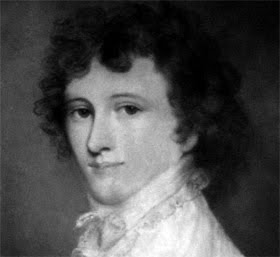
The woman who'd so bedazzled Marshall, then 42, was Reine-Philiberte de Villette (left), a 30-year-old widow with 2 children. As a girl she "had been destined for a convent" because of her family's impoverishment; instead, she'd been adopted and brought up by the aged French philosopher Voltaire. As detailed in this French account of her life, following the death of the Marquis de Villette, whom she'd married by arrangement of Voltaire, Madame de Villette became a society woman. Her salon afforded an entrée into French circles for diplomats from the new American republic -- among them Marshall, who 4 years after writing this letter would become Chief Justice of the United States. Sotomayor takes Obama to Court
Later this morning Chief Justice John G. Roberts, Jr., will administer the oath of the office of Associate Justice to Sonia Sotomayor (right). The event will take place at the Court's marble edifice (below) -- a choice of location that reflects President Barack Obama's understanding both of the separation of powers and the importance of symbolism.In recent years confirmees have had to take part in ceremonies at the White House. This departure from prior practice has been cause for concern among some on the Court. Just weeks after the inauguration at which Roberts swore in Obama, the Justice who administered the oath to Vice President Joseph Biden, John Paul Stevens, made a very public statement of concern.
The date was February 26. The place, Washington's Newseum. The occasion, Stevens' discussion with Cliff Sloan and David McKean, the authors of The Greatest Decision (2009), an excellent social history of Chief Justice John Marshall's landmark decision on judicial review, Marbury v. Madison (1803). Stevens used the opinion's treatment of the judicial oath as his springboard to discuss where a Justice's oath should be taken. Here's a transcription of the C-SPAN video of what Stevens, appointed in 1975 by President Gerald R. Ford, said:
[I]t's a very personal thing, but – rereading the opinion, the first part on the oath stresses the importance of the commission that was withheld or was not delivered to Marbury. In the end of the opinion, one of the reasons given by John Marshall for finding constitutional objection to their appellate jurisdiction was the nature of the oath that the judges had to take, and the fact that they had to solemnly swear to administer justice and so forth, and 'according to the best of my abilities and understanding, agreeably to the Constitution and laws of the United States.' And he stresses the fact that because they take that oath to uphold the Constitution, obviously the Constitution has to be a document of special importance.
Well, these two aspects of the case brought to mind my own installation. When I was installed as a Justice ofthe Supreme Court, President Ford came down to the Court, and moved the admission of the Attorney General who presented the commission to the clerk, and then the oath took place. ... When Justice O’Connor, who was the next appointment, was installed, President Reagan came down to the Court – we take actually two oaths, there is a statutory oath and a constitutional oath – and one of them was traditionally administered in the Conference Room, and the other in open court as part of the ceremony. And President Reagan came to the administration of the oath in the Conference Room.
And I’ve always thought those two examples of the President coming to the Court for that important event was a demonstration of the separation of powers involved, and the fact that after the appointment has taken place, the Justice is on his own or her own, and is no longer representing the political branch of the government. ...
President Reagan, when Warren Burger retired and William Rehnquist became Chief, and Justice Scalia was appointed they had the swearing-in at the White House. They also had a second ceremony at the Supreme Court. And also, after that, when Justice Kennedy was appointed, the first ceremony took place at the White House and not at the Court. And I was troubled by that as incorrect symbolism of the division of power between the separate branches.
So when the following four nominees were installed, with the same procedure, going at the White House, I did not attend the ceremony when David Souter or Clarence Thomas or Ruth Ginsburg or Stephen Breyer was installed. I thought that we should make a change in that regard. And because I didn’t, that fact that I didn’t go, I think will suggest to you I felt rather strongly that there is important symbolism in the way in which this terribly important oath is administered and the place in which it’s administered.
because I’m hopeful that in the future, Presidents may consider the importance of coming to the Court on this occasion, and drawing the very fine and important line between the appointment process, which is political in character and involves the exercise of discretion, and the very separate status that is created after the appointment process has taken place.
On this day
On February 24, ...... 1803 (205 years ago today), the U.S. Supreme Court for the 1st time held an Act of Congress unconstitutional, and thus established the power of judicial review over legislative and executive action. Chief Justice John Marshall wrote the landmark judgment in Marbury v. Madison (above) for a unanimous Court. Evidence of the decision's lasting and global significance is this article by James Crawford, a professor at England's University of Cambridge: Marbury v. Madison at the International Level, 36 George Washington International Law Revew 505 (2004).
... 1955, 5 countries signed the Pact of Mutual Cooperation Between the Kingdom of Iraq, the Republic of Turkey, the United Kingdom, the Dominion of Pakistan, and the Kingdom of Iran. Known as the "Baghdad Pact" in recognition of the Iraqi city in which it was signed, the treaty did not last long: as detailed in a BBC analysis, its failure "heralded the end of British influence in the Middle East."