So should we, perhaps, be content with the virtual moratorium on nuclear testing?
No, because commitments that are not legally binding can easily be violated.
'Nuff said
Treaties no treat?
What to make of Jamie Rubin's blithe Farewell to the Age of the Treaty?In an op-ed yesterday Rubin, a State Department spokesperson back when Madeleine Albright was Secretary of State, posited that treaties aren't "even worth the trouble anymore."
The "trouble," it appears, is not with international agreements themselves. Troublesome, rather, is securing 2/3 consent of the Senate, a constitutional sine qua non for U.S. ratification of a treaty. The requirement's now bedeviling President Barack Obama's bid for ratification, detailed here, of the U.S.-Russia New Start disarmament treaty. (prior posts) (credit for White House photo of April 2010 signing)
"'Fortunately, there is an alternative,'" Rubin breezed. He argued that statutes, which pass upon simple majorities of both houses of Congress, usually "will work just fine."
Even putting aside the glib assertion that "the international system has most of the rules it needs," Rubin's argument falters on a number of points:
► History: The op-ed's ahistorical in its implication that this is a new problem. Presidential struggles to clear the 2/3 Senate hurdle are "nothing new," as our Opinio Juris colleague Duncan Hollis pointed out. Failure to secure approval dates at least to President Woodrow Wilson, and the Senate's rejections of the Versailles Treaty (right) and the League of Nations Covenant, in 1919 and again in 1920 -- years surely within the putative "Age of Treaties." Rubin himself no doubt recalls President Bill Clinton's CTBT debacle back in 1999.► Politics: Also implicit is an assumption that congressional majorities easily may be obtained. Rubin points to legislative efforts on climate change as an example of his position "already being used." He pretermits, however, that these efforts have yet to bear statutory fruit. Given that the New Year will inaugurate a House of Representatives with a heavy GOP lean, getting Congress to okay internationally aimed reforms would seem far from simple.
► International Relations: Rubin's solution seems unlikely to give U.S. status abroad the hefty boost he suggests. Statutes and treaties are quite different legal animals. A statute may be altered, even repealed, at any time. Preferring the legislative path thus adds instability to the United States' foreign relations. What's more, a statute is the unilateral enactment of a single sovereign. In contrast, a treaty embodies that sovereign's consent not just to act, but to do so out of an international obligation. Treaties represent a deeper level of commitment, a promise to pursue global cooperation even if domestic political winds shift. Opting always for the U.S. statutory fix, at a time when other countries are urged to join treaty regimes, seems unlikely to ease what Rubin rightly calls "international frustration with American leadership."
Hard to see the op-ed's effort -- in essence, to put a brave face on an inferior option -- as much more than advance spin should New Start founder in the Senate.
On November 19
On this day in ...... 1990 (20 years ago today), at a summit meeting in Paris, leaders of more than a score of countries signed an agreement billed as "the end of the cold war that divided East and West for more than four decades." The agreement between the member states of NATO, the North Atlantic Treaty Organization, and those of the Warsaw Pact promised to destroy "tens of thousands" of "nonnuclear weapons." Signing along with U.S. President George H.W. Bush was Soviet President Mikhail S. Gorbachev. (credit for photo of the 2 leaders at a 1989 Malta summit) At the signing in Paris, the latter proclaimed:
'What a long way the world has come!'A thought worth pondering given the current, new uncertainties about the fate of New START, the disarmament pact we've been tracking (prior IntLawGrrls posts).
(Prior November 19 posts are here, here, and here.)
On September 24
... 1996, at the New York City headquarters of the United Nations, U.S. President Bill Clinton signed the Comprehensive Test Ban Treaty, intended to prohibit all nuclear weapons testing. (credit for 1996 pro-treaty demonstration in front of White House) He used the same pen with which President John F. Kennedy had signed the Limited Test Ban Treaty in 1963. Clinton then urged further limits on weapons of mass destruction in a speech before the 51st session of the U.N. General Assembly. For the 2d year in a row, The New York Times reported, Clintonasked diplomats and world leaders to take a strong stand against what he calls the 'new threats' of the post-cold-war era: Drug traffickers, terrorists and unsafeguarded weapons materials. 'Frankly, we have not done that yet.'
Three years later, the Senate refused to give its advice and consent to the Comprehensive Test Ban Treaty. In 2009, President Barack Obama pledged he would "immediately and aggressively pursue" ratification. To date, however, he has not presented it to the Senate.
(Prior September 24 posts are here, here, and here.)
'Nuff said
'Earlier is clearly better.'
-- Dr. James N. "Jim" Miller (right), Principal Deputy Undersecretary of Defense for Policy, quoted in Politico yesterday by Laura Rozen (to whose foreign policy blog we link in our "connections" column at right). Miller was speaking of the Obama Administration's hopes for U.S. ratification of New START, the nuclear weapons treaty that, as we've posted here and here, U.S. President Barack Obama and Russian President Dmitry Medvedev signed last April in Prague, Czech Republic. As Rozen reported, the Foreign Relations Committee of the U.S. Senate is supposed to vote today on the treaty. If the Committee approves, the treaty then will be sent to the full Senate. Miller made clear that the administration would like to see this happen sooner rather than later, even as he allowed:'But we understand that the Senate has to act according to its own timeline and have its own questions answered and we remain committed to provide those answers as they continue their deliberations.'
On September 3
On this day in ...... 1992, meeting at Geneva, Switzerland, the multilateral Conference on Disarmament adopted a draft text for the Convention on the Prohibition of the Development, Production, Stockpiling and Use of Chemical Weapons and on their Destruction, which then was transmitted in the Conference Report to the U.N. General Assembly. The adoption culminated efforts dating at least to 1968, when Sweden placed discussion of chemical weapons curtailment on the active agenda of a conference then known as the 18 Nations Disarmament Committee, chaired jointly by the United States and the Soviet Union. The chemical weapons treaty would enter into force on April 26,1997. As of May 2009 it had 188 states parties, including the United States.
(Prior September 3 posts are here, here, and here.)
A New START, but disarmament is still at the starting line
The “Treaty Between the United States of America and the Russian Federation on Measures for the Further Reduction and Limitation of Strategic Offensive Arms,” more commonly known as the New START (prior IntLawGrrls post), could have earned any of a variety of other possible nicknames: post-START, START’s successor, START follow-on. How appropriate that the current administration is calling this treaty, signed on April 8 of this year, what it is: a modest new start to a process that began over two decades ago during the administration of President Ronald Reagan, who, like President Barack Obama (above, far right), publicly aspired to a world free of nuclear weapons. (photo credit)The United States and Russia could have progressed to much deeper cuts in their nuclear arsenals over that time. Instead, inattention to arms control and missed opportunities in those intervening years turn what would otherwise seem like a small step of restarting a 20-year-old process into a laudable achievement.
In terms of reducing nuclear armaments, New START is rather a “modest step,” as many have observed (e.g. former Secretary of Defense William J. Perry and former Secretary of State George P. Shultz, here, and Stanford’s Pavel Podvig, here. The ceiling on deployed nuclear warheads in new START is 1,550, compared to 6,000 in START and 1,700-2,200 in the Moscow Treaty, which was signed on May 24, 2002. But much of that purported reduction had either already occurred as of signing or will be achieved through different counting methods rather than actual destruction of weapons.
New START is not so very different from the original START. Comparison of New START with the original, START I, reveals:
► 12 of New START’s 16 articles borrow heavily from its parent.
► START was nearly twice as long as New START and more complicated, creating cumbersome inspection and verification regimes and rules that had come under bilateral derision toward the end of its life.
► Some of START I's complexity has been left out of the new treaty regime entirely. For example, Article VI of START I, relating to “restricted areas” and the number of structures that each covered facility could include. A Fact Sheet of the State Department touts this simplicity, referring to New START as including
a verification regime that is adapted from START, but is simplified, less costly to implement, and tailored to the specific provisions of the new Treaty.
The Protocol and Annexes will be integral parts of the Treaty and thus submitted to the U.S. Senate for its advice and consent to ratification.
So why did the task of slightly simplifying a 20-year-old treaty and making modest moves toward disarmament present such a challenge that old START’s expiration date came and went without the successor treaty being concluded?Dmitry Medvedev, Russia's President, commented after the signing of New START:
'Just a couple of months ago, (this) looked like mission impossible.'
Yet the Bush administration:
► Dithered over what the desired successor agreement should look like,
► Placed missile defense as its sole priority in the area,
► Unilaterally withdrew from the Anti-Ballistic Missile Treaty in 2001, and
► Downgraded the bureau within the State Department that was responsible for arms control, even removing the phrase “arms control” from all titles and names.
All of this left the Obama administration severely handicapped in the race to reach a successor agreement within the president’s first year in office.
That New START has been signed within only a few months after START’s expiration is thus a significant achievement.
The United States can lead by example, asking other countries to honor their obligations under the Nuclear Non-Proliferation Treaty, or NPT. Possessing 95 percent of the world’s nuclear weapons, the United States and Russia bear primary responsibility for fulfilling Article VI of the NPT:
to pursue negotiations in good faith on effective measures relating to … nuclear disarmament.
Headed by Secretary of State Hillary Clinton, the United States' delegation will arrive tomorrow at the 2010 Review Conference of the Parties to the Treaty on the Non-Proliferation of Nuclear Weapons at U.N. headquarters in New York with a strengthened hand. (credit for March 2010 photo of Clinton arriving in Moscow for negotiations above left; credit for U.N. photo above right) That hand includes:(Hopefully), Senate ratification of New START.
And beyond that:
(Hopefully), with a shorter horizon of 10 years for expiration of New START, more earnest steps toward real disarmament during the lifetime of the treaty.
On April 7
On this day in ...... 1978, in the wake of criticism from abroad, the United States "put on the back burner" plans to place neutron bomb warheads on missiles and shells "planned for deployment in Europe." A "specialised thermonuclear weapon which produces a minimal blast but releases large amounts of lethal radiation, the bomb "designed to kill people while minimising damage to property...." Although development would be authorized in 1981, only a few such bombs were made, and none was deployed to Europe. China would announce development of the neutron bomb in 1999. (credit for (c) 1999 BBC image)
(Prior April 7 posts are here, here, and here)
Stevens on targeted killing
As detailed via quotes in the post below, the Legal Adviser to the U.S. Department of State, Harold Hongju Koh (below left), yesterday outlined a multi-pronged defense of the Obama Administration's use of drones for targeted killings of presumed al Qaeda operatives. (photo credit) Among the statements made during Koh's keynote speech to the American Society of International Law was this:[S]ome have argued that the use of lethal force against specific individuals fails to provide adequate process and thus constitutes unlawful extrajudicial killing. But a state that is engaged in armed conflict or in legitimate self-defense is not required to provide targets with legal process before the state may use lethal force.
One event days before Stevens’s twenty-third birthday would stay with him for the rest of his life. The architect of the Pearl Harbor attack was Admiral IsorokuYamamoto, who had learned English from a missionary and become a Babe Ruth fan while studying at Harvard in the 1920s. On April 14, 1943, Americans discovered that Yamamoto [right] was about to travel to the front. Unbeknownst to the Japanese, Stevens explained in an interview more than sixty years later, “We had broken the code.” On Roosevelt’s orders, U.S. pilots downed Yamamoto’s plane over a Solomon Islands jungle on April 18, Easter Sunday. “I was on duty on the day they brought the plane down,” Stevens said, “The message was, ‘We bagged one eagle and two sparrows,’ indicating success in the mission.” The kill buoyed the spirits of many, who knew that getting Yamamoto would, as Stevens put it, “have a tremendous strategic advantage.”
But the incident troubled the young officer. “I remember thinking that the planners must have engaged in a lot of deliberation before deciding to go along with the plan,” Stevens said. “I have read a number of books on it since and discovered that was not the case. They were concerned that targeting him would reveal that they had broken the code.” Accounts of the killing indicate that U.S. Admiral Chester A. Nimitz and others—in communications laced with foxhunting terms—debated only the tactical benefits and costs. “But they had no humanitarian concerns at all of the kind that troubled me,” Stevens said. That fact “kind of surprised me,” he continued, particularly given that Yamamoto “had spent time in the United States and had friendships among high-ranking American officers.”
The morality of military action became a lifelong preoccupation.
Appearing before the Chicago Bar Association decades later, Stevens alluded to the event without naming the target. The Justice told his audience that the experience had sown doubts in his mind about another instance in which the state takes the life of a named individual; that is, capital punishment. Recalling that talk, Stevens affirmed that the Yamamoto incident led him to conclude that “[t]he targeting of a particular individual with the intent to kill him was a lot different than killing a soldier in battle and dealing with a statistic. . . . In my mind, there is a difference between statistics and sitting on a jury and deciding whether to kill a single person.”
That superior officers expressed no qualms in 1943 about targeting Yamamoto suggests earlier sources for Stevens’s “humanitarian” unease.
Koh on targeted killing

There was much worth pondering in the keynote speech that Harold Hongju Koh (center left), since last June the Legal Adviser to the U.S. Department of State, delivered yesterday at the annual meeting of the American Society of International Law.'Grrls will be posting on various aspects of that talk and others in short order. But we can't let a day go by without posting his remarks on unmanned aerial vehicles, better known as UAVs or drones (pictured below).
A few hours before Koh's speech, IntLawGrrls guest/alumna Mary Ellen O'Connell, newly elected an ASIL Vice President, had chaired a well-attended panel on the issue. Mary Ellen, who'd written a Balkinization post in support of Koh's nomination about this time last year, last December contributed an IntLawGrrls post outlining her legal concerns about the United States' use of drones in the AfPak conflict to target for killing persons believed to be al Qaeda operatives.
Thanks to ASIL's Sheila R. Ward, we set forth verbatim relevant quotes from Koh's speech, which you can watch in the video clip here.
Koh, formerly the Yale Law Dean and an ASIL Counsellor, maintained that such use is legal, essentially embracing the "war" paradigm that many others have challenged. He stated:
[I]t is the considered view of this administration … that targeting practices, including lethal operations conducted with the use of unmannedHe then detailed how "this administration has carefully reviewed the rules governing targeting operations to ensure that these operations are conducted consistently with law of war principles"; specifically:aerial vehicles (UAVs), comply with all applicable law, including the laws of war…
As recent events have shown, Al Qaeda has not abandoned its intent to attack the United States, and indeed continues to attack us. Thus, in this ongoing armed conflict, the United States has the authority under international law, and the responsibility to its citizens, to use force, including lethal force, to defend itself, including by targeting persons such as high-level al Qaeda leaders who are planning attacks….
► First, the principle of distinction, which requires that attacks be limited to military objectives and that civilians or civilian objects shall not be the object of the attack; andKoh endeavored to assure his audience that in
► Second, the principle of proportionality, which prohibits attacks that may be expected to cause incidental loss of civilian life, injury to civilians, damage to civilian objects, or a combination thereof, that would be excessive in relation to the concrete and direct military advantage anticipated.
U.S. operations against al Qaeda and its associated forces – including lethal operations conducted with the use of unmanned aerial vehicles – great care is taken to adhere to these principles in both planning and execution, to ensure that only legitimate objectives are targeted and that collateral damage is kept to a minimum.Addressing critics of the policy, he continued:
[S]ome have suggested that the very use of targeting a particular leader of an enemy force in an armed conflict must violate the laws of war. But individuals who are part of such an armed group are belligerent and, therefore, lawful targets under international law....
[S]ome have challenged the very use of advanced weapons systems, such as unmanned aerial vehicles, for lethal operations. But the rules that govern targeting do not turn on the type of weapon system involved, and there is no prohibition under the laws of war on the use of technologically advanced weapons systems in armed conflict – such as pilotless aircraft or so-called smart bombs – so long as they are employed in conformity with applicable laws of war….
[S]ome have argued that the use of lethal force against specific individuals fails to provide adequate process and thus constitutes unlawful extrajudicial killing. But a state that is engaged in armed conflict or in legitimate self-defense is not required to provide targets with legal process before the state may use lethal force.
[On this boldfaced statement, consider the rather different view in my post above, which reprints a passage, from my 2006 article, that recounts Justice John Paul Stevens' concerns regarding a targeted killing in which he and other Navy codebreakers played a role -- the killing in 1943 of Admiral Isoroku Yamamoto, architect of Japan's attack on Pearl Harbor.]
Koh maintained that due precautions are taken even without the interposition of due process:
Our procedures and practices for identifying lawful targets are extremely robust, and advanced technologies have helped to make our targeting even more precise. In my experience, the principles of distinction and proportionality that the United States applies are not just recited at meeting. They are implemented rigorously throughout the planning and execution of lethal operations to ensure that such operations are conducted in accordance with all applicable law….
Finally, Koh cited domestic law as an independent justification:
[S]ome have argued that our targeting practices violate domestic law, in particular, the long-standing domestic ban on assassinations. But under domestic law, the use of lawful weapons systems – consistent with the applicable laws of wear – for precision targeting of specific high-level belligerent leaders when acting in self-defense or during an armed conflict is not unlawful, and hence does not constitute ‘assassination.’
On March 26
On this day in ...... 1975 (35 years ago today), the Convention on the Prohibition of the Development, Production and Stockpiling of Bacteriological (Biological) and Toxin Weapons and on Their Destruction entered into force, 3 years after it had been opened for signature and the same day that the United States deposited its instruments of ratification, thus joining this Biological and Toxin Weapons Convention. Today it has 163 states parties.
(Prior March 26 posts are here, here, and here)
On December 29
On this day in ...... 1934 (75 years ago today), U.S. Secretary of State Cordell Hull expressed "genuine regret" at receiving Japan's formal notice of its renunciation of the Washington Naval Treaty of 1922, in which Britain, France, Italy, Japan, and the United States had agreed to limit armaments on their naval vessels. (credit for image of diplomats at 1922 Washington Naval Conference) The withdrawal came 21 months after Japan had quit the League of Nations (prior posts here and here).
(Prior December 29 posts are here and here.)
On June 28
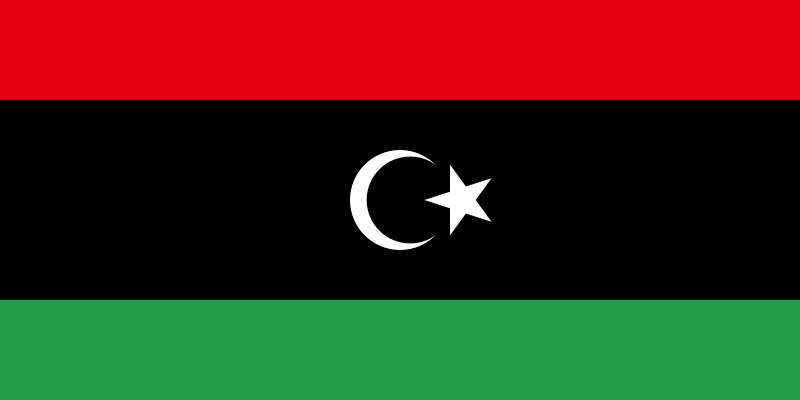
… 2004 (5 years ago today), the United States resumed direct diplomatic ties with Libya (flag at left) when it reopened a U.S. Liaison Office in the capital city of Tripoli. In December 1979, staff members had been withdrawn after a mob attacked and set fire to the U.S. embassy; the United States declared Libya a "state sponsor of terrorism." Relations between the 2 countries remained poor for decades. In 2003, Libya "accepted responsibility for the actions of its officials, renounced terrorism and arranged for payment of appropriate compensation for the families of the victims" of the bombings of a Berlin discotheque and two airliners, and also announced its decision to abandon its weapons of mass destruction programs. (image credit)
(Prior June 28 posts are here and here.)
On April 4
On this day in ...Guns and Kids
and mysterious, and get him a set of water guns that don't look like guns. In the process of this, we got into a conversation about why dad and I aren't such big fans of guns that led to my reflecting about some of the international law dialogues about armed conflict and human rights.When I asked Oz why dad and I aren't such big fans of guns, he opined that having guns around makes kids used to having guns and that this wasn't such a good idea. He then asked me why kids are allowed to have toy weapons at all if having them around makes them get used to them. I told him that I agreed with his concern and thought that this was a good reason for kids not to have them.
But the conversation wasn't quite over. Oz then reflected that the reason we needed guns was that if people could only fight with their hands, wars would never end. We've since probed this reflection quite a bit with Oz, including with some colleagues last night, and he remains quite convinced of this point. He thinks that weapons help end wars faster despite various efforts to suggest that maybe people could decide to stop fighting even if they only had their bodies to fight with.
Since then, beyond reflecting on how much grownups can learn from kids and how interesting their ideas are, I've been thinking about the armed conflicts that have been so defining over my lifetime. I grew up with kids who had parents fighting in Vietnam (my dad would spend weekends at Fort Riley then, but was never actively in combat). I've spent a lot of time over the past several years concerned with resource wars and genocides. And, of course, there's the ever-present conflicts in Iraq and Afghanistan.
Despite working on the human rights aspects of oil in Nigeria, the claim against Karadzic, as well as several years of teaching international law in which we would do a simulation exploring whether the Iraq invasion was justifiable under the U.N. Charter, I still struggle with how law can play a constructive role in ending violence. Although I'd like to disagree with Oz and think we could just get rid of weapons and end war, and I certainly don't think a lack of them exacerbates things, I wish I had more clarity on how we could achieve meaningful progress on making the world a bit safer and more humane. In the meantime, I plan to remain strict about my kids having guns.
P.S. Oz gave me permission to tell this story.
Realism and the cluster bomb ban
Is the 2008 Convention on Cluster Munitions unreal?So one might conclude from statements last week by our Opinio Juris colleague Julian Ku and others.
On Friday in Dublin, Ireland, 111 nation-states voted to adopt the treaty. On December 3 Norway will host a signing ceremony for the treaty, which will not enter into force until after 30 states have ratified it.
Key to the treaty is Article 1, "General obligations and scope of application," which provides:
1. Each State Party undertakes never under any circumstances to:
(a) Use cluster munitions;
(b) Develop, produce, otherwise acquire, stockpile, retain or transfer to anyone, directly or indirectly, cluster munitions;
(c) Assist, encourage or induce anyone to engage in any activity prohibited to a State Party under this Convention.
do not explode for years, until, that is, the bomblets are picked up, "often by children attracted by their small size and bright colors." Hence the poster above right. Answer to its question is: 2d from right, cluster bomb. (photo credit) Some bomblets, like that depicted near left, resemble food aid packages like that at far left. (photo credit) In total, 4 out of 10 cluster bomb victims are children.1. Each State Party shall, in accordance with national regulations, separate all cluster munitions under its jurisdiction and control from munitions retained for operational use and mark them for the purpose of destruction.
2. Each State Party undertakes to destroy or ensure the destruction of all cluster munitions referred to in paragraph 1 of this Article as soon as possible but not later than eight years after the entry into force of this Convention for that State Party. ...
may or may not be a good idea. But since key cluster bomb producers and users like the United States, Russia, China, Israel, India and Pakistan are not signatories, the importance of this treaty, beyond its symbolism, is questionable. Like the treaty to ban landmines, the vast majority of countries that will sign on to this treaty do not possess cluster bombs anyway. Hence, this is, for most countries, a costless decision and the use of landmines or cluster bombs is not substantially affected.
'This is a treaty drafted largely by countries which do not fight wars. Treaties like this make me want to barf. It's so irrelevant. Completely feel-good.'
Britain had the most difficult decision, and it is a challenge for realists to explain why a country like Britain would give up a military weapon without gaining any concessions from most of its treaty partners.
does not deny that states may seek to maximise self-interest; nevertheless, it accepts that self-interest may entail something other than aggrandisement of political and economic power. A state may, for example, come to find self-interest in the promotion of international respect for human rights. At the very least, a state will want to be seen as acting in this manner, even if it simultaneously pursues less idealistic paths. This well may have a pragmatic dimension: the self-interest of a weaker state in restraining the power of others is evident. But there also may be an idealistic dimension, a self-interest in placing the needs of the cross-border human collectivity over those of any individual state. ...
Grrrrrr
President Vladimir Putin formally notified NATO governments on Saturday that Russia will suspend its obligations under the Conventional Forces in Europe Treaty, a key Cold War-era arms limitation agreement, in response to American plans to deploy a missile shield in Eastern Europe.When we heard this on the news this morning, I asked my (French) husband why none of the 25 or so other NATO members were able to refuse to go along with this missile shield hoax. He claims that NATO has always been just the US and everyone else follows along. I have trouble believing that. Everyone’s got a budget to balance, and EU members have budget responsibilities with respect to EU membership. Nicolas Sarkozy is making hash of those right now, sending France into extragalactic debt even without shelling out for a missile shield, but this is more the exception than the rule. Surely it would be more cost effective to invest in long-term war-prevention programs like fighting desertification, poverty, illiteracy, etc.?