Showing posts with label medal of honor. Show all posts

Black History Month Highlight: Robert Blake

Contraband Robert Blake (Photo#: NH 103762)

Robert Blake was born into slavery in Virginia. After escaping, he enlisted in the US Navy from Port Royal, Virginia and served on USS Marblehead during the Civil War. While off Legareville, Stono River, South Carolina, on 25 December 1863, Blake bravely served the rifle gun as Marblehead engaged Confederates on John's Island. The enemy eventually abandoned its position leaving munitions behind. For his bravery in this action, Blake was awarded the Medal of Honor.

USS Marblehead engages a Confederate Battery on John's Island, Stono River, South Carolina, 25 December 1863 (Photo#: NH 79920)

LCDR Richard W. Meade, commanding the Marblehead, wrote in a report to Rear Admiral John Dahlgren off Legareville commending several individual sailors in the conflict.  Among the four who would eventually win the Medal of Honor was Robert Blake.  LCDR Meade had this to say in his report about Blake:

"Robert Blake, a contraband, excited my admiration by the cool and brave maner in which he served the rifle gun." (Meade to Dahlgren, ORN, 15:190-191)

Richard W. Meade

He ends his report to Dahlgren by commending everybody, including Blake, onboard the Marblehead during the tense engagement:

"I have again to commend the good conduct of everyone on board. Their courage was so well displayed that the enemy, who had doubtless counted on disabling us, were forced to retire [. . .] in confusion and ignominy.” (Meade to Dahlgren, ORN, 15:191)

It should be of note that Robert Blake was the first African American to actually receive the Medal of Honor (most give that honor to SGT William Harvey Carneyfor his heroism at Fort Wagner).

News---Alonzo Cushing Recevies the Medal of Honor For Gettysburg July 3 Heroics

147 Years Later, Wisconsin Civil War Soldier Gets Medal, Dinesh Ramde, Associated Press, May 19, 2010

Seven score and seven years ago, a wounded Wisconsin soldier stood his ground on the Gettysburg battlefield and made a valiant stand before he was felled by a Confederate bullet. Now, thanks to the dogged efforts of modern-day supporters, 1st Lt. Alonzo Cushing shall not have died in vain, nor shall his memory have perished from the earth.

Descendants and some Civil War history buffs have been pushing the U.S. Army to award the soldier the Medal of Honor, the nation's highest military decoration. They'll soon get their wish. Secretary of the Army John McHugh has approved their request, leaving a few formal steps before the award becomes official this summer. Cushing will become one of 3,447 recipients of the medal, and the second from the Civil War honored in the last 10 years.

It's an honor that's 147 years overdue, said Margaret Zerwekh. The 90-year-old woman lives on the land in Delafield where Cushing was born, and jokes she's been adopted by the Cushing family for her efforts to see Alonzo recognized. "I was jumping up and down when I heard it was approved," said Zerwekh, who walks with two canes. "I was terribly excited."

Cushing died on July 3, 1863, the last day of the three-day battle of Gettysburg. He was 22. The West Point graduate and his men of the Battery A, 4th U.S. Artillery were defending the Union position on Cemetery Ridge against Pickett's Charge, a major Confederate thrust that could have turned the tide in the war.

Confederate Gen. Robert E. Lee was planning an invasion of the North; both sides knew how important this engagement was. Cushing commanded about 110 men and six cannons. His small force along with reinforcements stood their ground under artillery bombardment as nearly 13,000 Confederate infantrymen waited to advance. "Clap your hands as fast as you can — that's as fast as the shells are coming in," said Scott Hartwig, a historian with the Gettysburg National Military Park in Pennsylvania. "They were under terrific fire." The bombardment lasted two hours. Cushing was wounded in the shoulder and groin, and his battery was left with two guns and no long-range ammunition. His stricken battery should have been withdrawn and replaced with reserve forces, Hartwig said, but Cushing shouted that he would take his guns to the front lines. "What that means is, 'While I've got a man left to fight, I'll fight,'" Hartwig said. Within minutes, he was killed by a Confederate bullet to the head.

Confederate soldiers advanced into the Union fire, but finally retreated with massive casualties. The South never recovered from the defeat. The soldier's bravery so inspired one Civil War history buff that he took up Cushing's cause by launching a Facebook page titled "Give Alonzo Cushing the Medal of Honor." Phil Shapiro, a 27-year-old Air Force captain, said such heroism displayed in one of the nation's most pivotal battles deserved recognition, even at this late date. "We need to honor those people who got our country to where it is," said Shapiro, of Cabot, Ark.

Zerwekh first started campaigning for Cushing in 1987 by writing to Wisconsin Sen. William Proxmire. Proxmire entered comments into the Congressional Record, she said, and she assumed that was as far as it would go. But current Sen. Russ Feingold later pitched in and helped Zerwekh and others petition the Army. After a lengthy review of historical records, the Army agreed earlier this year to recommend the medal.

More than 1,500 soldiers from the Civil War have received the Medal of Honor, according to the Defense Department. The last honoree for Civil War service was Cpl. Andrew Jackson Smith of Clinton, Ill., who received the medal in 2001. The Cushing name is prominent in the southeastern Wisconsin town of Delafield. A monument to Cushing and two of his brothers — Naval Cmdr. William Cushing and Army 1st Lt. Howard Cushing — stands at Cushing Memorial Park, where the town holds most of its Memorial Day celebrations.

Shapiro, the Facebook fan, said he thought of Alonzo Cushing plenty of times last year as he faced a number of dangerous situations during a five-month stint in Iraq. "I'd think about what Cushing accomplished, what he was able to deal with at age 22," Shapiro said. "I thought if he could do that then I can certainly deal with whatever I'm facing."

Text Source: Yahoo News
Top Image Source: Buffalo News
Second Image Source: MOH

News: Medal of Honor for Federal Canoneer at Gettysburg?


1st Lt. Alonzo Cushing Is One Step Closer to the Medal of Honor

Civil War hero from Delafield in line for Medal of Honor, Meg Jones, Milwaukee Wisconsin Journal Online, March 23, 2010.

In the hell that was the battle of Gettysburg, in the hailstorm of shells and shrapnel that extinguished so many lives on a hot July day, one bullet struck a blue-clad soldier from Delafield, Wis., in the head. A shell fragment already had pierced Alonzo Cushing's shoulder and shrapnel tore through his abdomen before the shot that felled the 1861 West Point graduate. Cushing died July 3, 1863, during Pickett's Charge at Cemetery Ridge next to the artillery guns he refused to leave. It was the third and final day of the Gettysburg battle. Cushing was just 22.

The 1st lieutenant's body was returned to his family and buried at West Point beneath a headstone inscribed "Faithful until death." Cushing's name didn't fade away - it graces a park in Delafield, and a white obelisk monument was dedicated there in 1915. However, a small but dedicated group wanted more for Cushing; they wanted his heroism recognized with the nation's highest military honor. Now, it appears that Cushing will be awarded the Medal of Honor for his actions on that Pennsylvania battlefield 147 years ago.

The secretary of the Army has approved the request, which must go through a few more hurdles before it can be signed by the president. Then the military will present the Medal of Honor to Cushing's family during a ceremony. "He's definitely my hero," said Phil Shapiro, 27, who started a "Give Alonzo Cushing the Medal of Honor" Facebook page in early February. "I always felt he deserved the Medal of Honor." The quest to recognize Cushing's valor began in the 1980s, first with then-Sen. William Proxmire and later with Sen. Russ Feingold, who eventually shepherded the request through military and congressional channels.

Margaret Zerwekh, 90, who belonged to the auxiliary of Sons of Union Veterans of the Civil War, has three inch-thick folders of paperwork relating to the effort. Normally, a recommendation for the Medal of Honor must be made within two to three years of the heroic action, and the medal must be awarded within three to five years. The length of time varies depending on the military branch, said Victoria Kueck, director of operations for the Congressional Medal of Honor Society. It takes an act of Congress to waive the time limits, which was done in Cushing's case.

The Medal of Honor dates to the Civil War. Of the 3,468 Medals of Honor awarded to U.S. military members, 1,522 were given out during the Civil War, though back then only a handful were conferred posthumously. It's possible Cushing was never recognized for his bravery because so many men valiantly lost their lives at Gettysburg or because so few Medals of Honor were awarded posthumously during the Civil War. Whatever the cause, Zerwekh believes Cushing is due.

"When Alonzo and his (three) brothers went off to the Navy and Army, their mother told them, 'Die my boys, but no dishonor.' That was probably one of the things he was thinking when he stood there at his last gun," said Zerwekh, who lives on property in Delafield once owned by Alonzo Cushing's father, Milton. Barbara Gruwell's father, Robert Cushing, who died this month at the age of 80, was part of the effort to recognize his ancestor. Gruwell, who is Alonzo Cushing's sixth cousin four times removed, was able to tell her father the good news before he died. "He was honored to know Alonzo had been recognized," said Gruwell, of Lodi.

Before Gettysburg, Cushing fought at Antietam, Fredericksburg and Chancellorsville as well as the Battle of Bull Run. Historic accounts of the Gettysburg battle place Cushing and his men of Battery A, 4th U.S. Artillery near a small grove of trees in a confined spot known as "the Angle" because of a stone fence used by Union troops during the third day of the battle.

This was the area of Pickett's Charge. Before that desperate and ultimately disastrous gamble, Confederate artillery launched a ferocious bombardment that decimated Cushing's unit. When the Confederate cannonade stopped, Cushing had only two working cannons and a few soldiers left. Despite being told by his superiors to seek medical attention, Cushing refused to leave the front line or disband what remained of his battery. He had been wounded in the shoulder and was holding in his intestines with his hand after shrapnel ripped through his abdomen and groin.

Battery A moved the two remaining guns to the stone wall and blasted away at the charging Confederates. Cushing was seen firing one of the cannons into the mass of Pickett's soldiers as they drew close to the stone wall. A few seconds after he yelled "I will give them one more shot," Cushing was struck in the mouth by a bullet that killed him instantly.

The location of Pickett's Charge and the Angle are among the most heavily visited places by tourists and re-enactors journeying to Gettysburg. A stone marker dedicated to Cushing was erected at the site in 1887. It's still there, right next to two cannons. "Many of the stories that surround Alonzo Cushing may seem like tall tales, but they're steeped in fact of his bravery on the battlefield," said Kirsten Lee Villegas, executive director of the Waukesha County Historical Society, which has numerous documents relating to Cushing in its archives. Cushing is mentioned in the Civil War exhibit at the historical society, which was responsible for the Cushing monument in Delafield in 1915.

Shapiro, the creator of the Facebook page dedicated to Cushing, learned of the Wisconsin hero when his father took him to Civil War battlefields as a boy. He wrote papers on Cushing for high school and college classes and bought two small crossed cannon pins similar to those worn by artillerymen such as Cushing. On a visit to Cushing's grave at West Point more than a decade ago, Shapiro left one of the cannon pins on the headstone. The other pin he keeps close.

Shapiro is an Air Force C-130 pilot based at Little Rock Air Force Base. He recently returned from missions in support of Haitian earthquake victims and last year was deployed to Iraq, where he flew cargo and passengers throughout the war zone. He's expecting to be deployed overseas again later this year. Shapiro wears the artillery pin fastened to the underside of his hat. "Sometimes if I get in a situation I'm nervous about, I look at it and touch it and try to remember I have courage. I've never been in a situation anything close to what Alonzo did, but if you could be 22 years old and do what he did, I can certainly put up with anything," Shapiro said.

Bottom Image Caption: First Lt. Alonzo Cushing of Delafield (middle, standing) was among Union officers at Antietam in 1862. At Gettysburg the next year, a wounded Cushing refused to abandon his post and was killed. A group has been pushing to honor him.

Sources:
Portrait Image:Cushing's Battery
Medal Image: Medal of Honor
Text and Bottom Image: Milwaukee Wisconsin Journal Online

CWL --- Stealing the General: Not Your Disney's Train Raid


Stealing the General: The Great Locomotive Chase and the First Medal of Honor, Russell S. Bonds, Westholme Press, 444 pages, maps, b/w photographs, notes, index, bibliography, $29.95, 2007.

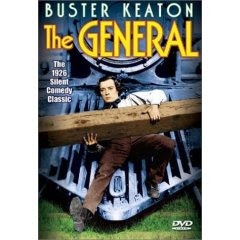
Buster Keaton and Fess Parker. If you are over fifty, then you probably know who they are. Silent film comedian and Davy Crockett/Daniel Boone. The story of Union soldiers traveling south surreptitiously to high jack a locomotive and retreat north, all the while disabling rails and bridges was the stuff of legend before Hollywood was born. Buster Keaton's film, The General is a hallmark of silent film comedy; Fess Parker's film, The Great Locomotive Chase is the hallmark of the Cold War Disney entertainment machine.

Russell Bond's Stealing the General gives the reader the whole story: the idea, its implementation, its execution, and its failure. In April 1862, twenty Union soldiers crossed Confederate lines to steal a locomotive in an endeavor to aid in the capture of Chattanooga, Tennessee. Thinking that Steven Spielberg will have Liam Neeson portray Lincoln in the film version of Team of Rivals and that Harrison Ford possibly will star in Manhunt: The 12 Day Chase for Lincoln's Killer, then Bond's work may generate a third Civil War locomotive chase film.

Lawyer and historian, Russell Bonds offers a wonderfully gripping narrative account of the first Union invasion of Alabama, the theft and the chase, the capture of raiders, their executions and their escapes. By the end of the book, when the reader is thoroughly satisfied, the Medal of Honor is introduced and the story has a second ending, just like the movies. The author has a superlative writing style, and an authoritative control of the vast primary source material available from the participants.

Bonds also tells the stories of Confederate railroading, boom town Atlanta, and locomotive construction. In addition, not only do the personalities of the Union soldiers come to the fore but the personalities of those chasing them. To the satisfaction of this reader, Bonds provides a succinct review of the literature of the chase, both by the participants and by later writers.

Fortunately, members of the Book of the Month Club, the History Book Club, the Military Book Club and shoppers at Borders Books and Music and Amazon.com shoppers will have the opportunity to see the splendid cover art.

 
Bloggers Team