Showing posts with label Turkey. Show all posts

Study dispute resolution in Cyprus

(Delighted to welcome back alumna Anna Spain, who contributes this guest post)

I am pleased to announce a new program on international dispute resolution that I’ll be helping to teach this summer. It will take place in Cyprus, a venue that provides a unique and important context for the study of international dispute resolution.
In 1960, Cyprus became an independent nation after being under British colonial rule, thus aggravating the ongoing dispute between Turkey and Britain over the territory. Hostilities in 1963 and 1974 ultimately resulted in Turkish Cypriots declaring their independence as the Turkish Republic of Northern Cyprus from the Republic of Cyprus. (This history is the subject of a post yesterday as well as many prior IntLawGrrls posts.)
Today, the island nation is divided de facto into these two communities by an UN-administered buffer zone. The UN Peacekeeping Mission (logo below left) has served to maintain the ceasefire on the island since 1964 under the mandate of UN Security Council Resolution 186. Issues pertaining to property, territory, governance and the Turkish vs. Greek cultural identities remain, although economic development has led to increased cooperation in recent years.
In 2002, efforts to resolve the dispute began under the Annan Plan, which was formally presented to the parties by UN Secretary-General Kofi Annan on March 31, 2004. Although the Plan, which proposed terms to adjust the territory and address outstanding property disputes, was not accepted by the parties at that time, future efforts are being considered.
Our innovative study abroad program is inspired by this history.
It’ll be taught by Cesare Romano, Professor of Law at Loyola Law School and Director of the Cyprus Program and me. We will strive to understand the complex factors contributing to this and other international disputes around the world. As detailed here, we will spend one week at the University of Nicosia in the southern part of the island of Cyprus, and two weeks at Eastern Mediterranean University in the north. Participants will also visit the UN Peacekeeping Mission.
The program is designed to offer a comprehensive study of
► International dispute resolution mechanisms; and
► How those mechanisms are used to manage international conflict and to resolve international legal disputes.
The three-week, four-credit course will cover a broad spectrum of topics, including international law, the use of adjudication in international courts and tribunals, negotiation, mediation and other peacebuilding approaches.
I am delighted to be involved in this initiative, both professionally and personally.
The situation in Cyprus offers me an opportunity to expand my research and scholarship about how process, through international dispute resolution, can contribute to resolving conflict and influencing state-behavior. Identity-based conflicts and intra-state conflicts, like the one in Cyprus, are on the rise, expanding international disputes beyond the traditional inter-state context. As a result, new approaches are required. (See my recent article discussing this, Integration Matters: Rethinking the Architecture of International Dispute Resolution.) This initiative will also draw upon my prior experiences as an attorney-adviser at the U.S. Department of State – working with the UN Compensation Commission and the Iran-U.S. Claims Tribunal – in considering ways to approach the property disputes that are a contributing factor to the situation on Cyprus.
On a more personal note, I began my work in this field 17 years ago when, as a high school student, I helped mediate racial tensions between black and white members of my community. I understand first-hand how sensitive and challenging addressing identity-disputes can be. I also believe that progress is possible, and I look forward to sharing this optimism with those who join us in Cyprus this summer.
This program is open to law students as well as members of the general public. Applications are due April 8, 2011. For more information or to apply, visit here.

Intimate Violence, Victim Autonomy & State Due Diligence

Recently, I had occasion to re-read the momentous case of Opuz v. Turkey before the European Court of Human Rights (a case we've discussed on a number of occasions). (The photo at left shows some students and I visiting the Court several years ago). In Opuz, the Court ruled that Turkey’s failure to respond to twelve years of domestic violence against a woman and her mother (who was ultimately killed by the perpetrator) amounted to a violation of the right to life (set forth in Article 2 of the Convention for the Protection of Human Rights and Fundamental Freedoms); a violation of the right to be free from torture and ill-treatment (Article 3); and a violation of the right to non-discrimination on the basis of sex (Article 14).
In so ruling, the Court determined that laws on Turkey's books addressed to protecting victims of intimate violence were not fully implemented:

  • Protective orders took weeks to be issued and then courts failed to enforce them;
  • Police either attempted to convince the (usually female) victim to drop her complaint or interjected themselves into the relationship in an effort to arbitrate a resolution of the dispute;
  • Prosecutors refused to pursue cases;
  • Courts entertained "provocation" and "defense of honor" excuses and issued sentences that are more lenient than those awarded for comparable crimes committed outside domestic context; and
  • knowledge of the laws was low within the populace.
Acknowledging that it cannot place an "unreasonable or disproportionate" burden on the State vis-a-vis the State's positive obligations to prevent violations, the Court held nonetheless that the State's duty to intervene is triggered as soon as the State's agents know (or should know) that there is a real and immediate threat to an individual. (Para. 129). In light of the escalating violence against the applicant and her mother, the Court held that the responsibility for the effective prevention and prosecution of acts of intimate violence fell squarely on the State.

One aspect of the case on which we've not heretofore focused involves the fact that several times over the period in question, the applicant (at left, photo credit) and her mother filed, but then withdrew, criminal petitions against the abusive husband. The Court thus had to consider whether the authorities were nonetheless obliged under the circumstances to pursue the criminal proceedings against the husband.

The Court noted that a number of states require the authorities to continue criminal proceedings even when the victim withdraws a complaint in cases of domestic violence. In other states, the authorities may continue such proceedings in the public interest in light of several factors, including:
  • the severity of the offense and whether it was premeditated,
  • the use of a weapon and the issuance of threats,
  • the presence of children or other at-risk individuals in or around the household,
  • the current state of the relationship of the victim and the perpetrator,
  • the perpetrator's criminal history,
  • perceptions about the existence of a continuing threat, and
  • the history of the relationship between the victim and the perpetrator.
Some states make the further distinction between crimes that are privately prosecutable and require the victim's complaint, and other--usually more serious--offenses that are prosecutable in the public interest in the absence of the victim's complaint and even without the victim's support. (See paras. 87-89).
In Turkey, it is only where the crime in question resulted in unfitness to work for ten days or more that the authorities were required to pursue criminal proceedings even absent a complaint lodged by the victim. (Para. 123). Indeed, Turkey argued that it would have violated the applicant's right to privacy and family life, set forth in Article 8 of the Convention, were the police to have separated the husband from the family.

The Court noted that a balance must be struck between the right of every person to be protected from intimate violence and the parallel rights to privacy and the family. (Para. 138). Here, the Court determined that Turkey had not struck the right balance in light of the factors listed above. Rather, the Turkish legislative framework set too high a bar to allow a prosecution to go forward absent a complaint from the victim. In addition, the authorities, although not entirely passive, failed to display the necessary due diligence to protect the rights at issue in light of those protective measures that were available to them and the severity of the harm. Bearing in mind the many reasons a victim might withdraw her complaint (including threats, "false consciousness," an apparent reconciliation, and a faith in the perpetrator's willingness and ability to reform), the rights to privacy and the family cannot be applied in such a way that they effectively override those rights addressed to the very safety of the private realm in the first place.

Interights intervened in the case (their case file is here) and provided an excellent brief on the emerging due diligence standard in human rights law. The brief traces trends in domestic law away from requiring victim participation in such cases towards placing authority for effective prosecution on the State. In addition, the brief noted that other persons and entities (such as medical personnel, family members, and neighbors) can increasingly report cases of domestic violence.

The petitioner, Nahilde Opuz, is reportedly in hiding, concerned that her ex-husband will retaliate against her for pursuing her case.

On August 21

On this day in ...
... 1762, Lady Mary Wortley Montagu (left) died at age 73 in her birth city, London, a year after returning to the city on the urgings of her daughter, then wife to Britain's Prime Minister. Montagu had lived abroad much of her adult life. She'd been born into an aristocratic family, befriended a women's rights activist, Mary Astell, and eloped with Edward Montagu over her father's objection. Edward also was a member of the British elite, and while he served as Ambassador at Istanbul, she wrote the Turkish Embassy Letters for which she is best known. (image credit) Having herself been disfigured by disease, she became an expert on and advocate, through her letters, of the Turkish method of smallpox vaccination -- the only one then available.

(Prior August 21 posts are here, here, and here.)

On August 10

On this day in ...
... 1920 (90 years ago today), in a community outside Paris, the Treaty of Sèvres was signed by representatives of the Allied Powers who'd won World War I and of the Ottoman Empire they'd defeated. By the treaty's terms the Ottoman Empire was abolished. Turkey was to give up rights to Arab Asia and North Africa, while Armenia was to become independent and Kurdistan autonomous, and Greece was to control specified regions. (credit for photo of Greek Prime Minister Eleftherios Venizelos signing the treaty) "Rejected by the new Turkish nationalist regime, the Treaty of Sèvres was replaced by the Treaty of Lausanne," Switzerland, the 1923 pact discussed in this post.

(Prior August 10 posts are here, here, and here.)

On July 21

On this day in ...
... 1974, a day after Turkish troops invaded the island of Cyprus and a week after "a Greek-sponsored coup in the capital, Nicosia," the "Cyprus conflict spill[ed] into London." Marching through London's city center were more than 10,000 protesters, identified as "Greek-Cypriots and British left-wing activists" by the BBC. On Cyprus, the dispute would render 200,000 refugees, as Turkey's hold on the northern part of the island persisted. Efforts at full reconciliation continue to this day.

(Prior July 21 posts are here, here, and here.)

On March 30

On this day in ...
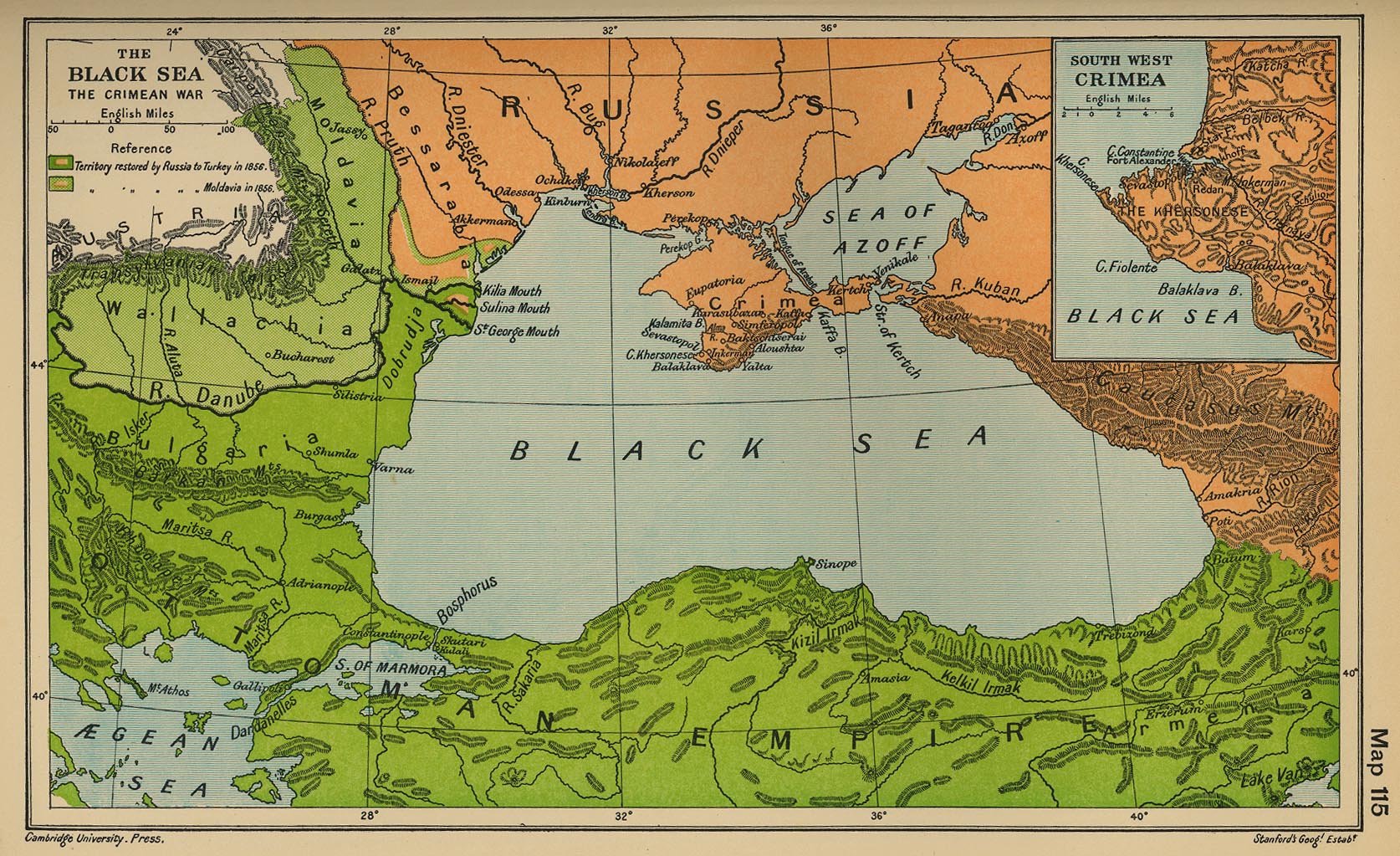
...1856, in France's capital city, the Treaty of Paris was signed, ending the Crimean War, a 3-years-long conflict about which we've posted. Concluding this pact were "Russia on one side and France, Great Britain, Sardinia-Piedmont, and Turkey on the other." The agreement "guaranteed the independence and territorial integrity of Turkey," provided for reorganization of territory that eventually became Romania, and closed the Black Sea "to all warships," and opened the Danube river "to the shipping of all nations." (map credit)


(Prior March 30 posts are here, here, and here)

On January 5

On this day in ...
... 1809, at what is now Çanakkale, Turkey, delegates from Britain and the Ottoman Empire signed Treaty of Peace, Commerce, and Secret Alliance commonly known as the Treaty of the Dardanelles, named after the Turkish strait depicted at right. Ratifications would be exchanged in July of the same year. The pact provided inter alia for an end to hostilities between the 2 powers, restoration of seized property, establishment of diplomatic and trade relations, and a British promise to support the Ottomans in the event of an attack by France. A point of treaty-drafting interest:

[T]he treaty is of particular interest because of its language. Normally, treaties are drawn in the language of the parties negotiating them. Because the Ottomans had a limited knowledge of English, however, they insisted that the treaty be drawn in Turkish and French, with which they were much more comfortable. This was a matter of some discussion in the foreign office, but the Ottoman position prevailed.
(Prior January 5 posts are here and here.)

What do women want? International law that matters in their day-to-day lives

(Part 3 of a 3-part guest post on what women want from international criminal justice, by Judge Patricia M. Wald. Part 1 is here; Part 2 is here.)

I believe women want international law and tribunals to make a difference in their daily lives.
Even if tribunals do their work well, so that women’s wrongs are recognized as serious war crimes, crimes against humanity, and tools of genocide – even if enough women can infuse their own sensitivities into the process – even if tribunals achievements’ are truly accessible to ordinary women – will all that really help women in states where old ways survive? In states where women are treated, in peacetime as well as in wartime, as property, and their sexual and physical integrity impugned at will?
Even in countries that have ratified the Convention on the Elimination of All Forms of Discrimination Against Women and other human rights treaties, customary law and local norms executed by tribal and religious courts often approve practices that oppress and diminish women – that deny them rights to work, to hold property, to custody of their children, to be educated, to inherit money, or to obtain divorces however maltreated they may be. In these benighted lands, there are only a few embryonic organizations, and even fewer shelters, for oppressed women.
You may ask what all this has to do with tribunals.
I see an entry point whereby the advances of international humanitarian law and tribunal jurisprudence could help the plight of these women and girls. It is future development of the crimes against humanity doctrine.
Unlike genocide, which limits its protection to racial, religious, and ethnic groups, and unlike war crimes, which require a nexus to armed conflict, crimes against humanity can include a state-ordered, perhaps even a state-tolerated, regime of discrimination that violates the fundamental rights of women.
Surely the conditions I have described could, in extreme cases, amount to the discriminatory treatment that is the vital element in the underlying crime of persecution, which can qualify as a crime against humanity. Article 7 of the ICC Statute defines a crime against humanity as prohibited conduct that is part of an “attack,” against “any civilian population,” which involves “the multiple commission of specified acts pursuant to or in furtherance of a state or organizational body”; the violations must be systematic or widespread. Article 7(g) sets out the full list of sexual crimes – rape, slavery, forced pregnancy, etc. – that may anchor a crime against humanity designation. Article 7(h) specifies gender as a ground on which a claim for persecution can be based.
The $64 question, of course, is whether a state-tolerated regime of gender oppression, enforced by private parties or clerical or tribal authorities, would ever meet the test. It is certainly not beyond contemplation that discriminatory legislation, exemplified by the Shiite law on mandated intercourse and travel bans for married women passed by the Afghanistan parliament, might qualify, or that regimes that allow women to be stoned to death for adultery without any formal trial might as well.
Recent developments lend support for this way of thinking:
► Action by U.S. immigration authorities, granting asylum for women who show that the rigid discriminatory codes of conduct pertaining to women in their native countries were officially approved or enabled by the government;
► A ruling by the European Court of Human Rights that Turkey’s failure to protect a woman who had sought help from the authorities from domestic violence amounted to gender discrimination in violation of obligations under CEDAW; and
► The embryonic responsibility to protect doctrine embraced by the United Nations, which seeks to delineate the obligations of a country to keep its residents safe from predatory attacks by nongovernmental groups.
I do not speak in an advocacy mode. Nor am I sanguine that crimes against humanity will proceed along this route. But I persist in thinking that the very existence of a universally accepted criminal norm that so neatly fits the situation that so pervasively stifles the very life and spirit of so many women in so many parts of the world could serve a purpose:
► An extreme case could arise where the degree of violence or slavery-like conditions systematically imposed on civilian women would produce an international cry for humanitarian intervention, including criminal accountability of the persons responsible.
► Following Justice Robert H. Jackson’s more conservative example as Chief U.S. Prosecutor at Nuremberg – he insisted that the crimes against humanity committed by the Nazis against the Jews in prewar Germany could be charged as such if they were part of preparation for war – a prosecutor might in the context of a wartime case against leaders of these regimes add a count based on the continuing abuses perpetrated against women at all times. (I have often wondered how a judge could rule on wartime atrocities against women and not be troubled by equally abhorrent acts committed in peacetime against those same women.)
► There is the hope and some evidence that tribunal decisions on gender crimes will work their way into domestic jurisprudence.
► The recognition of crimes against humanity extending to systematic oppression of women would be a useful talking point in diplomatic negotiations that seek compliance with more traditionally enforceable treaties or convention obligations.
► In some countries – Kuwait, Egypt, even Iran – where women are beginning to organize against gender discrimination and to affirmatively seek rights to education, custody, and property, the crime against humanity designation for persistent denial of their pleas might add to their powers of persuasion.
► If this norm were in place, countries would have to comply with it when seeking to join the ICC – a point at which they must conform their own laws in order to meet complementarity standards.
► It would indeed be salutary if the ICC prosecutor were to mobilize on behalf of women suffering the worst abuses the kind of “Dutch uncle” supervision -- proactive complementarity -- that he has told us is already under way in several countries where outside groups have urged him to open formal investigations into a variety of alleged offenses.
I entreat you to think about ways in which the tribunals can alleviate the misery of women, in situations where the commission of serious crimes against humanity is virtually indisputable, so that if and when the right situation comes along, you will be ready.

On September 14

On this day in ...
... 1829 (180 years ago today), a years-long armed conflict between Russia and the Ottoman Empire ended with the signing of the Treaty of Edirne in the city of that name -- a city in modern-day Turkey that also had been known as Adrianople. Impetus for the war had been the intervention of Russia, allied with Britain and France, in Greeks' struggle for independence from the Ottomans. The treaty's "most important clause granted Greece complete independence"; on account of this and other provisions, the pact "marked another step in the decline of the Ottoman Empire," which would cease altogether after World War I. (credit for 1828 caricature by Briton William Heath, published during the war, depicting Russia's czar encaging a turkey)

(Prior September 14 posts are here and here.)

Landmark Domestic Violence Judgment by European Court of Human Rights

In a landmark decision, the European Court of Human Rights has unanimously found that a state violated the human rights of the applicant and her mother in failing to protect them against domestic violence. In Opuz v Turkey, discussed in a previous post on IntLawGrrls, the applicant alleged that the state bore responsibility under the European Convention on Human Rights for its failure to take action against her violent husband who repeatedly attacked her and killed her mother.
The European Court had previously found state responsibility in a domestic violence case in Bevacqua and S. v. Bulgaria (2008), grounding its decision in article 8 (right to respect for family life) of the European Convention. In Opuz v Turkey, however, the Court found violations of:
  • the right to life (art. 2) "in respect of the death of the applicant's mother"

  • the prohibition of torture (art. 3) "in respect of the authorities' failure to protect the applicant against domestic violence perpetrated by her former husband"

  • and -- significantly -- the right to non-discrimination on the basis of sex (art. 14). It explicitly recognized domestic violence as a form of gender discrimination that gives rise to state responsibility.
Regarding the latter, the Court found:
the existence of a prima facie indication that hte domestic violence affected mainly women and that the general and discriminatory judicial passivity in Turkey created a climate that was conducive to domestic violence ...
the criminal-law system, as operated in the instant case, did not have an adequate deterrent effect capable of ensuring the effective prevention of [domestic violence] ...
Bearing in mind its finding above that the general and discriminatory judicial passivity in Turkey, albeit unintentional, mainly affected women, the Court considers that the violence suffered by the applicant and her mother may be regarded as gender-based violence which is a form of discrimination against women. Despite the reforms carried out by the Government in recent years, the overall unresponsiveness of the judicial system and
impunity enjoyed by the aggressors, as found in the instant case, indicated that there was insufficient commitment to take appropriate action to address domestic violence.

Read the Court's decision here.
Watch the Court hearing in the case in October 2008 here.
A report issued in May 2009 on the Caselaw of the European Court of Human Rights on Violence against Women, prepared by Christine Chinkin, is available here.

On April 26

On this day in ...
... 1828, Russia declared war on Turkey, asserting that the latter had breached the 2-year-old Treaty of Akerman. Eventually Turkey's sultan would yield to Russia's tsar. The ensuing 1829 Treaty of Adrianople resulted in entrenching Russia's hold on Caucasus and Danube territories.
... 1248, the Gothic structure in Paris known as La Sainte-Chappelle was consecretated. It was built as the royal chapel for the "ultra-devout" King Louis IX, and its stories-tall stained-glass windows (above) are, even today, a sight to behold.

(Prior April 26 posts are here and here.)

On April 12

On this day in ...
... 1204 (805 years ago today), during the 4th Crusade, Constantinople fell to crusaders and Venetians. All who take note of current conflicts will find familiar ground in what this website writes of what happened next in the Byzantine city (below left; credit) where today stands Istanbul, Turkey:
Thus began the sack of Constantinople, the richest city of all Europe. Nobody controlled the troops. Thousands of defenseless civilians were killed. Women, even nuns, were raped by the crusading army and churches, monasteries and convents were looted. The very altars of churches were smashed and torn to pieces for their gold and marble by warriors who had sworn to fight in service of the Christian faith.

... 1968, the U.S. Public Health Service released evidence indicating that in Skull Valley, Utah, 6,400 sheep had died because of the airborne testing 4 weeks earlier of a nerve gas agent by the U.S. Army at its Dugway Proving Ground nearby. The Pentagon maintained that no harm to humans would result from the testing of the chemical weapon. (credit for 1968 Deseret News photo)

(Prior April 12 posts are here and here.)

On November 15

On this day in ...
... 1978 (30 years ago today), in New York City, Dr. Margaret Mead died from cancer. She'd been born 76 years earlier in Philadelphia, Pennsylvania, to a father who was a finance professor and a mother who was a sociologist. While a graduate student at Columbia, Mead was mentored by the anthropologist Franz Boas. At age 23 she traveled to the South Pacific for field research on her dissertation (center left), eventually published as the perennial bestseller Coming of Age in Samoa (1928). She worked with New York's American Museum of Natural History, wrote a column for Redbook magazine, and spoke out on U.S. social issues. Having had the opportunity to hear a Mead lecture shortly before she died, this IntLawGrrl can attest that she was a powerful speaker.
... 1983 (25 years ago today), inhabitants in the north of an Aegean Sea island broke with inhabitants of Greek ancestry to the south, and declared the Turkish Republic of Northern Cyprus to be an independent state. Ever since, as a de facto matter, the U.N.-controlled buffer zone in blue on the map at right has marked the division of Cyprus. As a de jure matter, however, no country other than Turkey recognizes the breakaway territory as a state. On May 1, 2004, "the Republic of Cyprus became a full member" of the European Union. But Community law is "suspended in the area administered by Turkish Cypriots."

European Court of Human Rights considers domestic violence

This October the European Court of Human Rights (left) heard arguments in the case of Opuz v Turkey (ECtHR press release) in which the applicant claimed a violation of the Convention on the basis of Turkey’s alleged failure to take action against the applicant’s husband who repeatedly subjected her to domestic abuse and killed her mother. The applicant complained of violations of her right to life (Art. 2), the right to be free from torture, inhuman and degrading treatment or punishment (Art. 3), the right to an effective remedy (Art. 13) and the right to be free from discrimination (Art. 14--in this case it was a claim of gender discrimination). (photo credit)
The case is particularly important as it opens the vista for a recognition at ECtHR level that states have enforceable and justiciable positive obligations to take reasonable steps to protect individuals from domestic violence. Of course, states’ positive obligations in relation to the right to life and to the right to be free from torture, inhuman and degrading treatment or punishment have been long-established under the ECHR, but a finding that domestic violence engages those obligations would be enormously important from the perspective of effective protection. Should the Court find in Mrs. Opuz’s favour, this could significantly chip away at the public/private divide which has traditionally obstructed attempts to use international law to protect vulnerable individuals (and especially women and children) from intimate forms of violence. The Court has already held that states have positive obligations to protect children from sexual abuse and corporal punishment from their parents (Z v United Kingdom (2002) and A v United Kingdom (1998), for example) and so the integrity of this public/private dividing line is not in issue, but whether it will be pierced from a gender perspective remains to be seen. [Aside: this is not intended to deny that men are at times the victims of domestic violence, but rather to reflect the fact that such victims are primarily women].
It seems to me to be quite probable that the applicant will succeed under Arts. 2 and 3, particularly since the violence was frequently reported and the state did not effectively investigate and protect, but success under Art. 14 (non-discrimination) is arguably somewhat less likely. Nevertheless, the case represents an important opportunity for the Court to make a decisive mark against a ‘hands off’ approach to domestic violence and rather to recognise that such violence must be combated. The date of the judgment is not yet known, but there is little doubt that it will be noted and discussed here on IntLawGrrls!
INTERIGHTS are a joined party in this case and their summary of the arguments is available here.

On July 24

On this day in ...
... 1823 (185 years ago today), Chile abolished the slave trade. Abolition was a legislative act of the Republic of Chile, which had been established after the South American country won independence from Spain in 1818. Such measures are detailed in James Ferguson King, The Latin-American Republics and the Suppression of the Slave Trade, 24 Hispanic American Historical Review 387 (1944). (map credit)
... 1923 (85 years ago today), in Switzerland, Britain, France, Greece, Italy, Japan, Romania, Turkey, the United States, and Yugoslavia signed the post-World War I Treaty of Lausanne, which established a Republic of Turkey in part of what had been the Ottoman Empire, and further provided for protection of the Greek ethnic minority within those borders. (map credit)

Banning headscarves, banning parties

So, headscarves are back in the courts in Europe, and it’s a bit more complicated this time. Turkey has for some time banned headscarves in universities, in pursuit of its constitutional mandate of secularism. The legislature recently passed a law rescinding the ban, and that law is being challenged before Turkey’s Constitutional Court as violating secularism. Fair enough. But here’s where it gets a bit tricky: The Constitutional Court just agreed to hear a case seeking to ban the governing party and 71 of its members from politics for five years because they are pursuing an anti-secularist agenda. The suit apparently cites the law rescinding the headscarf ban as exhibit A. Turkey’s governing party is the successor to an openly Islamic party previously banned by the Constitutional Court for this reason. It is also the party that won an unpredecented 47% of the vote in the last election.
The first suit sounds like fair play all around. The majority party passes a law changing a longstanding policy, it’s challenged in court as unconstitutional – this is the usual political-legal rough and tumble. The second suit seems rather more extreme. The European Court of Human Rights has apparently upheld Turkey’s banning of other parties in at least some instances, as “necessary in a democratic society.” I can imagine why this might be the finding for parties that are openly terrorist in their means, for example, or oppressive in their ends – judicial review of their individual policies in such instances would not necessarily serve to keep their actions within constitutional bounds. (Note that these are just examples -- I do not know what the justifications were for the prior bans.) But if a party is playing by the democratic rules – winning elections, passing legislation, letting constitutional claims be heard before the courts, and living with the results -- why should there be any need to act against that party directly, even if it were to put forward unconstitutional policies, and even if it were to do so consistently, as this suit claims? Shouldn’t lawsuits aimed at the policies, instead of the party, be a sufficient remedy for any unconstitutional laws it might pass?

"The Politics of the Veil"

As recently reported by the New York Times and elsewhere, a debate is raging in Turkey about whether women should be banned from wearing headscarves (hijab) and other religious attire in public universities and other state institutions. (map credit)
Turkey imposed a ban to promote a vision of secular democracy that traces its broadest roots to the founding of the modern Turkish state by Mustafa Kemal Ataturk (below left) in the 1920s. (The law in question apparently does not single out women; certain types of beards and other forms of religious attire were also prohibited). Similar bans have been in place on and off since the days of Ataturk. In a departure from this long history, Turkey’s parliament recently backed constitutional amendments that would enable the lifting of the ban. These proposals have brought about protests in the streets seeking to maintain the ban and related protections for secularism (below right). (photo credit)
Such restrictions on religious expression implicate well-established international human rights protections. As in the 1st Amendment to the U.S. Constitution, many of the omnibus human instruments treaties include reference to the right to religion in conjunction with freedom of expression and thought. For example, the 1953 European Convention on Human Rights & Fundamental Freedoms (ECHR) at Article 9 articulates broad protections for freedom of thought, conscience, and religion that include the right to change one’s religion and to express it in community with others. The right to manifest one’s religion, however, is subject to a potent “clawback” clause at Article 9(2), which authorizes the state to prescribe limitations on the exercise of the right in certain circumstances. Article 9(2) reads:
Freedom to manifest one’s religion or beliefs shall be subject only to such limitations as are prescribed by law and are necessary in a democratic society
► in the interests of public safety,
► for the protection of public order, health or morals, or
► for the protection of the rights and freedoms of others.

Similar language appears in the universal International Covenant on Civil and Political Rights (ICCPR), drafted more than a decade after the ECHR. Thus, the human rights treaties treat internal convictions differently than external religious manifestations: restrictions may be placed by the state on the latter so long as they are prescribed by law and necessary to achieve a legitimate, and enumerated, state aim.
Ironically, perhaps, the ban that Turkey is now considering lifting has already received the blessing of the European Court of Human Rights (below right).
That blessing came in response to a complaint by Leyla Şahin, a medical student at the University of Istanbul who was denied access to lectures, courses and two written exams because she was wearing a headscarf. Şahin alleged a violation of several articles of the ECHR and its Protocols: ECHR Articles 9 (freedom of thought, conscience and religion), 8 (right to respect for private and family life), 10 (freedom of expression), and 14 (prohibition of discrimination), and Article 2 of Protocol No. 1 (right to education). The case is Şahin v. Turkey.
In a judgment that was 5 years coming, the Grand Chamber (analogous to en banc review) rejected Şahin’s claims. While it ruled that the ban was an infringement on her rights of religious expression, the Chamber considered the restriction justified within the Turkish context. In particular, it ruled that Turkey was acting within its margin of appreciation when it considered the ban to be necessary to protect two legitimate state aims: the rights and freedoms of others and public order. With respect to the first articulated aim, the Chamber reasoned that that the headscarf is perceived by many as a compulsory religious duty. Allowing it to be worn in state institutions would impact the rights of others who chose not to wear it. (Here, the Court cited Dahlab v. Switzerland, in which the court held that a pre-school teacher wearing a headscarf may affect the freedom of conscience and religion of her very young charges). This, the Court reasoned, would threaten the right of gender equality that pervades the ECHR.
With respect to the second legitimate aim — the protection of public order — the Court ruled that the ban was justified in light of the danger posed by political Islam to the secular democratic state. The Court determined that Turkey was within its right to ban the headscarf in the face of extremist political movements that are seeking to dismantle the secular republic and impose their religious values on society as a whole. In this way, the Court accepted that the headscarf in Turkey had become a symbol of “political Islam” or “radical Islam” and that allowing women to wear the scarf is the equivalent of allowing political Islam to take root.
The Şahin decision turns largely on the concept of the margin of appreciation, a jurisprudential abstention that grants states some measure of discretion in implementing their human rights obligations in their unique historic, cultural, and social contexts. Similar to U.S. constitutional adjudication, the more fundamental the right and the more extreme the restriction, the narrower the margin of appreciation. In this case, Turkey was granted a wide margin of appreciation in light of the fact that the European Court could identify no European consensus on regulating religious symbols and thus declined to impose one on the rest of Europe. (This aspect of the ruling prompted a vigorous dissent from Françoise Tulkens, the Belgian judge, who lamented the lack of “European supervision” offered by the Court.) In addition, the Court noted that Turkey’s specific historical experience with fundamentalism and constitutional secularism justified the ban.
The Court did not independently consider Şahin’s other claims involving her right to education or privacy on the ground that those claims did not raise any issues separate from the claims under Article 9. The Court’s ruling considers the issues entirely in the abstract, even though there was no evidence in the record that the applicant sought to undermine the ethos of secularism (in fact there was testimony that she supported it), that there was any disruption at the university upon her wearing the scarf, that she subscribed to any extremist movements, or that her goal was to proselytise or attack the convictions of others. (An interview with Şahin is available here). Even in the abstract, the opinion lacks analytical rigor as to how the ban advanced the state’s legitimate goals of maintaining secularism and public order. This is the thrust of the lone dissent by Judge Françoise Tulkens (left). In her view, the principles of secularism, equality and liberty should harmonized, not weighed against each other. Furthermore, the sadly ironic result is that the European Court has disempowered women who choose the wear the headscarf out of religious conviction and ratified their exclusion from public universities — all in the guise of promoting gender equality. (It may also provoke a female “brain drain”; Şahin apparently now practices as a doctor in Vienna).
Although the case applies to just Turkey as a technical matter, the Court’s jurisprudence applies to all of Europe. This raises the question of how the Court would consider a similar ban in place elsewhere in Europe, such as the one in France (French tympanum with motto, below left). In 2004, France banned the wearing of “ostentatious” symbols symbols of religious affiliation in state institutions that on its face applies equally to Sikh turbans, Yarmulkes, headscarves, crosses, etc. In drafting a “neutral” statute the French Parliament claimed to be guided by the concept of laïcité, or state secularism, that purportedly undergirds the French state. And yet, the statute is inherently subjective, and the French majority practice will be taken as the standard against which all other practices will be compared. (In the U.S., this formulation would be immediately declared void for vagueness, because it allows for too much discretion in determining what constitutes “ostentatious.”) The French measure has been given judicial approval by the French Conseil Constitutionnel, which cited the Şahin case for support. (The best discussion of this issue, the French law, and the relevant decisions can be found in Joan Wallach Scott’s The Politics of the Veil (right), which inspired this post and its title.)
These concerns about the wearing of the headscarf create simplistic associations between religious traditions and Islamic fundamentalism, radicalism, and terrorism. This belies the fact that the headscarf and related articles of Islamic clothing (a useful guide may be found here) are in many ways unstable signifiers. Some who choose to wear the headscarf or other coverings find support—if not an obligation—for them in the Qur'an. In these circumstances, the headscarf and other coverings act as symbols of individual religious conviction, spiritual duty, and piety. In the “diaspora”—where the custom may not be mandated by religious edict, familiar pressure, or social norms—wearing the headscarf may express nostalgia for a homeland (perhaps never known), operate as a fashion statement or a form of adolescent rebellion against assimilationist parents, or assert an ethnic or religious identity against perceived cultural hegemony. Of course, how we dress is not devoid of political significance; religious fundamentalist movements have appropriated the headscarf and other coverings for political ends. In these contexts, mandating that women cover themselves can result in female subjugation by preventing women from fully participating in society. While ostensibly shielding women from the male gaze, the headscarf and other coverings may also operate to control and suppress women’s sexuality and sexual autonomy. As a symbol of chastity, the headscarf can also serve as a shaming symbol against others who resist the practice. The headscarf thus can be used as an expressive symbol by—and against women—depending on the context. Opinions like Şahin ascribed the headscarf with a monolithic meaning: the wearing of the headscarf signals ideological support for political Islam. In today’s context, this meaning has in many ways eclipsed the prior simplistic equation of the headscarf with women’s oppression.
Putting legal arguments to the side, such bans are flawed as a matter of policy. As Scott argues in her book, such ban simply reaffirm the status of Muslims as “outsiders” who inevitably pose a threat to mainstream culture and society. By outlawing the wearing of the headscarf, it inevitably becomes a symbol of resistance and an expressive act. At the same time, such bans conveniently give the illusion of action: they are easily implemented and compliance is easily verified. Such quick fixes are no substitute for the really hard work of genuine assimilation, which must involve the adaptation of the host culture to infusions of new cultures in the face of inevitable processes of globalization and migration. In any case, denying young women the right to a public education and to public employment is a perverse and counterproductive reaction to a practice with deep religious and cultural moorings.

On this day

On February 24, ...
... 1803 (205 years ago today), the U.S. Supreme Court for the 1st time held an Act of Congress unconstitutional, and thus established the power of judicial review over legislative and executive action. Chief Justice John Marshall wrote the landmark judgment in Marbury v. Madison (above) for a unanimous Court. Evidence of the decision's lasting and global significance is this article by James Crawford, a professor at England's University of Cambridge: Marbury v. Madison at the International Level, 36 George Washington International Law Revew 505 (2004).
... 1955, 5 countries signed the Pact of Mutual Cooperation Between the Kingdom of Iraq, the Republic of Turkey, the United Kingdom, the Dominion of Pakistan, and the Kingdom of Iran. Known as the "Baghdad Pact" in recognition of the Iraqi city in which it was signed, the treaty did not last long: as detailed in a BBC analysis, its failure "heralded the end of British influence in the Middle East."

Democracy and the Rule of Law in Armenia?

A few days ago, President Kocharian of Armenia dismissed Judge Pargey Ohanian, who had acquitted two businessmen who had been imprisoned and charged with corruption after they had accused Armenian custom officials of corruption. Judge Ohanian’s dismissal indicates that the effects of the Constitutional reforms of 2005 may be all too limited.
Following Armenia’s September 1991 independence from the Soviet Union, the country was held up often as a beacon of democracy among transitional countries. In a recent article, I used the disputed 2003 Armenian Presidential elections and analysis of Armenia’s constitution as lenses through which to assess the transition to democracy and adherence to the rule of law in Armenia. Based on analysis of the conduct of and events surrounding the elections of 2003, the status of the Armenian judiciary, and relevant Armenian Constitutional provisions, I claimed that, despite the wide-ranging changes in the legal and political landscape since 1991’s independence from the Soviet Union, rule of law reform and the spread of democracy was largely superficial and formalistic. I noted that, rather than enjoying democratic freedom and the protection of the rule of law following Armenia’s independence from the Soviet Union, Armenians were experiencing a curtailment of liberty and the capture of the mechanisms of government.
In the article I also attempted to identify the reasons for the failure of Armenia’s transition. Among the factors I identified were Armenia’s strategic geo-political location, pervasive corruption and clientelism, the balance of powers enshrined in the Armenian constitution, nationalism and the Armenian Diaspora, and multilayered and sometimes conflicting donor country motives. While I concluded that the factors were inextricably intertwined, making definitive diagnosis impossible, in the Article I pointed to several fundamental mechanisms, including a more knowledgeable and purposive role of the Armenian Diaspora, that may lead to rule of law and democratic reform. Judge Ohanian’s dismissal indicates that there continues to be executive domination of the judiciary, and a great need for reform in Armenia.
This past week, the 1915 genocide of the Armenian people has been much in the news. Despite protests from Turkey, the issue of the United States' recognition of the Armenian Genocide will go to the floor of the U.S. Congress. However, in the face of continued warnings regarding the geo-political implications of such a vote, Congressional support has waned, and it seems that the recognition will not come from the U.S. government.
It is not clear whether a vote in the U.S. Congress would stimulate a rapprochement between Armenia and Turkey. However, action that could stimulate long-suppressed dialog, and open Armenia to greater interaction with its neighbors and the rest of the world is to be desired. Resolution of the Karabakh conflict and of the unresolved and long-simmering issue of the genocide between Armenia and Turkey would benefit both countries and contribute to stabilizing the tension-filled region.

Take care not to court insecurity

"George Bush Goes for Consensus in Naming Michael Mukasey for Justice," reads the minutes-old headline at Le Monde. It spins with the Associate Press story that surmises, "Mukasey appears unlikely to face a bruising confirmation battle in the Democratic-controlled Senate."
No quibbling about the credentials of Mukasey (left), who presided over high-profile terrorism trials while a Chief Judge at the U.S. District Court in Manhattan, to serve as Attorney General of the United States. Still, there's good reason for Senators to take a hard look at the nomination.
Fresh in mind is the U.S. citizen whom the U.S. executive kept in "enemy combatant" detention for years before permitting him to stand trial in federal court in Miami. Prosecutors set out the case against José Padilla in an open and public proceeding, without resort to classified evidence -- and jurors promptly returned the verdict of guilty that likely will permit his incarceration for life. Putting to one side the difficulties presented to the defense by the taint of prior detention, many saw the result as proof positive that persons suspected of terrorist acts can and should be handled through the justice system in place before attacks on Washington and New York set the stage for efforts to establish a newfangled system. (See here, for example; I'd written as much here before the verdict.)
The administration's called this new mechanism "military commissions," though, as the Supreme Court recognized in Hamdan v. Rumsfeld, in many respects -- respects particularly menacing to the U.S. tradition of fundamental fairness in the substance and procedure of criminal law -- the system deviates from past commissions. Despite Congress' near-rubberstamp of the system in the post-Hamdan Military Commissions Act, the newfangled system continues to falter: the latest halt occurred because military judges concluded that the government was asking them to act illegally.
Against this backdrop, consider now the op-ed that Mukasey published in the Wall Street Journal a week after the close of the Padilla case. In stark contrast with many other commentators, Mukasey saw the result not as an affirmation of existing practice, but rather as evidence that "current institutions and statutes are not well suited to even the limited task of supplementing what became, after Sept. 11, 2001, principally a military effort to combat Islamic terrorism."
To solve the problem that he maintains is at hand, Mukasey commends his readers, and Congress, to give "careful scrutiny" to proposals for "a new adjudicatory framework" -- the so-called Homeland Security Court or, more often, National Security Court, idea that's been percolating in certain thinktanks for a year or more now. It remained out of the larger public discourse until a recent bipartisan publication in support.
Have yet to read anything in support that demonstrates genuine need for this legal contraption. Proponents tend to ignore statistical analyses -- like this chart in the ABA Journal -- indicating that the Justice Department's scarcely a failure in playing its part in the U.S. antiterrorism campaign. And just as the "new paradigm" proponents of a few years back (some of the same folks now calling for this "new court") acted as if history offered no cautionary lessons, proponents today do not mention difficulty and criticism (some from the pre-9/11 United States) visited upon other countries that've pursued this path. Think of the nonjury Diplock courts in Northern Ireland, or the special terrorism tribunals in places like Egypt, Turkey, and Peru. These examples show that such courts, though established in the name of enhancing security, not infrequently make guarantees of due process, public assumptions of the fairness and legitimacy of judicial decisions, and, in extreme cases, public safety, less secure.
With benefit of hindsight, Mukasey's August op-ed looks much like an audition for the position of next Attorney General. And with more than a year remaining for implementation, the Senate ought to use the confirmation hearings to test whether the nomination's intended to pave the way for a final Bush legacy: for the 1st time in the history of a centuries-old country that's faced many a threat to peace, even to its very existence, establishment of a permanent, due-process-lite National Security Court.
 
Bloggers Team