Showing posts with label Permanent Court of International Justice. Show all posts

On August 30

On this day in ...
... 1924, the Permanent Court of International Justice, headquartered at the Peace Palace in The Hague (right), issued its judment on jursdiction in Mavrommatis Palestine Concessions Case (Greece v. United Kingdom). One passage read:
By taking up the case of one of its subjects and resorting to diplomatic action or international judicial proceedings on his behalf, a State is in reality asserting its own right — its right to ensure, in the person of its subjects, respect for the rules of international law.
Decades later the statement came under attack, in the First report on diplomatic protection, presented at a 2000 session of the International Law Commission. Special Rapporteur John R. Dugard characterized the passage as a "judicial blessing" of a legal "fiction," one that inter alia "provided a justification for military intervention or gunboat diplomacy."

(Prior August 30 posts are here, here, and here.)

Not liking Lotus in Kosovo

New sighting of old law is not always a welcome event.
Take glimpses of Lotus in Kosovo, for example.
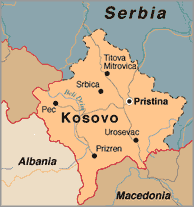
Kosovo, as detailed in yesterday's post, refers to the Advisory Opinion on Accordance with International Law of the Unilateral Declaration of Independence in Respect of Kosovo issued on July 22 at the Peace Palace (above) in The Hague, Netherlands. (photo credit)
About 7-1/2 months after the proclamation on February 17, 2008, of the Kosovo Declaration of Independence, the U.N. General Assembly asked the 15-member International Court of Justice: Is that declaration "in accordance with international law"?
"The answer to that question," the ICJ reasoned in ¶56 of its principal opinion, "turns on whether or not the applicable international law prohibited the declaration of independence." Below the surface of that phrasing, this reader caught sight of S.S. Lotus, the 1927 Permanent Court of International Justice holding that international law permits whatever it does not prohibit. Yesterday's post pointed to problems this methodology creates, and further noted that Lotus receives no citation on any of the principal opinion's 44 pages.
In point of fact, though the Kosovo judgment comprehends 9 additional, separate opinions, Lotus is discussed only once anywhere -- in the 3-page Declaration filed by Judge Bruno Simma (left).
Simma too saw Lotus lurking in ¶56. He did not like what he saw.
Adoption of the Lotus approach "reflects an old, tired view of international law," wrote Simma, whose many academic positions include former Law Dean at the University of Munich and current Visiting Law Professor at the University of Michigan. Simma's Declaration variously termed such reasoning "mechanical," "obsolete," "anachronistic, extremely consensualist," and "redolent of nineteenth-century positivism, with its excessively deferential approach to State consent." A onetime advocate before the Court in cases such as LaGrand, Simma lamented what he considered a missed opportunity for the ICJ "to move beyond" in Kosovo:

The Court could have considered the scope of the question from an approach which does not, in a formalistic fashion, equate the absence of a prohibition with the existence of a permissive rule; it could also have considered the possibility that international law can be neutral or deliberately silent on the international lawfulness of certain acts.
Simma imagined "a deeper analysis" of whether self-determination or remedial secession -- concepts raised in submissions during the pendency of the Kosovo case -- "permit or warrant independence (via secession) of certain peoples/territories." He continued:

[T]he Court could have delivered a more intellectually satisfying Opinion, and one with greater relevance as regards the international legal order as it has evolved into its present form, had it not interpreted the scope of the question so restrictively. To treat these questions more extensively would have demonstrated the Court's awareness of the present architecture of international law.
Forcing an act into a Lotus-like legal/illegal binary refuses to consider the act along a spectrum that includes other labels, such as "tolerated," "permissible," and "not illegal," that may be less clear yet, in Simma's view, clearly reflect the needs of present-day international law.
The future will tell whether Simma's succinct Declaration augurs something new in the ICJ, an institution whose 65-year-old Statute assumes -- as did the PCIJ in Lotus -- that international law primarily governs disputes between sovereign states, resoluble by litigation limited to states alone.


(Part 1 of a 2-part series; Part 1 is here)

Leviathan below Kosovo

Just below the surface of the recent advisory opinion on Kosovo lurks an international law leviathan.
Lotus may float again.
More than 80 years ago the Permanent International Court of Justice wrote in The Case of The S.S. Lotus, named after the steamship at right (prior post):

International law governs relations between independent States. The rules of law binding upon States therefore emanate from their own free will as expressed in conventions or by usages generally accepted as expressing principles of law and established in order to regulate the relations between these co-existing independent communities or with a view to the achievement of common aims. Restrictions upon the independence of States cannot therefore be presumed.

What followed from that passage is called the Lotus principle. Distilled to its essence by Lotus dissenter Bernard Cornelis Johannes Loder (right) (credit), a Judge who'd served as the PCIJ's President from 1922 to 1924, the principle is this:
[U]nder international law everything which is not prohibited is permitted.
As discussed here by Christopher Greenwood -- at that time an advocate before the PCIJ's successor, the International Court of Justice, and now a Judge on that Court -- the Lotus principle figured overtly in the ICJ's 1996 Advisory Opinion on the Legality of the Threat or Use of Nuclear Weapons. More subtle is the role that Lotus plays in the Court's most recent decision, the Advisory Opinion on Accordance with International Law of the Unilateral Declaration of Independence in Respect of Kosovo. That ICJ examination of the declaration proclaimed in Pristina on February 17, 2008 was issued on July 22. (See prior post and new ASIL Insight.)
Lotus is not cited once in the 44 pages of the principal opinion in Kosovo. Yet one hears loud Lotus soundings in Kosovo passages like these:

... the General Assembly has asked whether the declaration of independence was 'in accordance with' international law. The answer to that question turns on whether or not the applicable international law prohibited the declaration of independence. ...[¶56]

In no case, however, does the practice of States as a whole suggest that the act of promulgating the declaration was regarded as contrary to international law. On the contrary, State practice during this period points clearly to the conclusion that international law contained no prohibition of declarations of independence. [¶79]

Finding neither a general nor a specific international legal prohibition, the principal opinion left open space within which to act -- space that, in an unpublished analysis of U.S. counterterrorism policy, I have dubbed a "Lotus hole." (See n.114.) Combined with principles like territorial integrity and political independence -- guaranteed in Article 2(4) of the U.N. Charter -- the Lotus hole typically accords a state considerable freedom of action.
In Kosovo, however, that typical result took a curious turn.
Disputants in the 1927 Lotus case were France and Turkey, indisputably sovereign states. But the actors given freedom by the ICJ's newest ruling were not representatives of a State -- at least, the Court took pains in ¶51 to decline decision on "whether or not Kosovo has achieved statehood."
Nor did those actors comprise the Assembly of Kosovo, a body whose ultra vires actions are bound to be annuled by a U.N. Special Representative, head of UNMIK, the U.N. Mission in Kosovo. The Court held quite to the contrary. Labeling the actors "the authors of the declaration," the Court found their action "outside that order" set up by international civil institutions. [¶105]
That the declaration affected the territorial integrity of the State of Serbia mattered not, for the reason that the persons making the declaration were not agents of a state, and, as the Court wrote in ¶80,

the scope of the principle of territorial integrity is confined to the sphere of relations between States.
The Court reasoned, in brief, that the action was not prohibited by the international law which, to quote Lotus, "governs relations between independent States," and as a matter of that same international law, the "authors" thus were free to act.[¶ 121]
Call it a Lotus hole for nonstate actors.
One might see in this topsy-turvy result an end, for good or ill, to the Westphalian system. Before jumping to that position, however, consider downsides the declaration's authors face post-Kosovo.
The very finding of nonstate status leaves open the question of what, now, Kosovo is.
► Has it "achieved statehood"?
► May Kosovo, as the authors declared it would, "undertake the international obligations of Kosovo" [¶75], engaging in external relations as do other sovereign states?
► Or is Kosovo, rather, some interim entity, a collection of people who have proclaimed the place they inhabit to be independent, yet who cannot exercise all attributes of sovereignty?
Further navigation of international politics is required for closure of holes left open by this international law judgment.
As tomorrow's post will tell, one member of the Kosovo bench (credit) lamented this Lotus-driven result.


(Part 1 of a 2-part series; Part 2 here)

On February 6

On this day in ...
... 1946, the judges of the League 0f Nations-era Permanent Court of International Justice having resigned days earlier, election of the 1st members of the International Court of Justice took place at the 1st session of the United Nations' General Assembly and Security Council. Judge José Gustavo Guerrero (left) of El Salvador, the last President of the PCIJ, would be elected the ICJ's President in April; a month later, the new court would get its 1st case, Corfu Channel.

(Prior February 6 posts are here and here.)

On February 6

On this day in...
... 2000, Tarja Kaarina Halonen was elected Finland’s President. Halonen (left), who had served as the country's Minister of Foreign Affairs since 1995, holds the top post to this day. Just this past Sunday, another woman became leader of a nearby country: Johanna Sigurdardottir is Prime Minister of Iceland. In the words of the BBC, Sigurdardottir (below right) "is the first openly lesbian head of government in Europe, if not the world -- at least in modern times."
... 1946, the judges of the League-of-Nations-founded Permanent Court of International Justice all having resigned 6 days earlier, elections were held for the 1st members of the International Court of Justice, during the 1st session of the U.N. General Assembly and Security Council.


On this day

On February 15, ...
... 1879, women 1st were authorized to practice before the U.S. Supreme Court, after President Rutherford B. Hayes signed into law an authorization bill that'd passed both houses of Congress. Spearheading the legislation was Belva Lockwood, a New York-born, Washington-based attorney whom the Court had refused to admit to its bar 3 years earlier, proclaiming:
[N]one but men are permitted to practice before [us] as attorneys and counselors.

Lockwood would be sworn in to the Supreme Court bar in March 1879. The next year, in the case of Kaiser v. Stickney, she became the 1st woman to argue before the Court. Lockwood's amazing life story -- she also is the 1st woman to have "run a full-fledged campaign for the presidency of the United States" -- is the subject of Jill Norgren's recent book, Belva Lockwood, for which none other than Justice Ruth Bader Ginsburg wrote the foreword. (photo courtesy of the National Women's History Museum)
... 1922, at The Hague, an international judicial body established as part of the Covenant of the League of Nations held its 1st public session. The Permanent Court of International Justice, as it was called, operated until the onset of World War II made it impossible to continue.
 
Bloggers Team